What to Do When the Leaves of the Money Tree Turn Yellow: Pests and Diseases and Their Control
The money tree is a perennial evergreen herbaceous plant and a highly ornamental foliage plant. Let's learn more about the money tree.
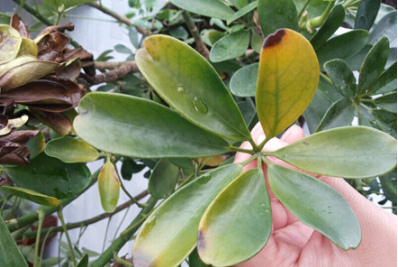
What to Do When the Leaves of the Money Tree Turn Yellow
The money tree is a perennial evergreen herbaceous plant and a highly ornamental foliage plant. So what should you do if the leaves of the money tree turn yellow?
Causes of Yellowing Leaves in the Money Tree and Their Control
1. Overwatering
If the money tree is overwatered, the potting soil becomes too moist and water accumulates. Over time, this causes root rot in the money tree, and the symptoms of root rot will cause the leaves of the money tree to turn yellow.
Control measures:
Simply control the amount of watering. First dig the money tree out of the pot, being careful not to damage the roots, and check whether the roots have rotted. If they have rotted, bury it in sandy soil and do not water it; just spray water around it. Wait for the roots to return to normal, then take it out.
2. Insufficient Light
If, during the growth process, the plant is kept in a dark state because its environment receives no light, the leaves will grow leggy, the branches will become thin, weak and shriveled, and the leaves will become smaller, affecting its normal growth and thereby causing the leaves to turn yellow.
Control measures:
Let the plant gradually be exposed to sunlight. You can first move half of the plant to a sunny spot, then slowly move the whole plant to a lighted place, giving it the light it needs for growth so the leaves gradually return to green. But be careful not to expose it for too long or to direct strong light.
3. Unsuitable Temperature
The money tree needs a warm environment to grow. If the temperature is too high, the leaves will be scorched and slowly turn yellow.
If the temperature is too low and the potting soil is also moist, it will cause root rot, which in turn affects the growth of the leaves and makes them turn yellow.
Control measures:
When the temperature is too high, provide appropriate shade. Do not expose it to light for too long, as this will raise the temperature, so after a period of exposure, move it to a cool place to lower the temperature.
When the temperature is low, pay attention to cold protection. You can wrap the plant in plastic film to take good cold-protection measures.
4. Damage from Pests and Diseases
If ventilation is not done frequently and the environment is dim, the leaves of the money tree will suffer the piercing-and-sucking damage of scale insects.
This affects the growth of the plant, and when it spreads onto the leaves, it will cause the leaves to turn yellow.
Control measures:
The method to treat the pest damage is: first, you can use transparent tape to stick the insects off, or use a damp cloth to wipe off the insect bodies. The most direct method is to spray with chemicals: you can spray a 1000-fold dilution of 20% buprofezin wettable powder to directly and thoroughly eliminate the source of the insects.
Pests and Diseases and Their Control
Diseases of the Money Tree and Their Control:
1. Freeze Damage
The money tree is prone to freeze damage in winter. In winter, if the temperature drops below 5°C and the potting soil is somewhat moist, the money tree plant is easily frozen, showing lodging. In severe cases, it can also cause rot.
In winter, keep the overwintering temperature above 10°C, and water less to keep the potting soil dry.
2. Sunscorch
Sunscorch of the money tree mainly occurs in summer or on clear days after rain, as well as when plants grown indoors for a long time are suddenly moved outdoors and come into direct contact with strong sunlight. When sunscorch generally occurs, the leaves of the money tree show chlorosis and turn white, and in severe cases they even turn black. So be sure to provide timely shade when the light is strong.
3. Brown Spot Disease
Brown spot disease often occurs on the leaves of the money tree, and the lesions on the leaves are round and grayish-brown in color. Brown spot disease tends to occur under conditions of high temperature, high humidity and poor ventilation.
When brown spot disease occurs, promptly remove the diseased leaves and spray chemicals. A 50% carbendazim wettable powder or a 40% chlorothalonil suspension has a relatively good effect.
Pests of the Money Tree and Their Control:
1. Scale insects:
What most commonly occurs on the money tree is the damage of scale insects, which easily breaks out in poorly ventilated environments.
In the early stage of a scale insect outbreak, they need to be killed promptly, and a specialized insecticide can be sprayed.
What to Do When the Leaves of the Money Tree Turn Yellow: Causes of Yellowing Leaves in the Money Tree and Control Methods
The money tree is a perennial evergreen herbaceous plant and a highly ornamental foliage plant, and it is a very popular potted plant. What should you do when the leaves of the money tree turn yellow? Let's take a specific look at the causes of yellowing leaves in the money tree and the control methods!
Cause One: Overwatering
If the money tree is overwatered, the potting soil becomes too moist and water accumulates. Over time, this causes root rot in the money tree, and the symptoms of root rot will cause the leaves of the money tree to turn yellow.
Control measures
Simply control the amount of watering. First dig the money tree out of the pot, being careful not to damage the roots, and check whether the roots have rotted. If they have rotted, bury it in sandy soil and do not water it; just spray water around it. Wait for the roots to return to normal, then take it out.
Cause Two: Insufficient Light
If, during the growth process, the plant is kept in a dark state because its environment receives no light, the leaves will grow leggy, the branches will become thin, weak and shriveled, and the leaves will become smaller, affecting its normal growth and thereby causing the leaves to turn yellow.
Control measures
Let the plant gradually be exposed to sunlight. You can first move half of the plant to a sunny spot, then slowly move the whole plant to a lighted place, giving it the light it needs for growth so the leaves gradually return to green. But be careful not to expose it for too long or to direct strong light.
Cause Three: Unsuitable Temperature
The money tree needs a warm environment to grow. If the temperature is too high, the leaves will be scorched and slowly turn yellow.
If the temperature is too low and the potting soil is also moist, it will cause root rot, which in turn affects the growth of the leaves and makes them turn yellow.
Control measures
When the temperature is too high, provide appropriate shade. Do not expose it to light for too long, as this will raise the temperature, so after a period of exposure, move it to a cool place to lower the temperature.
When the temperature is low, pay attention to cold protection. You can wrap the plant in plastic film to take good cold-protection measures.
Cause Four: Damage from Pests and Diseases
If ventilation is not done frequently and the environment is dim, the leaves of the money tree will suffer the piercing-and-sucking damage of scale insects.
This affects the growth of the plant, and when it spreads onto the leaves, it will cause the leaves to turn yellow.
Control measures
The method to treat the pest damage is: first, you can use transparent tape to stick the insects off, or use a damp cloth to wipe off the insect bodies. The most direct method is to spray with chemicals: you can spray a 1000-fold dilution of 20% buprofezin wettable powder to directly and thoroughly eliminate the source of the insects.
What to Do When the Money Tree Gets Bugs: Pest and Disease Control for the Money Tree / 2 Pests, 5 Diseases
Keeping a potted plant indoors has now become a popular trend, and the money tree is not only beautiful but also has a good meaning, so it is the choice of many families. However, during cultivation, the money trees of many flower lovers get bugs and diseases, which seriously affects their ornamental value. So what should you do when the money tree gets bugs? The following are 7 pest and disease controls for the money tree. Take a look!
1. When the Money Tree Gets Bugs, Spray with Chemicals
Indoors is not the same as outdoors. If you do not care for it according to the money tree's cultivation methods, and add to that a high-temperature, high-humidity environment, the money tree will get bugs and diseases. So what should you do then? Actually, it is very simple. We just need to determine which pest or disease it is, and then spray with the corresponding chemical. The specifics are all in the pest and disease control for the money tree, so let's continue reading.
2. Pest and Disease Control for the Money Tree, 2 Pests and 5 Diseases
1. Scale insects
What most commonly occurs on the money tree is the damage of scale insects, which easily breaks out in poorly ventilated environments. This insect pierces the leaves with its mouthparts and sucks the sap from the leaves of the money tree. Symptoms of infestation: the leaves of the money tree turn yellow, and in severe cases the plant will die.
Control method: when there are few scale insects, you can gently and repeatedly wipe the affected plant with alcohol, which can remove them; when there are many pests, immediately spray a 1000-15000-fold dilution of dichlorvos, or a 1000-fold dilution of 50% malathion emulsion, etc., for control.
2. Aphids
One of the main pests of the money tree, it mainly harms the leaves and buds and sucks large amounts of sap, causing poor growth of the money tree. Because aphids reproduce in large numbers, they are usually densely packed when discovered, which is not only frightening but also very disgusting.
Control method: if a small number of aphids are found, you can use a brush dipped in laundry detergent to brush them off; when there are many aphids, spray a 1000-fold dilution of 40% omethoate emulsifiable concentrate, or a 1000-fold dilution of 50% fenitrothion emulsifiable concentrate for control. The effect is quite good~
3. Brown spot disease
A main disease of the money tree, it mainly harms the leaves. Symptoms of the disease: the lower leaves start to develop the disease and gradually spread upward; in the early stage they are round or oval and purplish-brown, and in the later stage they turn black; in severe cases, the leaves of the money tree turn yellow and fall off, affecting flowering.
Control method: after discovering the above symptoms, you can spray a 500-fold dilution of 50% carbendazim wettable powder, or a 500-fold dilution of 25% chlorothalonil, once every 7-10 days; 2-3 times is enough to see results.
4. Stem rot
A disease that harms the stems of the money tree. It generally spreads by splashing from watering, and it is prone to occur when moisture lingers for a long time. Symptoms of the disease: the stem or the base of the stem of the money tree rots, causing the whole plant to quickly wither and die.
Control method: after discovering the above symptoms, you can spray a 600-fold dilution of 27% copper hydroxide suspension; when the disease is severe, you can also add some Qingkulike or hymexazol when spraying, and the effect is quite good.
5. Late blight
One of the main diseases of the money tree, it mostly occurs in July-August and mainly harms the lower leaves. Symptoms of the disease: the leaf tips first show dark green water-soaked irregular lesions, which turn brown after expanding. When humidity is high, white mold grows at the boundary between diseased and healthy parts on the back of the leaf.
Control method: promptly cut off the diseased leaves and burn them in a centralized pile or bury them in soil to reduce the source of the disease. When the disease occurs, you can spray a 600-700-fold dilution of 72.2% propamocarb aqueous solution for control.
6. Freeze damage
In addition to the above pests and diseases, the money tree is also prone to freeze damage in winter. When the winter temperature is below 5°C and the potting soil is somewhat moist, the money tree is easily frozen, showing lodging, and in severe cases it can also cause rot.
Control method: when the winter temperature is low, move the money tree indoors for care, and keep the room temperature above 10°C, then water less to keep the potting soil dry.
7. Sunscorch
In summer or on clear days after rain, the money tree can also be scorched. When sunscorch generally occurs, the leaves of the money tree show chlorosis and turn white, and in severe cases they even turn black.
Control method: when the light is strong, provide timely shade for the money tree.