Paris polyphylla (seven-leaf-one-flower) planting techniques and pest and disease control methods
Paris polyphylla, also known as seven-leaf-one-flower, is a perennial herb with anti-inflammatory and analgesic, blood-activating and stasis-dissolving, and heat-clearing and detoxifying effects, and is a powerful medicinal Chinese herb. As wild Paris polyphylla is continuously depleted while demand for it keeps growing, its price has also risen, and many people have chosen to cultivate it. So let me introduce to you the planting techniques and pest and disease control methods for Paris polyphylla:
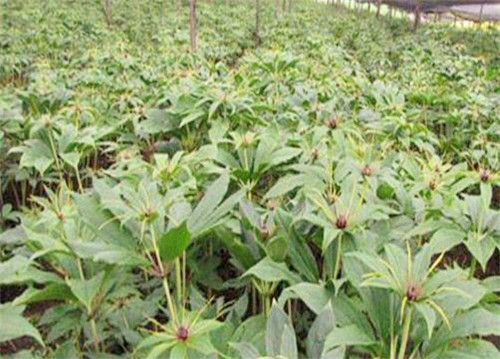
I. Growing conditions for Paris polyphylla
Paris polyphylla is a perennial herb of the Liliaceae family; in fact the rhizome is perennial, while the stems and leaves wither once a year. It has a relatively long overwintering period and a relatively short vegetative growth period, because the reproductive growth period of Paris polyphylla is relatively long.
The growing environment of Paris polyphylla favors warmth, diffuse light and shade, but it also fears frost and low sunlight. Paris polyphylla is suitable for growing at an annual average temperature of 11°C and an annual average rainfall of between 900-1100mm. Paris polyphylla has high medicinal value and good market prospects.
The planting site for Paris polyphylla should preferably be a sandy loam with deep soil, good drainage and a loose, fertile texture. Paris polyphylla does not require deep plowing; before planting, simply plow and harrow the land and level it into beds. Applying sufficient base fertilizer is enough.
Generally, Paris polyphylla is propagated by rhizome. Place the seed rhizome in each hole and cover with fine soil. Spray the soil surface with new high-fat film; this can preserve soil moisture and prevent water evaporation, protect against sun and drought, keep warmth and prevent freezing, prevent soil crusting, suffocate and isolate sources of pests and diseases, and improve the emergence rate.
For fertilizing Paris polyphylla, cake fertilizer and plant ash are suitable; before each topdressing, weeds must first be hoed and the soil loosened. When it is dry with little rain, watering must be done in the morning and evening so that the leaves and seedlings of Paris polyphylla grow normally. Spraying Paris polyphylla with the medicinal herb root growth agent at the right time can transport the products of leaf photosynthesis (nutrients) to the root system, improve the nutrient conversion rate and soil-loosening capacity, make the rhizome expand rapidly, and greatly increase the medicinal content.
II. Paris polyphylla planting techniques
1. Site selection and land preparation
Paris polyphylla prefers a warm, shaded environment, but it also needs a certain amount of light, so when choosing a planting site, choose sloping land with short sunshine duration, and the soil is best if it is loose humus soil. The root system of Paris polyphylla does not grow deep, so when preparing the land, shallow plowing is enough. During land preparation, apply sufficient base fertilizer and then make beds; generally the bed width is 1.5 m and the height about 30cm, then mix the base fertilizer evenly with the soil, level it and wait for sowing.
2. Sowing
Paris polyphylla can be propagated by seed and rhizome. The sowing time is in May. Before sowing, first soak the seeds in clean water for one day, then take them out and mix with plant ash for disinfection before sowing. When sowing, make holes in the ground, generally 3-5cm deep, with a spacing of 30-35cm between holes. Sow two or three seeds per hole, cover with soil promptly after sowing, and water according to whether the soil is dry or moist; generally seedlings emerge after one week.
3. Seedling management
After emergence, management must be timely. Generally sowing is in early to mid-May, and in late May the seedlings should be thinned or replanted in time. Before thinning, water once first, then use a tool to dig out the seedlings, being careful not to damage the root system. The same applies when replanting: water once to settle the roots, make full use of the seedlings, and maintain a certain planting density so that they can grow quickly.
4. Cultivation and weeding
The soil for planting Paris polyphylla is required to be loose, and since the root system of Paris polyphylla is relatively shallow, special attention must be paid to loosening the soil and weeding. In the rainy season, the soil very easily crusts into blocks, which hinders root growth and makes respiration difficult; at this time, drain promptly to prevent waterlogging. Cultivate frequently and loosen the soil shallowly to ensure soil permeability so the roots grow normally. In addition, weeding is also necessary to prevent poor growth caused by weeds competing for nutrients. When weeding, the roots must be pulled out completely to avoid regrowth.
5. Fertilizer and soil management
The growth pattern of Paris polyphylla is that when the plant flowers, the tubers below expand rapidly, so during vigorous growth, sufficient nutrients must be provided. Vigorous growth is generally from June to August, so fertilizer must be applied promptly in early June to ensure the needs of growth. When fertilizing, use farmyard manure and organic fertilizer as much as possible: apply 2000-3000kg of fully decomposed farmyard manure per mu, and apply 20-30kg of calcium fertilizer per mu at the roots, then earth up the soil.
III. Pest and disease control methods for Paris polyphylla
1. Control of Paris polyphylla black spot disease
The disease starts from the leaf tip or leaf base, producing round or nearly round lesions, and sometimes the disease spreads to the flower axis, causing leaf blight and stem blight
Control measures: pay attention to drainage and reducing moisture, lower air humidity, and reduce the incidence of disease; in the early stage of disease, spray 1% anisodamine aqueous solution at 300-500 times dilution, or 50% thiophanate-methyl suspension at 1500—2000 times dilution, or 50% iprodione wettable powder at 1000—1500 times dilution; choosing any one of these gives good results.
2. Control of Paris polyphylla stem rot
This disease occurs mostly during the seedbed stage, and is even more serious during the field stage under high temperature and high humidity. First, yellow-brown lesions appear at the base of the stem; after the lesions expand, the leaf tips lose water and droop, and in severe cases the stem base becomes wet and rotted and the seedlings collapse
Control measures: rotate with gramineous crops for more than 3 years; before transplanting, spray the seedbed with 50% carbendazim wettable powder at 1000 times dilution as a "send-off medicine"; remove diseased seedlings; in the early stage of field disease, drench the holes with 95% dexon wettable powder at 1000 times dilution, once every 10 days, for 2—3 consecutive drenchings.
3. Control of Paris polyphylla scarab beetles
Scarab beetles damage leaves as adults (fried-bean beetles) and bite the stems as larvae (white soil grubs), affecting the growth of Paris polyphylla.
Control measures: at night, use torches to attract and kill adults, or place fresh vegetable leaves sprayed with trichlorfon on the bed surface to attract and kill larvae; use measures such as interferon and pheromone trapping. When preparing the land and making beds, broadcast 5% phoxim granules at 1.5—2 kg per mu, or 3X carbofuran granules at 2--3 kg.