-

What are the processing technologies for reishi (Ganoderma lucidum) products?
Reishi milk powder I. Raw material formula: fresh milk 300kg, whey powder 25.2kg, refined vegetable oil 10kg, high-fructose corn syrup (70%) 15kg, reishi 8kg, vitamin A 1.2g, vitamin C 60g, vitamin E 1.2g, calcium lactate 5kg, ferrous lactate 62g, zinc gluconate 87g, lecithin 1.2kg. II. Process flow: whey powder, high-fructose corn syrup, vitamin C, etc. -> dissolve -> filter -> vegetable oil VA, VE
-
What environmental factors affect the appearance quality of bag-cultivated Ganoderma (reishi)?
Ganoderma, as a medicinal fungus, has its medicinal value and commercial value directly related to the quality of its fruiting bodies. Cultivating fruiting bodies with well-developed caps and good maturity is the ideal goal of medicinal Ganoderma producers. Ganoderma fruiting bodies are quite sensitive to environmental factors such as temperature, humidity, aeration and light. If conditions are unsuitable, deformed mushrooms are very likely to appear. Strictly regulating environmental factors is a necessary measure to improve the finished-product rate and appearance quality of Ganoderma. 1. Temperature factor. Ganoderma fruiting body primordia can form in large numbers at 25-30°C, form less and grow slowly below 22°C, and although they can form above 34°C, they very easily form nodular protrusions after primordium formation and stop developing; Ganoderma caps grow faster at 28-30°C, with sparser concentric rings and lighter surface color, while at 24-26°C the growth period is longer, more active ingredients accumulate, and the texture is harder, so Ganoderma grown at this temperature has better quality. To balance growth time and fruiting body quality, the room temperature during the primordium differentiation and growth stage is best controlled at (28±1)°C, and during the cap growth stage at (26±1)°C. In cultivation practice, the temperature control methods are: (1) arrange the mushroom emergence time appropriately according to local natural temperature conditions; in central and southern Hebei, early June to early September is more suitable; (2) when the temperature is 30°C, appropriate shading, sprinkling well water on the ground combined with ventilation, etc. can lower the room temperature by about 1-3°C; (3) production units with the means can use automatic temperature control equipment, for better results.
-
Detailed Explanation of High-Quality and High-Yield Cultivation Techniques for Log-Grown Lingzhi (Ganoderma)
Lingzhi (Ganoderma) is a precious medicinal fungus. Modern medical research has demonstrated that lingzhi possesses multiple functions such as cancer prevention, anti-cancer and anti-aging properties, and the development and application of lingzhi has attracted widespread attention. Longquan City is a key production area for lingzhi; in the early 1990s, trials of short-log sterilized-substrate cultivation techniques for lingzhi were already underway, and these techniques have been continuously refined through production extension and application. By 2002, the city's log-grown lingzhi cultivation volume reached 3000 cubic meters, with a total output of 120 tons, accounting for about 1/4 of the national total output, and achieving an output value of 700
-
Key Management Techniques for Log-Cultivated Ganoderma in Summer
1. Thinning: About 10-20 days after the mature colonized logs are covered with soil, primordia begin to form. Because the light in artificial shade sheds is generally quite strong, the cut cross-sections of the logs are stimulated by light and tend to form numerous primordia. To improve the quality of the Ganoderma, excess primordia should be removed, leaving only 1-2 thick, sturdy primordia per log segment. If two primordia are kept, they should be more than 15 cm apart. Otherwise, after the caps differentiate, they will crowd and stick together, causing deformities and reducing commercial value. Thinning can be done by simply picking them off by hand, then covering the spot with fine soil.
-
Detailed Explanation of High-Yield Cultivation Techniques for Ganoderma lucidum Using Short Logs with Sterilized Substrate
Short-log sterilized-substrate cultivation is a relatively fast-developing new technique for cultivating Ganoderma lucidum (reishi) in recent years. On average, more than 20 kg of dried mushrooms can be harvested per cubic meter of wood, with high yields reaching more than 30 kg, a 20% increase over conventional cultivation methods. The reishi produced is firm and thick in texture, glossy, and higher in acid content than bag-cultivated reishi, with more than 90% of the product meeting export requirements. 1. Cultivation season: Ganoderma lucidum belongs to the medium-to-high temperature type of fungi, and its yield is related to the tree species of the logs, cultivation time, and cultivation techniques. Inoculation time can be arranged from late October to December
-
Growth regulation and craft-shaping induction techniques for lingzhi (Ganoderma)
1. Characteristics of induced craft shaping. Unlike traditional handcrafted shaping, induced craft shaping relies on artificial regulation of the materials used so that they grow as naturally as possible. For example: fish require smooth, flat lingzhi pieces bearing wing-shaped fins; birds require feather-like, elongated lingzhi caps as the main body. To make lingzhi grow into such a myriad of forms, one must master the environmental conditions that affect lingzhi morphology. 2. Lingzhi morphology and environmental conditions. The environmental conditions that affect lingzhi morphology are mainly meteorological factors such as light, air, humidity and temperature. (1) Light. Lingzhi is sensitive to light,
-
Four Reform Measures for Bag-Cultivated Lingzhi (Ganoderma) Cultivation Technology
1. Change the substrate from sawdust to wood blocks. Lingzhi (Ganoderma) is tough in texture and needs to absorb large amounts of lignin and cellulose during its growth. When sawdust or cottonseed hulls are used as the substrate, because the texture is loose, the lignin in the substrate is easily decomposed by the mycelium, and often after harvesting one to two flushes the mushroom log disperses and falls apart. If wood blocks mixed with coarse sawdust are used as the substrate, the same volume contains more lignin, and there are many gaps between the wood blocks, giving good aeration, which is favorable for lingzhi growth, so yields are high and quality is excellent. 2. Change indoor cultivation to outdoor soil-covering cultivation. In indoor bag cultivation of lingzhi, the surface of the mushroom log easily forms a layer of
-

-
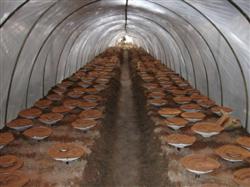
Where can I find high-yield cultivation techniques for lingzhi (Ganoderma lucidum)?
Where are there high-yield cultivation techniques for lingzhi? How should lingzhi be grown for high yields? Zhongdiwang has high-yield lingzhi cultivation techniques for reference: Lingzhi, also known as lingzhi herb or immortal herb. It is a precious large medicinal fungus, whose fruiting bodies and spores are used for medicinal purposes. It has the effects of nourishing and strengthening the body and prolonging life, ...
-
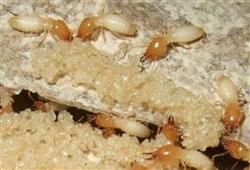
Lingzhi (Ganoderma lucidum) cultivation techniques: How do you control termites when growing lingzhi?
How do you control termites when growing lingzhi? Please explain: termites, also called white ants, belong to the order Isoptera, family Termitidae. Termites occur mainly in hilly and mountainous areas, and are less common in plains areas. The termite group is a large family, most thriving in tropical and subtropical regions. In the cultivation of lingzhi and other edible fungi, ants mainly bore into and feed on the log segments....
条件筛选