Causes and Solutions for Yellowing Needles on Japanese White Pine
When summer arrives, the Japanese white pine (Pinus parviflora) grown by flower enthusiasts often develops yellowing at the tips of its needles, and after late autumn some needle tips die back, which greatly detracts from its ornamental value. What exactly causes this phenomenon? The Japanese white pine gets its name from its needles growing in clusters of five. The plant is relatively short, grows slowly, has short needles and dense branches, an elegant bearing and a beautiful tree shape, making it a superior tree species for bonsai.
In midsummer and early winter, the needles in the middle part of the branches of the Japanese white pine often turn yellow in an irregular pattern; this is a normal manifestation of the tree's metabolism. Investigations into soil pH, temperature, moisture and so on show that the main cause is not improper fertilization, but rather poor water control.
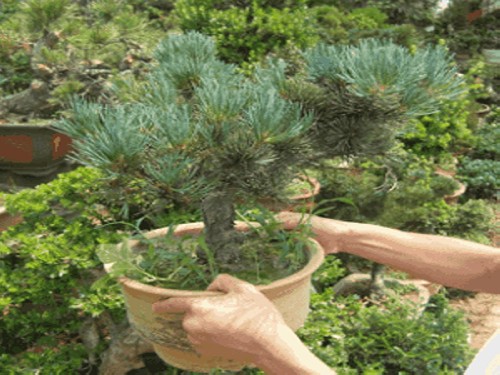
First, the potting soil is often too wet, and with poor drainage and water accumulating in the pot, oxygen in the soil is depleted, causing root rot and turning the needles yellow;
Second, exposure to scorching sun and overly dry potting soil can also cause the needle tips at the top of the Japanese white pine to scorch; if the water shortage continues, the plant will eventually die;
Third, keeping the Japanese white pine indoors for a long time, with insufficient light and air, violates its habit of preferring to receive light outdoors, or suddenly moving it outdoors where it is exposed to scorching sun, can also cause yellowing and dieback.
In response to the above causes, actively take corresponding preventive and remedial measures, spraying the drought-resistant and waterlogging-preventive agent "Xin Gao Zhi Mo" (New High-Fat Film); in dry seasons it prevents water transpiration, resists sun scorching, and preserves moisture and soil moisture; it also reduces the adverse effects of continuous rainy weather on the normal growth of the Japanese white pine.
By using "Xin Gao Zhi Mo", the water balance within the plant is regulated, so that the plant can still grow vigorously even under harsh conditions.
In midsummer and early winter, the needles in the middle part of the branches of the Japanese white pine often turn yellow in an irregular pattern; this is a normal manifestation of the tree's metabolism. However, when summer arrives, the Japanese white pine cultivated by some flower enthusiasts develops yellowing at the tips of its needles, and after late autumn some needle tips die back, which greatly detracts from its ornamental value. The causes include the following:
1. Watering too frequently, or heavy rainfall in June each year, keeps the potting soil constantly too wet, and with poor drainage and water accumulating in the pot, oxygen in the soil is depleted, causing root rot and turning the needles yellow.
2. In the hot summer, water evaporates quickly, and if watering is insufficient, the needles will scorch. If exposed to scorching sun and the potting soil is too dry, the Japanese white pine will also develop scorched needle tips at the top of the shoots; if the water shortage continues, the plant will eventually die.
3. Keeping the Japanese white pine indoors for a long time, with insufficient light and air, violates its habit of preferring to receive light outdoors, or suddenly moving it outdoors where it is exposed to scorching sun, will likewise produce the above conditions. To prevent the leaves of the Japanese white pine from turning yellow and dying back, corresponding preventive and remedial measures should be taken in response to the above causes.
In response to the yellowing of the Japanese white pine's leaves, it is best to bury the entire pot of the Japanese white pine in elevated, well-drained soil, keeping it slightly moist; do not use too much water (the roots fear waterlogging, so mist the foliage frequently). It needs diffused light, so do not bake it in the sun. The Japanese white pine likes sunlight, but light should be increased gradually. Remove the yellowed and withered leaves and strengthen care, so that it gradually sends out new buds and becomes beautiful again.