-
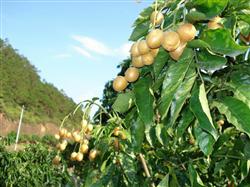
What are the key technical points for planting and managing seedless wampee?
How do you manage the planting of seedless wampee? What should you pay attention to? We also ask netizens with experience in growing seedless wampee to help introduce it. Seedless wampee helps digestion, dissolves phlegm and regulates qi. It mainly treats indigestion, fullness and pain in the chest and diaphragm, distending pain from hernia, and phlegm-fluid cough and panting, and other conditions, so among the people it is known as the "treasure among fruits". Zhongdiwang...
-
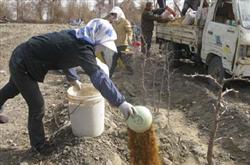
What are the key technical points for managing jujube trees during the flowering period?
How should jujube trees be managed during the flowering period? What methods can prevent flower and fruit drop during the flowering period of jujube trees? We also ask experienced netizens to help explain. Because the flowering period of jujube trees is long and the number of flowers is large, the consumption is very great. In addition, during this period flower bud differentiation, the sprouting of fruiting branches, and fruit setting proceed simultaneously, which leads to jujube trees blooming but not setting fruit, or a large amount of...
-
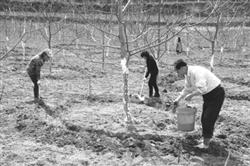
What are the key technical points for managing walnut trees in autumn and winter?
How should walnut trees be managed well in autumn and winter? Please give guidance. Autumn and winter management of walnut trees mainly includes soil, fertilizer and water management, as well as pruning and freeze protection. For detailed operations, you can refer to the following methods: Soil, fertilizer and water management for walnut trees in autumn and winter: For non-bearing trees, after leaf fall and before the soil freezes, deep-till the soil and build tree basins, generally to a depth of 20-25 cm. The base fertilizer should mainly be decomposed organic fertilizer, with an application rate of 25-50 kg per tree, and 2-5 kg of superphosphate can also be added. When fertilizing, the ring trench method can be used, that is, dig a ring-shaped trench 20-40 cm wide and about 30 cm deep around the outer edge of the canopy, placing topsoil and subsoil separately. After digging, put the fertilizer in, then fill in topsoil and mix evenly, and finally fill in an appropriate amount of subsoil to level with the original ground surface.
-
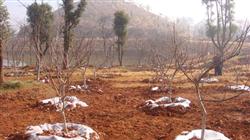
What are the methods for planting and managing persimmon trees?
How do you plant and manage persimmon trees? Please give an introduction. The methods for planting and managing persimmon trees can refer to the following methods: 1. Planting persimmon trees. 1. Choose the site and build the persimmon orchard. Choose a leeward, shady site with deep soil, fertile and loose soil, and a low groundwater table. 2. Dig holes and apply base fertilizer. Follow the mountain contour to cut horizontal terraces, and build them into mountain orchards with a front ridge and back ditch, reverse-sloping terrace surfaces, or a "fish-scale pit" style. Plant at a row spacing of 6 x 5.5 m, with 20 trees or 50 trees (close planting) per mu. The hole surface width, bottom width, and depth of the planting hole should reach 1 m, 0.8 m, and 0.6 m respectively. First allow weathering, then backfill the planting hole with weeds and topsoil to 80% full, and at the same time backfill a corresponding amount of organic fertilizer as base fertilizer, with the hole position 20 cm above the terrace surface. When planting, spread 1-1.5 kg of calcium magnesium phosphate fertilizer in each hole to improve planting quality and growth.
-
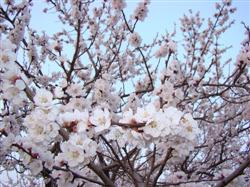
What are the key technical points for managing apricot trees during the flowering period?
How should apricot trees be managed during the flowering period? Please give guidance. Apricot trees bud and bloom earlier than other stone fruit trees, second only to the wild peach. In North China, apricot trees generally bloom from late March to mid-April, and the flowering time varies depending on the cultivar and environmental conditions. Preventing late frost: apricot trees bloom relatively early and are susceptible to early spring frost damage...
-
Detailed Explanation of the Key Techniques for Planting and Managing Winter Jujube Trees
How do you plant and manage winter jujube trees? Please give an introduction. Planting and managing winter jujube trees can be done with reference to the following techniques: Cultivation points: Planting. This variety has strong adaptability, tolerates drought and poor soil, and is not strict about fertilizer and water requirements. For orchard establishment, a dense, dwarfed cultivation method should be used, generally 2 to 3 × 3 to 4 m, with 5... plants planted per mu.
-

What are the key points for managing walnut trees? Explained clearly in one article
Key points for managing walnut trees
-
Detailed Explanation of Key Technical Points for Managing Red-Fleshed Honey Pomelo in the Rainy Season
How to manage red-fleshed honey pomelo in the rainy season? Please advise. In the rainy season, you can refer to the following methods to manage red-fleshed honey pomelo: (1) Combine weeding with intertillage and soil loosening. In the rainy season, weeds grow very quickly, not only competing with red-fleshed honey pomelo trees for water and nutrients, but also serving as hiding places for pests and diseases. Timely intertillage and weeding are necessary, and herbicides such as sethoxydim, paraquat, glyphosate, etc. can also be used.
-
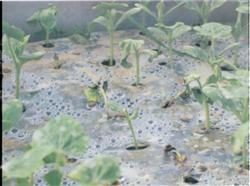
What are the key points for managing watermelon seedlings?
What issues should be noted in watermelon seedling management? (1) Temperature management: In temperature management, two tendencies should be avoided. One is not daring to remove the film for ventilation, fearing the seedlings will freeze, which results in high temperature and high humidity in the seedbed and causes the seedlings to grow leggy; the other is too much ventilation, which makes the temperature inside the bed too low, causing slow seedling growth...
-

条件筛选