What are the key technical points for planting and managing seedless wampee?
How do you manage the planting of seedless wampee? What should you pay attention to? We also ask netizens with experience in growing seedless wampee to help introduce it. Seedless wampee helps digestion, dissolves phlegm and regulates qi. It mainly treats indigestion, fullness and pain in the chest and diaphragm, distending pain from hernia, and phlegm-fluid cough and panting, and other conditions, so among the people it is known as the "treasure among fruits". Zhongdiwang...
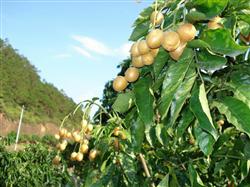 How do you manage the planting of seedless wampee? What should you pay attention to? We also ask netizens with experience in growing seedless wampee to help introduce it
Seedless wampee helps digestion, dissolves phlegm and regulates qi. It mainly treats indigestion, fullness and pain in the chest and diaphragm, distending pain from hernia, and phlegm-fluid cough and panting, and other conditions, so among the people it is known as the "treasure among fruits". Zhongdiwang has compiled the management points for seedless wampee, listed in detail below for netizens' reference.
1. Pruning and orchard cleanup of seedless wampee, and cultivating fruiting mother branches:
From the fifth year after planting, seedless wampee begins to enter the adult fruiting tree stage. After harvesting the fruit, focus on cutting back and shortening the fruiting branches, clear weeds from the orchard, and especially prune out dead branches, diseased and pest-damaged branches, and shaded branches to ensure ventilation and light penetration, promote autumn shoots, and cultivate robust fruiting mother branches for the following year. This is an important technical step for a high and stable yield the next year.
1. Fertilization. Mainly apply organic fertilizers such as human and livestock manure and urine, combined with nitrogen, phosphorus and potassium fertilizers, applied in two split applications. The first is 10-15 days before or after fruit harvest to promote autumn shoots, and the second is before the end of September to strengthen the shoots. By the end of October the leaves will turn green and mature; during the leaf greening period, foliar fertilizer can be sprayed 2-3 times to promote full maturation of the autumn shoots.
2. Irrigation. After fertilization, irrigate around the tree canopy in the orchard to keep the soil moist and promptly stimulate the emergence of autumn shoots.
3. Pest and disease control. During the leaf greening period of autumn shoots, strengthen pest and disease control, spraying together with foliar fertilizer to control pests and diseases such as red spider mite, leaf miner and anthracnose.
2. Promoting flower bud differentiation of seedless wampee:
In early to mid-December, according to weather conditions, regulate fertilizer and water, protect autumn shoots and control winter shoots. Methods: (1) Clear ditches and drain water, loosen soil and cut roots, or girdle, etc. (2) Use 500-800 ppm daminozide or paclobutrazol, spraying twice consecutively, once every 15 days. Both have the effect of inhibiting vegetative growth, promoting flower bud differentiation and shortening the length of flower spikes.
3. Bud thinning and flower strengthening of seedless wampee:
Carry out bud thinning and flower strengthening while shortening the length of flower spikes. Methods: (1) Cut off the entire flower spike on weak and small fruiting mother branches; (2) For large flower spikes, thin out some dense side spikes, appropriately shorten overly long flower spikes, and retain medium-sized flower spikes. At the same time, during the flower bud stage, spray 0.2% monopotassium phosphate plus 0.1% borax, twice consecutively at half-month intervals. Measures: strengthen fertilization, apply flower-promoting fertilizer around Great Cold, combining slow-release fertilizer with quick-acting fertilizer.
4. Flower preservation and fruit preservation of seedless wampee:
The fundamental measure for preserving flowers and fruit is to strengthen fertilizer and water management throughout the entire cultivation process, enhance tree vigor, and strengthen flowers and preserve fruit. Methods: (1) Shorten flower spikes; (2) Spray chemicals: during full bloom, spray 5 ppm 2,4-D plus 50 ppm 920. Measures: 15-20 days after the second full bloom, apply fertilizer to strengthen flowers and preserve fruit, mainly potassium and nitrogen fertilizers, with phosphorus and magnesium fertilizers added.
5. Fruit thinning and fruit cracking prevention of seedless wampee:
The amount of fruit retained on the whole tree should be determined according to factors such as tree age, tree vigor, canopy size and number of branches and leaves, with the standard being that after harvest the leaf color does not fade and enough robust fruiting mother branches can promptly emerge. Methods: After the first young fruit drop (soybean size) stabilizes, fruit thinning can begin. First thin out deformed fruit, cracked fruit, rotten fruit, diseased and pest-damaged fruit and other fruit with no retention value; then thin out small fruit; then thin out densely set fruit and individual especially large fruit, so that the fruit in the whole cluster is evenly distributed and uniform in size, retaining 20-40 fruits per cluster.
In the middle and late stages of seedless wampee fruit development, pay special attention to the problem of fruit cracking: (1) Regulate orchard moisture; (2) Increase application of fertilizers containing the three elements boron, sulfur and calcium.
6. Fruit ripening and harvest of seedless wampee:
Before the seedless wampee fruit ripens, it appears clearly angular with a square top. From the end of June to early July, the fruit rapidly expands and fills out, the angles fade, and the fruit color turns yellow. Seedless wampee ripens differently from local wampee; only when the seedless wampee fruit turns from orange-yellow to brown does it truly show the seedless wampee flavor. Measures: (1) A common folk practice is to spray fermented diluted human urine; (2) Spray fertilizers containing the two elements K and S, which can promote uniform fruit ripening and rich flavor.
Management methods for wampee trees during the flowering period
What varieties of wampee are there?