-
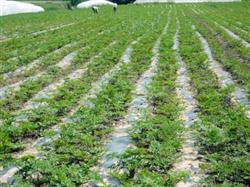
What precautions should be taken when growing Angelica sinensis with plastic film mulching?
What should be noted when growing Angelica sinensis with plastic film mulching? Please introduce Angelica sinensis, of the Apiaceae family, a perennial herb with a fleshy root. Its leaves are several times pinnately compound. It flowers in summer, with white flowers in compound umbels. The fruit is oblong-elliptical, with broad wings on the lateral ribs. It is produced in Gansu, Shaanxi, Sichuan, Hubei, Yunnan, Guizhou and other provinces of China. In...
-
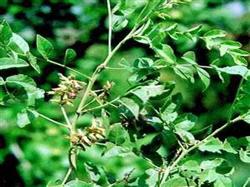
Detailed Explanation of Licorice Plastic Mulch Ridge-Furrow Cultivation Techniques
1. Site selection range. Licorice has strong adaptability and can grow in most soils, but slightly alkaline or alkaline sandy loam with a pH of 7.2--8.5 is most suitable. 2. Crop rotation selection. Licorice is a perennial herbaceous plant of the genus Glycyrrhiza in the Fabaceae family. The previous crop should preferably be a grass-family crop; legume crops should be avoided. 3. Land preparation and fertilization...
-
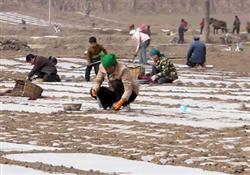
What should be noted when cultivating Angelica sinensis (dong quai) with plastic film mulching?
What should be noted when cultivating Angelica sinensis with plastic film mulching? Please give guidance. When cultivating Angelica sinensis with plastic film mulching, note the following points: 1. Choose a good previous crop field. Select fertile, loose, deep-soiled, shady terraced fields with relatively high organic matter content. A wheat stubble field is best; avoid continuous cropping. Deeply plow and turn the previous crop stubble, and before sowing, combine with plowing, apply fertilizer and form ridges. ...
-

Detailed Explanation of Key Points of Mulch Cultivation Techniques for Gastrodia elata
For more than a decade, the author has studied, investigated, tested, summarized and promoted mulch cultivation techniques for Gastrodia elata in production areas across more than ten provinces and cities nationwide, which can increase Gastrodia elata yields by 20-30%. The principles and technical methods of yield increase through mulching are now introduced: Principles of yield increase through mulching. Gastrodia elata is a plant that prefers cool temperatures and humidity. In nature it is mainly distributed under forests or in shrublands, mostly growing on gentle slopes at 10-30°C. During its growth period it likes moisture but fears waterlogging; it likes warmth, with the most suitable temperature being 20-25°C, but fears high temperatures, and growth stops when the temperature exceeds 28°C.
-
Detailed Explanation of Mechanical Film-Mulching Cultivation Techniques for Licorice
Licorice is one of the main cash crops of the 222nd Regiment, with a sown area of more than 800 hectares. The licorice grown is Ural red-skin licorice, with bright color and excellent quality. The licorice rhizome is well developed and penetrates deep into the soil. It is suitable for dryland farming, tolerant of salt and alkali, strongly heliophilous, fond of calcium, afraid of waterlogging, and has very strong vitality. I. Land Requirements 1. Site Selection Cultivating licorice should choose flat terrain, loose texture, few weeds, high organic matter content, pH 5-8, and conveniently irrigated sandy soil, with loam being better. The previous crop is best as corn, wheat, barley
-
What are the benefits of plastic film mulching cultivation for Schisandra chinensis?
After the small seedlings are planted, water them thoroughly immediately so that the roots come into full contact with the water. Do not overwater; watering until thoroughly soaked is sufficient. Too much water will affect the soil temperature. Once the water has seeped down, plastic film mulching (preferably black plastic film) should be carried out promptly. This can raise the soil temperature, maintain soil moisture, and prevent weed growth. Plastic film mulching is an effective measure for promoting the survival and rapid growth and development of Schisandra chinensis seedlings. For arid regions, it is an effective method for increasing the seedling survival rate.
-
Detailed Explanation of Key Techniques for Plastic Film Mulch Cultivation of Angelica sinensis
Angelica sinensis, of the Apiaceae family, is a perennial herb with a thickened root. The leaves are several times pinnately compound. It flowers in summer, with white flowers in compound umbels. The fruit is oblong-elliptical, with broad wings on the lateral ribs. It is produced in China's Gansu, Shaanxi, Sichuan, Hubei, Yunnan, Guizhou and other provinces. In traditional Chinese medicine, the root is used as medicine; it is warm in nature and sweet, bitter and pungent in taste, with the functions of nourishing blood and invigorating the body, regulating menstruation and relieving pain, and is mainly used to treat blood deficiency, irregular menstruation, dysmenorrhea, amenorrhea, rheumatic arthralgia, traumatic injuries, carbuncles and so on. The root contains volatile oil and other components; the volatile oil can calm and regulate uterine activity. The water-soluble components of Angelica sinensis have an excitatory effect on the uterus as
条件筛选