-

Detailed Explanation of the Technical Method for Cultivating Lingzhi (Reishi) on Mulberry Branches
The artificial cultivation process for mulberry branch lingzhi is: mulberry branch collection - cutting into sections - crushing - ingredient mixing - bagging - sterilization - inoculation - cultivation management - harvesting lingzhi - sun drying - packaging. 1. After pruning and crushing the mulberry branches, pack them in food-fungus-specific plastic bags with a specification of 18 cm x 20 cm.
-
How to Propagate Mulberry Trees by Cuttings and How to Prune Mulberry Branches and Leaves
Mulberry trees were first cultivated in central and northern China. Now they are also cultivated in all provinces and regions from northeast to southwest China, and in the northwest as far as Xinjiang. Later, Korea, Japan, Mongolia, the Central Asian countries, Russia, Europe and other places, as well as India and Vietnam, also began to cultivate them,
-
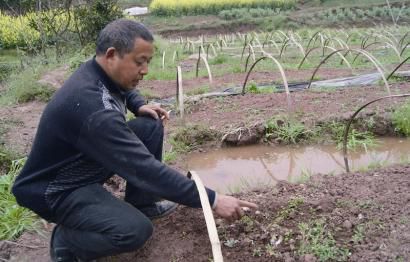
Mulberry Branches Grow Mushrooms, Turning Waste into Treasure: Waste Material Can Also Generate Income
Growing Mushrooms from Mulberry Branches: "Waste Material" Generates Income
-
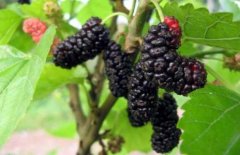
What nutrients do mulberry branches and mulberries each contain?
It is said that the mulberry tree is a treasure from top to bottom, so let's take a look at what functions the mulberry tree actually has and what nutritional value it offers. The bark and roots of the mulberry tree can be used in traditional Chinese medicine, known as mulberry white bark and honey-processed mulberry white bark; the leaves, dried and ground into powder, can also be used as medicine. The unripe fruit and the green branches of the mulberry tree contain a white latex, which may be slightly toxic and irritating. In addition, the pollen of the male flowers is relatively light and easily inhaled into the lungs, so individuals sensitive to it need to take care. The mulberry tree prefers fertile, well-drained loam, but can grow in a variety of soil types, with a pH of 5.5 to 6.5. Waterlogged areas should be avoided. The mulberry tree needs an average of about one inch of rainwater or irrigation per week; especially when watering is insufficient during the dry season, it may cause fruit drop. Iron, zinc, magnesium, barium, copper, and boron are the trace elements it needs, and organic fertilizers containing these elements can be purchased for use.
-
Technique for Cultivating Shiitake Mushrooms on Discarded Mulberry Branches in Northern China
Shiitake mushrooms belong to the fungal edible mushrooms, with very high medicinal and culinary value and promising market prospects. After the Agricultural Technology Center of Qianyang County, Shaanxi Province introduced this technique in 1999 and successfully tested it at the county's original seed farm, 44 farmers from 10 villages including Caojiayuan began engaging in shiitake mushroom production. According to 6 years of statistical data, apple orchards (including mulberry orchards) with trees aged 8 to 15 years yield an average of 500 kg of discarded old trees and pruned branches per mu per year that can be crushed into sawdust, producing 625 kg of fresh shiitake mushrooms, with sales revenue of about 2,500 yuan. I. Scale and Forms This technique
-
How to Grow Mushrooms on Mulberry Branches? Detailed High-Yield Cultivation Techniques
In terms of the comprehensive development and utilization of mulberry stalks, since 2006, Hechi City in Guangxi has successfully explored a new "mulberry-mushroom-fertilizer" agricultural circular economy model in Yizhou, Huanjiang and other cities and counties. The "Pleurotus citrinopileatus" (golden oyster mushroom) cultivated with mulberry stalks as the main substrate won the gold award at the 2006 China Hunan (International) Green Products Expo and passed national organic food certification. The success of mulberry branch mushroom cultivation solved the problem that had plagued Hechi City for more than 20 years, where large areas of mulberry stalks were burned as waste, causing resource waste and environmental pollution, and provided sufficient raw material resources for expanding the edible mushroom industry
-
Detailed Technical Points for Cultivating Reishi Mushroom with Mulberry Branches
Mulberry is a woody plant, and mulberry branches are the largest by-product of sericulture production. The degree of lignification of mulberry branches is moderate, and besides being usable as a high-quality paper raw material, they are suitable for use as a culture medium for edible and medicinal mushrooms. Mulberry branches themselves are a commonly used traditional Chinese medicinal material. The medicinal mushroom reishi (Ganoderma lucidum) cultivated with mulberry branches - mulberry branch reishi - is better than reishi cultivated with mixed wood sawdust and log wood. After mulberry branch reishi came on the market, its price is more than 50% higher than ordinary reishi. The technical points for cultivating reishi with mulberry branches are introduced as follows: 1. Cultivation techniques The artificial cultivation technical process for mulberry branch reishi is: mulberry
-
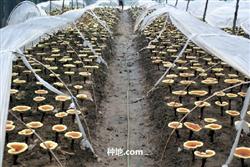
Can mulberry branches be used to cultivate reishi mushroom?
Can mulberry branches be used to cultivate reishi mushroom? What should be noted? The differences between mulberry branch cultivation technology for reishi mushroom and general reishi mushroom cultivation methods are mainly shown in: reishi mushroom strains, substrate formula and cultivation period, cultivation mode, and other aspects. 1. Screening of reishi mushroom strains Through introducing from Guangdong, Fujian...
-
How is bamboo fungus (Dictyophora indusiata) cultivated using mulberry branches and sugarcane bagasse?
How is bamboo fungus cultivated using mulberry branches and sugarcane bagasse? Please give an introduction. Bamboo fungus is a well-known edible mushroom, rich in nutrients and delicious in taste. Previously, there was no artificial cultivation in this county, and no fresh products were sold on the market. People were not as familiar with bamboo fungus as with other mushrooms, thinking that its cultivation techniques might be relatively complicated, but this is not the case...
-
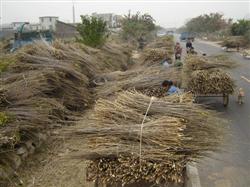
How is Lingzhi (Ganoderma) cultivated using mulberry branches? A detailed guide to the growing technique
How is Lingzhi (Ganoderma) cultivated using mulberry branches? Please explain the method. To grow Lingzhi using mulberry branches, you can refer to the following method: 1. Mulberry branch Lingzhi cultivation method. The artificial cultivation process for mulberry branch Lingzhi is: collecting mulberry branches - cutting into sections - crushing - blending ingredients - bagging - sterilization - inoculation - cultivation management - harvesting Lingzhi - sun-drying...
条件筛选