-
Can raw gypsum be used in mushroom cultivation substrate formulas?
Is it okay to use raw gypsum in mushroom cultivation substrate formulas?
-

High-nutrition formula cultivation of oyster mushrooms can achieve exceptionally high yields
The high-nutrition, exceptionally high-yield cultivation technique for oyster mushrooms uses raw materials such as wheat straw and rice straw, and adopts measures including high-nutrition formulas, removing the plastic casing from the mushroom logs, and covering with nutrient soil, so that the input-to-output ratio reaches more than 1:10, with very significant economic benefits. 1. Strain selection: choose wide-temperature varieties such as Changbai No. 1. The suitable cultivation time is from September of the current year to April of the following year. 2. Formula and treatment: there are 4 formulas: ① 50% soybean straw (crushed), 40% corncob or wheat straw, 8% cornmeal or wheat bran, 2% lime. ② 70% wheat straw, 27% wheat bran, 1% compound fertilizer
-
The latest high-yield and mold-resistant formula for oyster mushrooms is here
After years of practice and summary by researchers at the Edible Fungi Research Institute of Binhai County, Jiangsu, combined with the raw-material practical experience of mushroom farmers in the Binhai and Sheyang mushroom-growing areas, the formulas are summarized as follows: 1. 1000 kg cottonseed hulls plus 20 kg lime, 20 kg gypsum, 7 kg diammonium phosphate, 5-6 bags of Gudazhuang, and 1 kg Kemeiling. 2. 1000 kg cottonseed hulls plus 20 kg lime, 20 kg gypsum, two bags of special fertilizer for oyster mushrooms (bag/1500 g), and 1 kg Kemeiling. 3. 1000 kg corncobs,
-
High-yield Wild-simulated Cultivation Technique for Oyster Mushrooms in Winter and Spring
Oyster mushrooms produced using wild-simulated cultivation techniques not only taste as delicious as wild ones, but also truly achieve ecological, high-quality, high yields. Even in the cold winter and low-temperature early spring seasons, they can be grown in a relatively enclosed shade shed, making full use of ground heat to produce thick, tender, high-quality oyster mushrooms. This method increases yield by more than 60% compared with conventional cultivation methods, and by more than 40% compared with cultivation methods such as mushroom walls, with a biological conversion rate reaching more than 220%. The specific techniques for high-yield, high-quality wild-simulated cultivation of oyster mushrooms in winter and spring are as follows: 1. Mycelium culture: Use high-pressure or atmospheric-pressure sterilization
-
Key Points for Winter and Spring Management and Stimulation Techniques of Shiitake Mushrooms
Winter and spring management of shiitake mushrooms is the management of the fruiting period, which determines the level of economic benefit. The fruiting period is a transitional stage from mycelial development to fruiting body development. When management shifts from the spawn-running room to the fruiting period, the mycelium must reach physiological maturity. The standards for maturity are: first, a slight trembling sensation when holding the mushroom bag in the hand; second, the amount of wart-like growths accounts for 3/4 of the bag surface area and they become soft and elastic; third, pigment secretion covers 2/3-1/2 of the bag surface; fourth, the cultivation time must be 60-70 days, with an effective accumulated temperature of 1200°C. At the
-
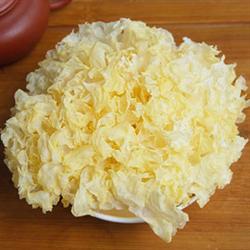
What season is suitable for cultivating white fungus (Tremella fuciformis), and what are the commonly used formulas?
What season is suitable for cultivating white fungus (Tremella fuciformis), and what are the commonly used formulas? Please give an introduction. Cultivating white fungus requires selecting a suitable cultivation period based on its biological characteristics and in combination with the climate environment of the cultivation region. Usually, inoculation and cultivation are arranged in spring from March to April and in autumn from September to October. If temperature can be regulated, it can be cultivated all year round....
-
Detailed Explanation of the High-Efficiency Field-Based Wild-Simulated Cultivation Technology Model for Oyster Mushrooms
Under the premise of producing the same mushroom yield, field-based wild-simulated cultivation of oyster mushrooms can reduce investment in production facilities and labor intensity, facilitate operation and management, and the fresh mushrooms produced have a strong wild mushroom flavor, enhancing the commercial value of oyster mushrooms. This model is highly practical, easy to operate, suitable for large-scale and industrialized production, and has high promotional value. Oyster mushrooms, with their advantages of high yield, strong adaptability and large consumption volume, occupy a major position in the edible mushroom production of our province. However, using houses, greenhouses, caves and other facilities to cultivate oyster mushrooms has long been
-
Formulation trial for cultivating Agrocybe aegerita (tea tree mushroom) with mulberry sawdust
At present, Fujian, Jiangxi and other places mostly use hardwood sawdust and cottonseed hulls to cultivate Agrocybe aegerita, but the yield is relatively low. This trial aims to explore suitable formulations for cultivating Agrocybe aegerita with mulberry sawdust and silkworm excrement, in order to make full use of local resources, save costs and improve economic returns. 1 Materials and methods 1.1 Test strain Agrocybe aegerita No. 1, provided by the Kexing Edible Fungi Research Institute of Gutian, Fujian. 1.2 Test formulations (1) cottonseed hull 82%, wheat bran 18%; (2) cottonseed hull 36%, mulberry sawdust 36%, rice straw powder 10%, silkworm excrement
-
What are the methods to stimulate mushroom logs to fruit early?
There are many methods to stimulate the growth and development of microorganisms, such as mechanical stimulation, ecological stimulation, physical stimulation, chemical stimulation, etc., but in the process of oyster mushroom cultivation, the following methods are generally used: (1) Shocking the mycelium: when the oyster mushroom mycelium has fully colonized and a layer of mycelial film has formed on the bed, a flat wooden board can be used to pat the bed firmly, board by board, leaving numerous board marks on the bed. In this way, the mycelium is subjected to vibration, which increases the opportunities for biochemical reactions and promotes the mass and rapid differentiation of fruiting bodies. (2) Scratch-and-break stimulation: after the mycelium
-
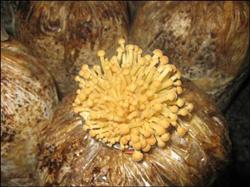
The five-character formula for water management during the fruiting period of bag-cultivated enoki mushrooms (Flammulina filiformis)
Enoki mushroom cultivation and management have high requirements, especially since fruiting body development is very sensitive to water requirements; water management during this period is the key to achieving high yield and quality. The "five-character" formula water management method is introduced here for reference. First, maintain. After the mycelium reaches the bottom of the bag, immediately open the bag and scratch the mycelium, rake away the old mycelial skin, and cover with wet newspaper or plastic film to maintain moisture and promote pinning. For those covered with newspaper, spray water in small amounts and frequently (3-4 times per day) to keep the newspaper moist; for those covered with plastic film, spray water onto the floor and into the air to maintain air humidity at around 90%. During this period, open windows for ventilation once a day, keep the room temperature at 10-14°C, and after 5-7 days mushroom pins will emerge in large numbers.
条件筛选