What to do when the leaves of a potted lucky bamboo turn yellow? It is mostly caused by a lack of sunlight
1. Reasons for yellowing leaves of lucky bamboo: it cannot be exposed to strong sun
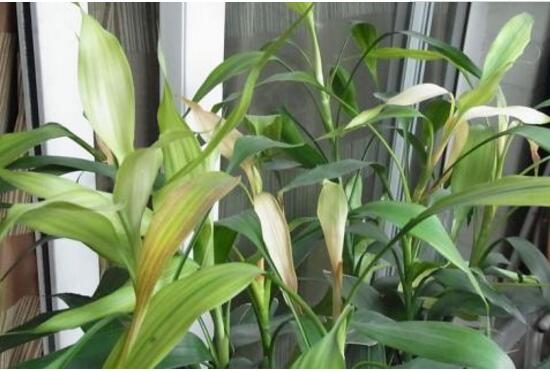
There are many reasons for lucky bamboo leaves turning yellow, for example: too much watering can cause the leaves to turn yellow, and too little water can also cause the leaves to turn yellow. Lucky bamboo cannot be in direct sunlight for a long time, otherwise the leaves will also turn yellow; of course, a lack of sunlight is no good either. So what should be done when lucky bamboo leaves turn yellow? We need to “treat the disease with the right medicine”.
① Strong sun exposure causes lucky bamboo leaves to turn yellow
Lucky bamboo is a shade-loving plant. If strong light shines directly on it, it will cause yellowing, specifically shown by the leaf tips or edges drying up. Solution: at this point, simply move it to a shaded place. Try to place lucky bamboo in a ventilated, cool spot; occasionally giving it some sun is fine too.
② Lack of sunlight causes leaves to turn yellow
No plant can be short of light. As mentioned above, lucky bamboo likes shade, but it cannot go without light for a long time. If lucky bamboo is kept in a place without light for a long time, then yellowing leaves will also appear. Solution: without light, chlorophyll cannot be produced, so it can be placed in a spot with diffused light.
③ Overwatering causes leaves to turn yellow
What should be done when the leaves of potted lucky bamboo turn yellow? It is very likely caused by overwatering. Although lucky bamboo can be grown in water, if soil-grown lucky bamboo is watered too much, yellow leaves will also appear. The leaves lose their luster and turn dull yellow, which is due to overwatering and the roots staying moist all the time. Solution: if this happens, the plant needs to be taken out of the pot, dried, and then repotted.
④ Lack of water causes leaves to turn yellow
If the yellowing is caused by a lack of water, it mainly shows as the leaf tips or edges drying up, which indicates that the lucky bamboo is short of water. This is also a sign of water shortage causing yellow leaves. Solution: when this happens, the humidity can be appropriately increased and watering carried out.
⑤ Fertilizing causes leaves to turn yellow
Both a lack of fertilizer and the use of too much fertilizer can cause the leaves to turn yellow and unattractive. When fertilizer is insufficient, it mainly shows as the color of the young leaves becoming lighter, yellow or pale green rather than green. When there is too much fertilizer, it mainly shows as the tips of the new leaves turning dry brown, the leaf surface usually appearing thick and lusterless, and not smooth and flat, while the old leaves turn scorched yellow and fall off.
⑥ Being next to a TV, refrigerator, etc. causes lucky bamboo leaves to turn yellow
If lucky bamboo is placed close to appliances such as a TV or air conditioner, it will very easily cause the leaf edges and other parts to turn yellow. Solution: at this point, simply move it far away and place it in a suitable spot, and it will grow very well.
⑦ Improper shaping causes lucky bamboo leaves to turn yellow
Lucky bamboo tends to grow in clumps, so when changing the pot and adding soil, pay attention to pruning old and residual fibrous roots and thinning out excess stems and leaves, so as to avoid excessive consumption of nutrients and to play a role in protecting the roots and leaves. If shaping is not attended to, it can also easily cause the leaves to turn yellow. The seven points above are all reasons that cause lucky bamboo leaves to turn yellow; everyone can “treat the disease with the right medicine”.
2. Lucky bamboo care experience
1. For lucky bamboo bought with roots, first cut off the roots. Then place it in a ventilated place for three to five hours to let the cut surface air-dry and heal, so that bacteria will not enter the root area and cause rot.
2. For water-grown lucky bamboo, during the first few days before new roots have grown, the water should be changed often. Also clean the root area, and once new roots have grown there is no need to change the water often. Just make sure the water in the vase can cover the root area; there should not be too much water, or the roots will have no oxygen. The above is an analysis of what to do when the leaves of potted lucky bamboo turn yellow and the reasons for lucky bamboo leaves turning yellow. Hurry home and save your little plant.
What to do when lucky bamboo leaves turn yellow? Reasons for lucky bamboo leaves turning yellow
Lucky bamboo sounds like a very auspicious plant, but if it is not grown well, its leaves easily turn yellow. How should this be solved? Let's take a look below with the editor. Characteristics of lucky bamboo: an evergreen subshrub-like plant. The plant height is over 1 m, the plant is slender, and the upright upper part has branches. The rhizome runs horizontally and is nodular. The leaves are alternate or nearly opposite, papery, long lanceolate, with an obvious 3 to 7 main veins, with short petioles, and deep green. The umbel has 3 to 10 flowers borne in the leaf axils or opposite the upper leaves, with 6 perianth segments, a bell-shaped corolla, and purple. The berry is nearly spherical and black. It is a perennial evergreen herb, and the plant height can reach more than 1.5 to 2.5 m; if used for commercial ornamental purposes, a cultivation height of 80 to 100 cm is appropriate. It is mostly cultivated in gardens, likes shade and moisture, and has thick stems and leaves. Its varieties include green leaf, green leaf with white edges (called silver edge), green leaf with yellow edges (called gold edge), and green leaf with silver center (called silver center). It is mainly used as a potted ornamental plant, has high ornamental value, and symbolizes "great fortune and great profit", and is therefore quite popular on the international market.
What are the reasons for lucky bamboo leaves turning yellow?
1. Overwatering
The young leaves are dull yellow and lusterless, the old leaves show no obvious change, the stems are thin and yellow-green, and the new shoots shrink and do not grow, indicating overwatering.
2. Lack of water
Yellowing from a lack of water is different from yellowing from too much water. Yellowing from water shortage shows as the leaf tips or edges drying up and becoming dry, with the old leaves turning yellow from the bottom up and falling off, but the new leaves growing relatively normally.
3. Lighting reasons
When strong sunlight shines directly on some shade-loving flowers, it easily causes the leaf tips and leaf edges of the flowers to dry up, and yellow spots appear on the sun-facing part of the leaves. Moving them to a shaded place is enough. Yellowing from lack of light: when placed in a shaded environment for a long time, the leaves cannot get enough sunlight and cannot form chlorophyll, and the whole plant's leaves turn yellow and then fall off.
4. Improper fertilizing
Flower yellowing caused by too much fertilizer or too high a concentration shows as dry brown tips on the new leaves; generally the leaf surface is thick and lusterless, and uneven and not smooth, and the old leaves turn scorched yellow and fall off. Yellowing caused by too little fertilizer and nutrient deficiency shows as the young leaves becoming lighter in color, yellow or pale green, while the old leaves are relatively normal or gradually turn from green to yellow.
5. Iron deficiency
Another reason for lucky bamboo leaves turning yellow is iron deficiency.
How to solve lucky bamboo leaves turning yellow?
1. After rooting, it is not easy to change the water; when the water evaporates and decreases, add water in time. Do not directly add water from the tap; add water that has been left overnight, or cooled boiled water.
2. Check whether the water has gone bad. If the water has a rotten smell, check whether the roots have rotted. If so, use a knife to cut off the rotten roots at the root area, then cultivate new roots again.
3. Do not fertilize too frequently. If too much fertilizer is applied, it will burn the roots, and yellowing leaves are also likely to appear. A rusty screw can be placed in the water to supplement iron.
4. Do not expose it to wind, and do not place it in a stuffy, humid, unventilated place. Also do not place it in a place with too strong light. If the light is too dim, it is stuffy and unventilated, or the air is dry, etc., all can cause the leaves to turn yellow; but if the placement spot has too strong light, it will likewise cause the leaves to turn yellow and lose their spirit.
Through the detailed introduction in this article, I hope everyone can gain something! Thank you for your support of and attention to Duorou Huapu!
What to do when lucky bamboo leaves turn yellow? Reasons and solutions for lucky bamboo leaves turning yellow
Lucky bamboo sounds like a very auspicious plant, but if it is not grown well, what should be done when its leaves easily turn yellow? Let's take a look below with the editor.
Characteristics of lucky bamboo: an evergreen subshrub-like plant. The plant height is over 1 m, the plant is slender, and the upright upper part has branches. The rhizome runs horizontally and is nodular. The leaves are alternate or nearly opposite, papery, long lanceolate, with an obvious 3 to 7 main veins, with short petioles, and deep green. The umbel has 3 to 10 flowers borne in the leaf axils or opposite the upper leaves, with 6 perianth segments, a bell-shaped corolla, and purple. The berry is nearly spherical and black. It is a perennial evergreen herb, and the plant height can reach more than 1.5 to 2.5 m; if used for commercial ornamental purposes, a cultivation height of 80 to 100 cm is appropriate. It is mostly cultivated in gardens, likes shade and moisture, and has thick stems and leaves. Its varieties include green leaf, green leaf with white edges (called silver edge), green leaf with yellow edges (called gold edge), and green leaf with silver center (called silver center). It is mainly used as a potted ornamental plant, has high ornamental value, and symbolizes "great fortune and great profit", and is therefore quite popular on the international market.
What are the reasons for lucky bamboo leaves turning yellow?
1. Overwatering
The young leaves are dull yellow and lusterless, the old leaves show no obvious change, the stems are thin and yellow-green, and the new shoots shrink and do not grow, indicating overwatering.
2. Lack of water
Yellowing from a lack of water is different from yellowing from too much water. Yellowing from water shortage shows as the leaf tips or edges drying up and becoming dry, with the old leaves turning yellow from the bottom up and falling off, but the new leaves growing relatively normally.
3. Lighting reasons
When strong sunlight shines directly on some shade-loving flowers, it easily causes the leaf tips and leaf edges of the flowers to dry up, and yellow spots appear on the sun-facing part of the leaves. Moving them to a shaded place is enough. Yellowing from lack of light: when placed in a shaded environment for a long time, the leaves cannot get enough sunlight and cannot form chlorophyll, and the whole plant's leaves turn yellow and then fall off.
4. Improper fertilizing
Flower yellowing caused by too much fertilizer or too high a concentration shows as dry brown tips on the new leaves; generally the leaf surface is thick and lusterless, and uneven and not smooth, and the old leaves turn scorched yellow and fall off. Yellowing caused by too little fertilizer and nutrient deficiency shows as the young leaves becoming lighter in color, yellow or pale green, while the old leaves are relatively normal or gradually turn from green to yellow.
5. Iron deficiency
Another reason for lucky bamboo leaves turning yellow is iron deficiency.
How to solve lucky bamboo leaves turning yellow?
1. After rooting, it is not easy to change the water; when the water evaporates and decreases, add water in time. Do not directly add water from the tap; add water that has been left overnight, or cooled boiled water.
2. Check whether the water has gone bad. If the water has a rotten smell, check whether the roots have rotted. If so, use a knife to cut off the rotten roots at the root area, then cultivate new roots again.
3. Do not fertilize too frequently. If too much fertilizer is applied, it will burn the roots, and yellowing leaves are also likely to appear. A rusty screw can be placed in the water to supplement iron.
4. Do not expose it to wind, and do not place it in a stuffy, humid, unventilated place. Also do not place it in a place with too strong light. If the light is too dim, it is stuffy and unventilated, or the air is dry, etc., all can cause the leaves to turn yellow; but if the placement spot has too strong light, it will likewise cause the leaves to turn yellow and lose their spirit.
How to grow lucky bamboo
1. Pruning
When first inserting, pay attention to pruning the roots. When first inserting, remove the leaves at the base so as not to affect the growth of the bamboo. The specific amount depends on the size of your own vase; just remove the leaves below the mouth of the bottle. In addition, a small part should be cut off at an angle from the root area with scissors or a knife, so that the bamboo can better absorb water; the cut should be as smooth as possible.
2. Water amount
Water amount control and the choice of water: the water only needs to reach one third of the vase, and should not be more than two thirds. Before rooting, change the water once every 3 days; after rooting, do not change the water again, just add water directly to the vase. When the weather is dry and stuffy, spray water on the leaf surface. It is best to use well water or purified water; if using tap water, it is best to store it for a day before use.
3. Temperature
Maintain indoor temperature. Lucky bamboo is suitable for growing between 16 degrees and 26 degrees, and cold easily causes the plant to die. In winter, do not place it on a balcony, next to a window, or in other colder places, and by no means let the water freeze. Anti-freezing measures can be taken when necessary.
4. Light
Ensure sufficient light. Water-grown lucky bamboo is generally placed indoors. Although it does not have high requirements for sunlight, if it cannot come into contact with sunlight at all, the leaves will likewise wither and yellow and grow poorly. Therefore, it should be placed in a bright, ventilated environment as much as possible so that it can fully come into contact with light.
5. Fertilizing
Fertilize once a month. For water-grown plants, we generally ignore fertilizing, but this is actually not the case; fertilizing can make the plant grow better. Water-grown lucky bamboo only needs to be fertilized once a month. You can go to a flower market to choose specialized fertilizer, or just drip a few drops of dissolved vitamin C1 into the water when adding water.