Yellowing leaves on African violets are mostly caused by insufficient light, overwatering, or improper fertilizing
Keeping an African violet indoors is a choice many flower lovers make; its leaves are emerald green and its flowers brightly colored, giving it excellent ornamental value. But during the growing process, for various reasons, many growers' African violets develop yellow leaves, seriously affecting the plant's ornamental appeal. So what causes yellowing leaves on African violets? Today the editor will solve this problem for everyone.
I. What causes yellowing leaves on African violets
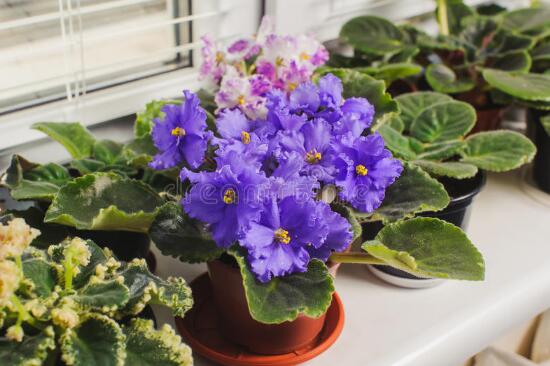
Yellowing leaves on African violets are actually caused by 4 reasons: large environmental changes, which the plant cannot adapt to, causing yellow leaves; insufficient light, causing leaves to turn yellow from lack of photosynthesis; overwatering, which affects root absorption and also turns leaves yellow; and insufficient or excessive fertilizing, which also causes leaves to turn yellow.
II. Solutions for yellowing leaves on African violets
1. Insufficient light
All plants need light, and although African violets are fairly shade-tolerant, they still run into trouble when light is lacking. Once an African violet is kept in a dark indoor spot for a long time, its leaves turn yellow from lack of photosynthesis, and sometimes the leaves even grow rampant.
Solution: Very simple, just give the African violet more light; however, African violets fear strong light, so in daily care, except when summer sunlight is especially strong, the plant should receive plenty of light in the other seasons.
2. Overwatering
African violets like a moist environment, and during their growing season we should water them more. But for beginners, watering is hard to control, and they often water too much or too often, resulting in water accumulating in the pot. When roots sit in water for a long time, they cannot breathe properly, the leaves cannot absorb nutrients, and they naturally turn yellow.
Solution: When you find the soil is too wet, loosen the soil more and move the African violet to a ventilated, sunny spot so the water evaporates quickly; if the soil stays too wet for a long time, the roots easily rot, and at that point you should take the plant out of the pot, cut off the rotten roots, and replant it in fresh soil.
3. Improper fertilizing
Having covered watering, let's talk about fertilizing, which is also one of the causes of yellowing leaves on African violets. Fertilizing is divided into too little or too much, as follows:
① Insufficient fertilizing: African violets like fertilizer, and ample nutrients let them bloom more beautifully. Once fertilizing is insufficient, it not only affects flowering but also turns the leaves yellow from lack of nutrients. Solution: Very simple, we just need to replenish fertilizer in time and the plant will slowly recover.
② Excessive fertilizing: When fertilizing African violets, apply thin fertilizer frequently; otherwise, once too much or too concentrated fertilizer is applied, it easily burns the roots and causes yellow leaves. Solution: Promptly pour water into the pot to dilute the fertilizer and let it flow out from the bottom; if it is discovered too late and the roots are burned and rotten, you need to cut off the rotten roots and repot in fresh soil.
4. Unsuitable environment
If the above causes of improper care can be ruled out, then the yellowing leaves of the African violet may be caused by an unsuitable environment. In a hot, dry environment or one with poor air circulation, its leaves easily turn yellow; besides this, potted plants bought online, because of the large geographic distance and big environmental change, may develop yellow leaves when the plant cannot adapt for a while.
Solution: Keep the African violet in a ventilated, semi-shaded spot; when a newly bought potted plant has yellow leaves, provide the environment best suited to its growth according to the African violet's growing habits, and before long the plant will return to health.
Overall, African violets are not difficult to grow, but not difficult does not mean they can be grown carelessly; to keep their leaves ever green and free of yellowing, you must pay attention to light, water, and fertilizer. Of course, do not panic when you find yellow leaves; just solve it according to the methods above. That is all the editor has to say about yellowing leaves on African violets, and I hope it helps everyone.
How to grow African violets? Growing methods and precautions for African violets
African violet, also known as Saint Paul, African violet (African violet), etc., is a perennial evergreen herbaceous plant of the genus Saintpaulia in the family Gesneriaceae. The flowers of the African violet are small and exquisite, with brilliant colors full of poetry, and have high ornamental value. The African violet is a world-famous potted flower, often planted indoors. So how do you grow African violets? The growing methods and precautions for African violets are introduced below.
Image: African violet
I. Growing methods for African violets
1. Pot selection:The African violet plant is short with a narrow root distribution; too large a pot looks unsightly, while too small a pot hinders development, so choose a small pot proportionate to the plant's size.
2. Soil:The potting soil can be made from 5 parts leaf mold, 3 parts garden soil, and 2 parts compost soil, or 6 parts leaf mold mixed with 4 parts sandy soil, or 1/3 each of leaf mold, peat soil, and sand mixed evenly.
3. Temperature:The suitable growing temperature for African violets is 18-24°C; when the temperature exceeds 27°C, growth becomes poor, and in midsummer shade and cooling measures must be taken; when the temperature drops below 16°C, growth stops, and it can endure 7-10°C low temperatures for a short time, so the winter room temperature must not be lower than 12°C.
4. Light:African violets are shade-tolerant plants and must not be placed in too strong sunlight or too shady a place. Except in winter, when they can be placed indoors with a bit more sunlight, in other seasons they should be kept in a spot with scattered light; especially in summer, it is best to place them in a cool, ventilated indoor spot.
5. Water:Do not water too much; overly wet potting soil easily rots the roots. Watering should follow the principle of watering when dry and letting it dry somewhat when wet; water more generously in summer, and in other seasons it is best to water when the potting soil is slightly dry. When watering, lift the leaves and gently pour along the edge of the pot, or use the immersion method to replenish water; never splash water from above, otherwise the leaves easily rot.
6. Fertilizing:During the growing period, apply a thin, well-rotted liquid fertilizer combining nitrogen and phosphorus or a compound flower fertilizer about once every 10 days, but be careful not to apply too much nitrogen fertilizer, otherwise the leaves grow luxuriantly but there are few flowers. So a nitrogen, phosphorus, and potassium ratio of 1:1:1 is best. After flower buds appear, apply 1-2 additional doses of 0.5% superphosphate and the flowers will be large and brightly colored; when fertilizing, also gently lift the leaves so the fertilizer water does not touch them, to avoid spots and rot on the leaves.
Image: African violet
II. Precautions for growing African violets
1. African violets like a semi-shaded, warm, and humid environment. The suitable growing temperature is 20-22°C, and the suitable light intensity is between 10000-12000lx. In summer, avoid strong light and high temperatures; spray shading agent on the cultivation facilities or use shade netting to block stronger light, and spray water to cool down and increase humidity, but ensure good ventilation.
2. During the growing process of African violets, relatively high air humidity should be maintained and watering should be moderate, but not too wet, lest stems and leaves rot; the difference between water temperature and air temperature should be less than 5°C to prevent leaves from turning yellow. Light should be suitable; insufficient light affects flowering, while too strong light causes leaves to turn yellow and scorch.
3. Ordinarily, do not water too much; wait until the potting soil is slightly dry before watering, as water accumulating in the pot is often the main cause of plant rot. During the growing period, apply a well-rotted thin liquid fertilizer or compound chemical fertilizer once every 7 to 10 days; the nitrogen content in the fertilizer must not be too high, otherwise the leaves grow very luxuriantly but there are few flowers.
[Editor's conclusion]African violets like a warm, humid environment and fear strong light and high temperatures in summer, so special attention is needed during care. The above has introduced the growing methods and precautions for African violets, and I hope it can help everyone!
How to grow African violets? Introduction to African violet care methods
African violet is also called African violet (scientific name: Saintpaulia ionantha), a perennial herbaceous plant of the genus Saintpaulia in the family Gesneriaceae. It has no stem and the whole plant is covered with hairs. The leaves are ovate, and the petioles are thick and fleshy. The flowers are borne one or several together, light purple. There are many cultivated varieties, including large-flowered, single, semi-double, double, and variegated-leaf types, and the flower colors include purple-red, white, blue, pink, and bicolor, etc. This article mainly introduces the care methods for African violets, hoping to help flower lovers growing African violets.I. Temperature and light
African violets like a warm, humid, and semi-shaded environment, and fear strong light and high temperatures in summer. In summer they need shading, and the leaf color will be emerald green; in winter, ample sunlight is needed for continuous flowering; on rainy and snowy days, supplementary light is very beneficial to the growth and flowering of African violets. The growing temperature is 16-24°C, 18-24°C from April to October, and 12-16°C from October to April of the following year. The daytime temperature should not exceed 30°C, as high temperatures are unfavorable to African violet growth. Flowering period: spring to autumn, and in winter they will also bloom if light is sufficient. The winter nighttime temperature should not be lower than 10°C, otherwise they are prone to cold damage. A relative humidity of 40%-70% is more suitable; if the pot is too wet, the roots easily rot. If the air is dry, the leaves lack luster
II. Watering
During cultivation, relatively high air humidity should be maintained and watering should be moderate, not too wet, to avoid rotting of stems and leaves. The difference between water temperature and air temperature should be less than 5°C; otherwise, a large number of yellow spots will appear on the leaves. If light is insufficient, flowering will be sparse and pale, or even only leaves will grow without flowers; if light is too strong, leaves will turn yellow and scorch. They can be kept in a bright spot without direct sunlight, with a suitable growing temperature of 16°C to 24°C.
In summer, keep them in a cool, ventilated spot, avoiding a stuffy, humid environment and blazing sun. Ordinarily, do not water too much; wait until the potting soil is slightly dry before watering, as water accumulating in the pot is often the main cause of plant rot.
III. Fertilizing
During the growing period of African violets, apply a well-rotted thin liquid fertilizer or compound chemical fertilizer once every 7 to 10 days; the nitrogen content in the fertilizer must not be too high, otherwise the leaves grow very luxuriantly but there are few flowers.
IV. Pot selection
Generally a plastic pot will do; determine the pot size according to the plant size, as too large or too small is not good. If you want early flowering, you can appropriately use a smaller pot for planting. If you want an overall beautiful look, you can put a suitable ceramic pot outside the plastic pot. Red clay pots have good breathability but watering must keep up, and they easily accumulate salt, so after a long time it is best to soak and rinse them thoroughly several times before use.
V. Pest and disease prevention
Under high temperature and high humidity conditions, wilt disease, powdery mildew, and leaf rot easily occur, and a 1000-fold dilution of 10% fungicide 401 acetic acid solution can be sprayed or poured into the potting soil. Scale insects and red spider mites often harm African violets during the growing period, and a 1000-fold dilution of 40% omethoate emulsifiable concentrate can be sprayed to kill them.
VI. Soil
The potting soil should be loose and fertile, and it is best to use soil rich in humus. Generally use 5 parts leaf mold, 3 parts garden soil, and 2 parts rotted barnyard manure soil, or 6 parts leaf mold mixed with 4 parts sandy loam, or leaf mold, peat soil, and sand mixed evenly in equal parts.
African violet is a beautiful potted flower with a small plant shape, a long flowering period, many varieties, and brilliant colors. It is a good indoor flower plant, and a good decorative accent on windowsills, in living rooms, and on tabletops. The growing methods for African violets are introduced here, and I hope it helps everyone.