-

Yangdao 6: Breeding and Utilization of a New Medium Indica Rice Variety with High Quality, High Yield and Disease Resistance
Yangdao 6 is a new medium indica variety bred by the Institute of Agricultural Sciences of the Lixiahe Region of Jiangsu, using Yangdao 4 as the female parent, crossed with "Yan 3021", with the F1 seeds subjected to 60CO-gamma ray irradiation mutagenesis, and then developed through continuous directional selection. This variety combines high quality, high yield, disease resistance and wide adaptability, and is an ideal seed source for developing high-quality rice; it has already been demonstrated and promoted on a large scale in Jiangsu, Anhui, Hubei, Shanghai and other provinces and municipalities. Yangdao 6 is also a high-quality restorer line for two-line hybrid rice and three-line Honglian-type hybrid rice, and the formulated "Liangyou Peijiu" and "Yueyou 9
-
How to choose orchid potting medium? A detailed guide to soil mixing methods for growing orchids
To grow orchids well, the potting medium is the foundation. How do you choose a potting medium suitable for orchid growth? Based on years of experience growing orchids, the author shares his personal views. 1. Matching the potting medium with the orchid pot. At present, most people choose clay pots, purple clay pots, ceramic pots, etc. for growing orchids. Because these orchid pots differ in breathability, the potting medium chosen for growing orchids also differs. Clay pots, because of their excellent breathability and drainage and good moisture retention, can use a somewhat finer potting medium; when choosing purple clay pots or ceramic pots for growing orchids, because of their poor breathability, in summer and autumn under the influence of the weather
-
Characteristics and cultivation key points of Zhendao No. 1, a high-quality medium japonica rice
Zhendao No. 1 (formerly known as 7038), when grown as single-season medium japonica rice in northern Jiangsu, has a whole growth period of 140-145 days. When grown as after-crop rice along the Yangtze River and in southern Jiangsu, the whole growth period is 125-130 days. This variety has a seed-setting rate above 90% and a 1000-grain weight of 25-26 g. When grown as single-season rice, the plant height is 100-105 cm; when grown as after-crop rice, the plant height is 85-90 cm. The head rice rate reaches 70.39%, and the eating quality is good. It is moderately resistant to sheath blight. Cultivation key points: (1) For single-season cultivation, sow in southern Jiangsu in late May. For after-crop rice cultivation along the Yangtze River and in southern Jiangsu,
-
Cage Culture Technology for Silver Carp and Bighead Carp Fingerlings: Using Small and Medium-sized Reservoirs as Broodstock Bases
As the main drinking water source for Beijing, Miyun Reservoir plays a decisive role in the capital's economic development and social stability. In order to scientifically convert the nutrients and aquatic organisms in the water body of Miyun Reservoir, purify the water quality, and protect this basin of "water of life" for the capital, after the cancellation of cage fish farming, the Miyun County government increased the amount of fingerlings stocked, releasing 485,000 kg, nearly ten million individuals, of silver carp, bighead carp, bream, grass carp and other fingerlings into Miyun Reservoir each year, aiming to reduce the nutrient load of the water body through fishery production. However
-

A Comprehensive Analysis of Common Problems in Small and Medium-Sized Pig Farms
Common Problems in Small and Medium-Sized Pig Farms
-
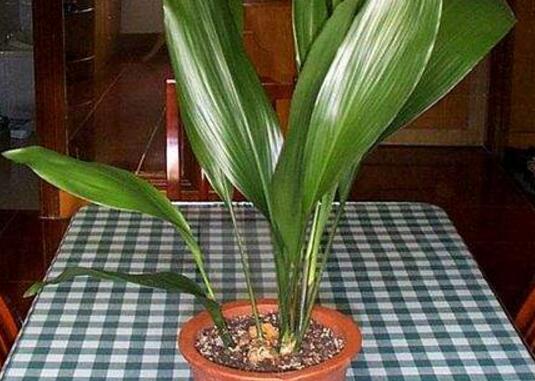
How to divide and repot an Aspidistra? Only with a good growing medium can it thrive into a full pot
In the process of growing an Aspidistra, as long as the cultivation method is scientific, it will grow very quickly, and after a period of time it can become lush and leafy. So at this point, how do you divide and repot an Aspidistra? This has probably become a question that flower lovers need to think about. Below, the editor will tell everyone a simple method
-
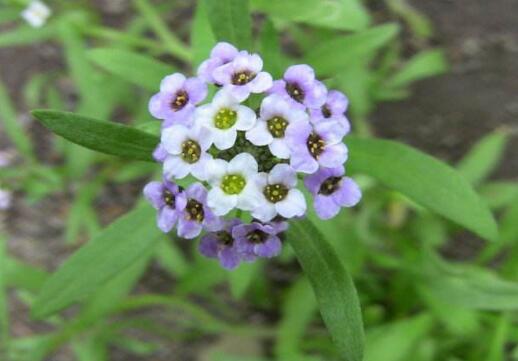
Sweet alyssum spring transplanting: getting the growing medium right, potting it up, and aftercare
After sweet alyssum (Lobularia maritima) has grown for a while, its pot may become too small and hold back its growth. The solution is to transplant it: take it out of the old pot and soil and replant it in fresh potting mix. So how do you transplant sweet alyssum without setting it back? Let's look at the transplanting method.
-
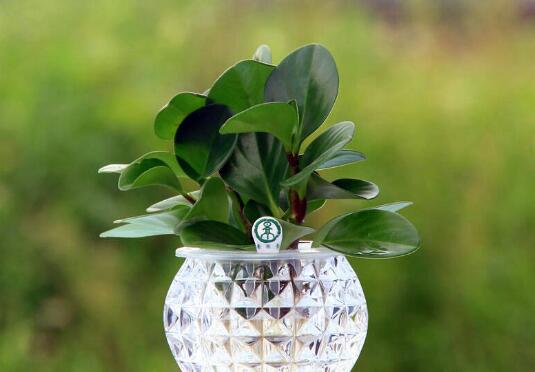
How to transplant a Peperomia? It is best done in spring, and the growing medium must have good drainage.
As we grow Peperomia, as it gradually grows, it also needs a spacious growing environment, and at this point we need to transplant and repot it; transplanting it into a slightly larger pot also lets it grow better. So how do you transplant a Peperomia plant?
-
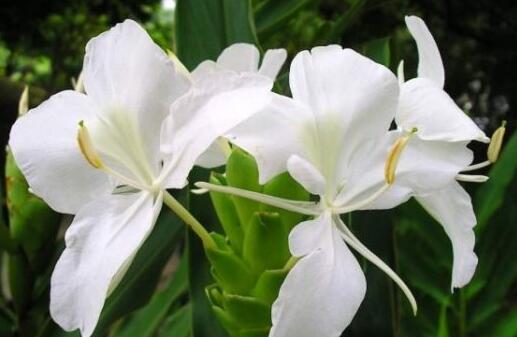
The main propagation method for ginger lily is division, and the growing medium should not be too wet.
Ginger lily is a flower recognized by many gardening enthusiasts. It is not only the national flower of Cuba, but is also cultivated all over the world. If enthusiasts want to grow a few more pots at home, besides buying them, they can also use propagation. So how do you propagate ginger lily? Let's take a look at the propagation methods for ginger lily.
-
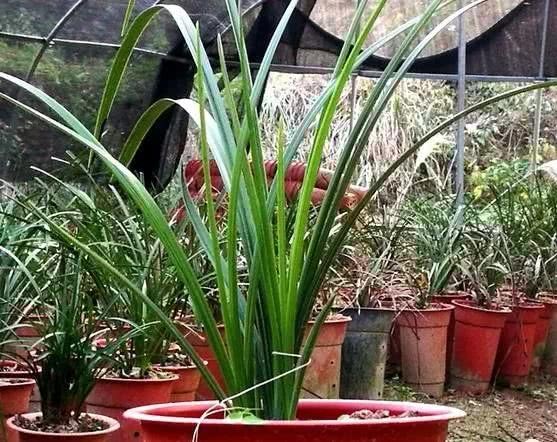
Can and when should you water an orchid with hollow rotten roots after trimming the roots, drying them, repotting and changing the potting medium?
Today a fellow orchid grower asked a question: for an orchid with hollow rotten roots, after trimming the roots and drying them, then repotting and changing the potting medium, can you water it once it is potted? When should you water? What the grower asked about is watering after treating an orchid with hollow roots. First, you have to know how hollow-root orchids form...
条件筛选