-
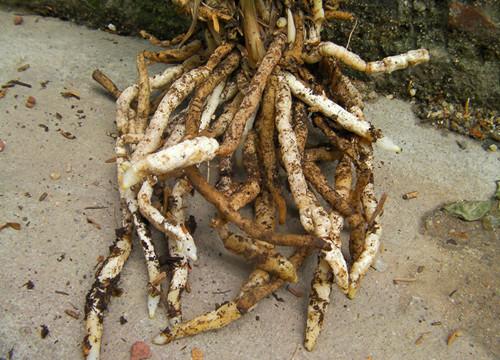
What potting medium should be used to grow orchids? An experienced orchid grower shares 2 kinds, for many shoots, strong seedlings and abundant flowers
To grow orchids well, you must first know how to grow the roots. Every orchid grower knows this, because orchid roots are the organs that absorb and store water and nutrients. Only when the orchid roots are strong can they absorb and store more water and nutrients to supply the orchid leaves. With rich nutrients, orchids can have many shoots, strong seedlings and abundant flowers. So here comes the question
-

Orchid growing medium recommendations: two simple options with ideal results
1. Kanuma soil 65% + Sento 35% This formula is widely used and generally recognized by orchid growers. With this formula, the medium is airy and drains well, and the orchid roots generally will not...
-
How to choose the right growing medium for Dendrobium officinale?
Dendrobium, listed 2000 years ago in the "Daozang" as the first of the nine great immortal herbs. The "Shennong Bencao Jing" lists it as a superior grade: "Strengthens yin and benefits essence, fortifies the stomach and intestines, supplements internal depletion...
-

How to choose a potting medium for orchids? Master these key points
The choice of potting medium is very important for growing orchids. Since most orchids like moisture but fear wetness and require ventilation and air circulation, the medium should be made of materials that can absorb water and...
-

Detailed Explanation of the Technical Requirements for Standardized Cultivation of Epimedium
Technical Requirements for Standardized Cultivation of Epimedium 1 Suitable Conditions for Standardized Cultivation and Protection-Tending Sites I.1 Suitable Growing Conditions for Epimedium wushanense and Epimedium acuminatum ...
-
Fresh food e-commerce begins reshuffling: small and medium players exit as giants battle for dominance
Fresh food e-commerce begins reshuffling: "small shrimp" exit as giants battle for dominance
-
Hybrid wheat brings good harvests even to medium- and low-yield fields
Hybrid wheat brings good harvests even to medium- and low-yield fields
-
Technical points for cultivating Gastrodia elata with rice husk culture medium
Rice husk is a good "soil" ingredient for culturing Armillaria mellea and cultivating Gastrodia elata in plain areas. The "soil" it forms, namely the filler, is loose, well aerated, has good water permeability and is rich in nutrients, which is beneficial to the growth of Armillaria mellea. The rhizomorphs on the fungus branches and fungus wood cultured with it are thick and vigorous, and the Gastrodia elata cultivated with them grows well. The method is: (1) Rice husk fungus substrate culture: use 1 part rice husk and 1 part yellow sand (volume ratio 1:1) or 3 parts rice husk and 2 parts yellow sand, add water and mix thoroughly, humidity 40%
-
How much does the base growing medium affect Gastrodia elata yield?
At present, the base growing media used for cultivating Gastrodia elata vary from place to place. In the Hanzhong area of Shaanxi, river sand is mostly used as the base growing medium, while in the Tonghua area of Jilin, humus soil is mostly used as the base growing medium. Some also use broadleaf tree sawdust mixed with sand or rice husk mixed with sand as the base growing medium. The biggest advantage of sand as a growing medium is good water permeability, but it contains very few nutrients; choosing humus soil made of semi-decomposed fallen leaves as the growing medium is better, but the black soil from the lower layer must not be mixed in. Production practice has shown that sawdust mixed with sand, rice husk mixed with sand, and semi-decomposed
-
Introduction to the Elite Hybrid Medium Indica Rice Variety Xieyou 136
Xieyou 136 is a new medium indica hybrid rice combination bred by the Institute of Agricultural Sciences of the Lixiahe Region in Jiangsu. This combination is high-yielding and stable, with an average yield of about 650 kg per mu, more than 8% higher than that of Shanyou 63. Its full growth period is 145 days, with a well-coordinated panicle-grain structure and relatively high grain weight; generally 170,000-190,000 effective panicles per mu, 122.4-167.3 total grains per panicle, a seed-setting rate of about 90%, and a 1000-grain weight of more than 30 g. It has a compact plant type, strong tillering ability, good luxuriance, and strong lodging resistance; at maturity the stems remain green and the grains turn yellow, giving an excellent appearance at maturity; it is resistant to rice blast,
条件筛选