How to divide and repot an Aspidistra? Only with a good growing medium can it thrive into a full pot
In the process of growing an Aspidistra, as long as the cultivation method is scientific, it will grow very quickly, and after a period of time it can become lush and leafy. So at this point, how do you divide and repot an Aspidistra? This has probably become a question that flower lovers need to think about. Below, the editor will tell everyone a simple method.
How to divide and repot an Aspidistra
1. Time for dividing
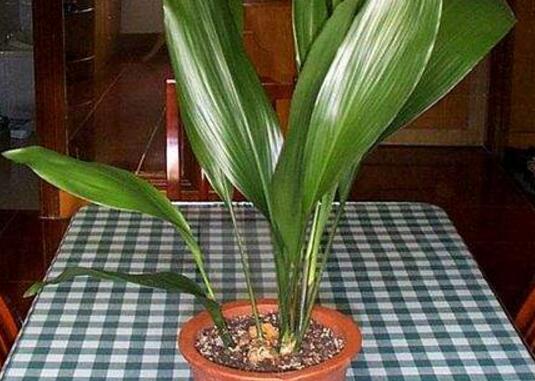
Because winter temperatures are rather low and summer temperatures are too high, the time for dividing is generally chosen in spring, that is, around February to March. This is also the time when repotting is needed, so the two can be done together.
2. Division method
Take the mother plant of the Aspidistra out of the flowerpot, use a tool to cut it vertically from the roots, dividing it into several clumps, with 3 plants per clump, and make sure each plant has 3-5 relatively robust leaves.
Soak the roots of the divided daughter plants in a 1500-fold chlorothalonil solution for 5 minutes, then take them out. This process disinfects the roots, can kill insect eggs and pathogens, and reduces the occurrence of pests and diseases after planting.
3. Potting up
Plant the air-dried daughter plants into new potting soil. Note that a 3 cm thick layer of base fertilizer should be placed at the bottom of the pot, and some foam or tiles should be placed at the drainage holes to increase drainage. After planting, water once, making sure the entire soil is thoroughly watered, then place it in a semi-shaded, ventilated place for care.
Should an Aspidistra use a large pot or a small pot
When dividing, the size of the flowerpot chosen depends on the height and growth condition of the plant. Generally, small pots are mainly used. Planting in a large pot requires a large amount of soil, so more water and fertilizer are needed when watering and fertilizing, making care more difficult than with a small pot, and it is also not conducive to growth. So do not choose a large pot to grow a small plant.
How to make an Aspidistra fill its pot
1. The growing medium must be chosen well
If you want an Aspidistra to fill its pot, the growing medium needs to use relatively high-quality soil. It can be made by mixing peat, perlite, and ceramsite in a ratio of 40%, 40%, and 20%, or it can be made using pond mud and leaf mold. Good soil conditions are the foundation for an Aspidistra to fill its pot.
2. Appropriate light
Neither let the light be too strong, nor let the Aspidistra lack light. Growing it in a bright place is best, so each person needs to place the Aspidistra in a suitable position according to the conditions in their own home.
How to divide and repot an Aspidistra
Time for dividing an Aspidistra
Aspidistra division can be carried out after the temperature warms up in spring, before the new buds have sprouted, in combination with repotting. Generally, it is done after the soil thaws in February to March.
Division method for Aspidistra
Take the mother plant out of the flowerpot, shake off the excess potting soil, and separate the tangled roots as much as possible.
Use a sharp knife to separate the plant, making sure each plant has a certain root system. Then prune the leaves, making sure each clump has 3-5 leaves, which helps survival.
Potting and disinfection for Aspidistra
Soak the divided small plants in a 1500-fold chlorothalonil solution for five minutes, then take them out and let them dry, after which they can be replanted. However, the soil should also be disinfected before planting.
Potting up an Aspidistra
Before planting, first place a 2-3 cm thick layer of coarse growing medium at the bottom of the pot as a drainage layer, then place the plant in. After potting, water thoroughly once, then place it in a shaded place for care.
Care after dividing an Aspidistra
After division, the root system is damaged to a certain extent, and its absorption capacity is also weakened. It takes about 3-4 weeks to recover, so before that, watering should be controlled to avoid root rot. However, after division, leaf growth is not greatly affected. In order to maintain the water balance of the leaves, it is necessary to mist the leaf surface 1-3 times a day. After division, fertilization is also not needed, and care should be taken that the sunlight is not too strong.
How to grow an Aspidistra? Cultivation methods and precautions for Aspidistra
Image: Aspidistra cultivation
[Common questions] How to grow an Aspidistra? Cultivation methods and precautions for Aspidistra
[Expert answer]
Propagation method: Use division propagation, which can be carried out in March in spring. Dig the large clump of plants out of the soil, gently shake off the old soil, and cut it along the direction of the rhizomes with a sharp knife, making sure each clump of rhizomes has 8-9 buds. Place the divided new Aspidistra plants in a shaded place to air-dry for half a day, and then they can be planted.
Production cycle: From planting the new plants to harvesting the finished product takes about 6 months. After that, finished products can be harvested successively. After about 3 years, the old plants should be renewed; at that time, the clumped Aspidistra can simply be divided and replanted.
Cultivation location: In northern China, it should be planted in the ground in a greenhouse; in the south, it can be planted in the open ground. The cultivation location should receive no less than 2 hours of direct sunlight per day.
Growing medium: A sandy loam rich in humus is preferable.
Planting: The planting density is 9-12 plants per sq m, and the seedlings should be planted at equal spacing.
Watering: Aspidistra likes moist soil, but note that the soil should not become waterlogged, otherwise the rhizomes of the Aspidistra are prone to rot.
Fertilizing: Before planting, fallen leaves can be applied as base fertilizer at an amount of 2 kg per sq m, and the base fertilizer should be evenly dug deep into the soil. During the vigorous growth stages in spring, summer, and autumn, apply a dilute fertilizer solution once a week as a top dressing. In winter, stop applying top dressing.
Light: Aspidistra grows well in a bright place without direct sunlight. A shade net can be used to shade it. During the high-temperature stages in summer and autumn, do not let the plant receive direct sunlight, otherwise irreversible yellow patches will appear on its leaves, slowing its growth rate and reducing its ornamental value.
Ventilation: During vigorous growth, maintaining appropriate ventilation in the environment is sufficient. Since Aspidistra grows slowly in winter, this operation can be omitted at that time.
Temperature: Aspidistra likes warmth and fears severe cold. The ambient temperature should be kept between 15-25°C, and the overwintering temperature should not be lower than 5°C.
Precautions:
1. During the growing season, Aspidistra should be watered sufficiently, keeping the potting soil consistently moist, and the leaves should be sprayed with water frequently to increase humidity, so as to facilitate budding and the growth of new leaves; after late autumn, the amount of watering can be appropriately reduced.
2. During the vigorous growth period in spring and summer, apply liquid fertilizer 1-2 times a month to ensure the leaves remain clear and bright. It can be cultivated year-round in a bright indoor space, but whether indoors or outdoors, it must not be placed in direct sunlight; even a short period of strong sunlight exposure may cause leaf scorch and reduce its ornamental value.
[Editor's comments] Many people are asking how to grow an Aspidistra. The above is the Aspidistra cultivation method and precautions shared with you by the editor of Diyi Nongjing. Now you know how to grow an Aspidistra, right? Friends who are interested can also get started. Growing one yourself is also a nice way to change your mood!