-

Licorice should not be stored for too long; the storage time of medicinal materials must be reasonably controlled
Licorice is generally stored as compressed bales wrapped in burlap, each weighing 50 kg, kept in a dry, ventilated place, with a safe moisture content of 12%-14% for the commodity. There are more than ten kinds of warehouse pests of licorice, including the coffee bean weevil, the brown mulberry borer, and the four-spotted chestnut borer. Fumigation with nitrogen or carbon dioxide for 514 hours can kill all adults and larvae, with no obvious change in the inner quality of licorice. Licorice is prone to mildew. If the air humidity is too high, mold spots or white and green mycelium easily appear on the surface of licorice. The following measures can be taken for prevention and control
-
Detailed Explanation of the Open-Field Cultivation Technique for Shiitake Mushrooms Using Substitute Materials
Recently, Gutian County in Fujian Province hosted the National Edible Fungi Technology Market. More than 700 people from research, production and management units as well as specialized household growers from 20 provinces, municipalities and autonomous regions gathered in Gutian. After visiting the county's field-cultivated shiitake mushrooms, everyone praised them without exception. Gutian County uses a new technique for open-field cultivation of shiitake mushrooms with substitute materials, and mushrooms emerge 70-80 days after inoculation. On average, every 100 kg of sawdust or cottonseed hulls can produce 8-12 kg of dried shiitake mushrooms, which is more than 10 times the per-unit yield of the old log cultivation method, and the production cycle has been shortened from the original more than two years to 10 months. The product's shape
-
How to choose materials for stump bonsai? Master these selection tips
Generally, plants with graceful forms, peculiar roots and trunks, brilliant flowers and fruits, strong sprouting ability, long lifespans, easy shaping, and strong resistance to adverse conditions are preferred. Plants suitable for stump bonsai are usually divided into three categories: conifers and cypresses, miscellaneous broadleaf trees, and flowering and fruiting trees. 1. Conifers and cypresses: Common excellent choices include five-needle pine, black pine, Buddhist pine, true pine, Japanese red pine, Huangshan pine, Chinese juniper, and creeping juniper. 2. Miscellaneous broadleaf trees: Materials vary from place to place. Common ones include Japanese bush cherry, Xiangfei bamboo, green-white bamboo, Buddha belly bamboo, serissa, boxwood, Chinese elm, trident maple, red maple, and banyan. These trees
-

What are the raw materials for organic fertilizer? Farm-made organic fertilizer vs. commercial organic fertilizer
In what ways do farm-made organic fertilizer and commercial organic fertilizer differ? Because organic materials differ in composition and in the nutrients they release upon decomposition, their application requires attention to the advantages and disadvantages of each organic material, making up for shortcomings by drawing on strengths, and making the most appropriate blending and application, which will achieve twice the result with half the effort
-
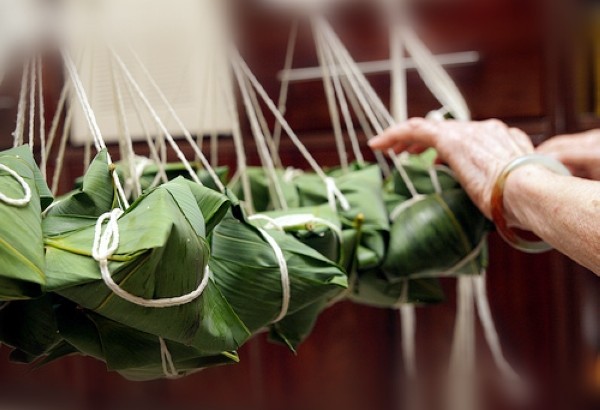
How should the most eco-friendly zongzi packaging be designed, and what eco-friendly packaging materials are there?
Zongzi - the most eco-friendly packaging design
-

Taichung World Flora Exposition's Forest House promotes domestic bamboo and wood materials, achieving a win-win for the environment and industry
To promote domestic bamboo and wood materials, the Taichung City Government invited the Forestry Bureau and the Experimental Forest Management Office of National Taiwan University to create a "Forest House" filled with the rustic fragrance of Taiwan's trees in the Houli Forest Park, allowing the public to experience the beauty of Taiwan's wood. The exhibition space was unveiled yesterday (...
-
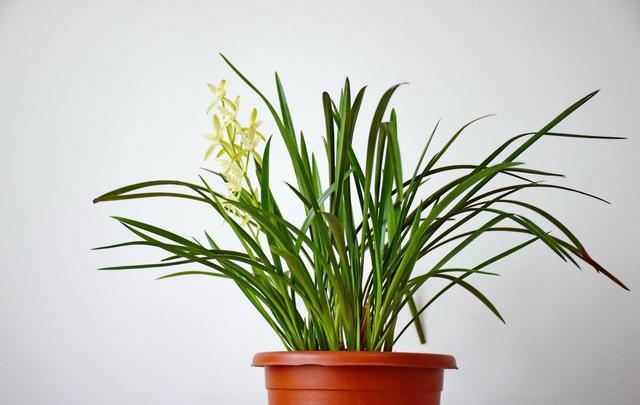
2 kinds of materials turn into flower soil, put a little in the pot, fertilizer effect lasts 200 days, flowers flourish
We usually keep some potted flowers at home or in the office, such as the common ones: pothos, spider plant, orchids, clivia, etc. For home gardening, it is not advisable to frequently use chemical fertilizers. The main fertilizers needed for growing flowers, such as nitrogen, phosphorus and potassium, can all be...
-
Add these 3 worthless materials when growing flowers, and any plant will thrive
Growing flowers has become more and more common as living standards and quality have improved. Nowadays, it seems almost every household keeps a few pots, but growing flowers is easy, while growing them well is truly difficult. Sometimes we not only need to improve our efforts in daily care work...
-
-
Put 4 kinds of materials worth next to nothing at the bottom of the flower pot, and any flower will grow more and more vigorously.
Pothos, spider plant, money tree, kalanchoe, clivia... I believe everyone has kept at least some of these flowers, right? With the improvement of living standards, flowers and green plants have entered the lives of the general public. Growing flowers, although it is a small part of life...
条件筛选