-

Method for Making Fermented Soil and Other Materials for Agaricus bisporus
At present, foreign factory-based mushroom production all uses peat with high saturated water content, good water-holding capacity and high porosity as the casing soil material, and the yield per unit area is relatively high. There are roughly five types of casing soil materials used in China, namely coarse and fine soil, mixed soil, river mud and rice husk soil, fine mud and rice husk soil, and fermented soil. Fine mud and rice husk soil and fermented soil are two casing soil materials developed according to China's current mushroom cultivation methods and rural conditions, with simple preparation and good casing soil effects. These two casing soil materials have relatively high saturated water content, good water-holding capacity and relatively large
-
Detailed Explanation of How to Make Mushroom Casing Materials
At present, foreign industrialized mushroom production all uses peat, which has high water content, good water-holding capacity, and large porosity, as the casing material. There are roughly five types of casing materials used in China, namely coarse and fine soil, mixed soil, river mud and rice chaff soil, fine mud and rice chaff soil, and fermented soil. Fine mud and rice chaff soil and fermented soil are two casing materials developed according to China's current mushroom cultivation methods and rural conditions, and they are simple to make and have good casing effects. These two casing materials have relatively high saturated water content, good water-holding capacity, and relatively large porosity, and contain
-
Detailed Explanation of the Open-Field Cultivation Technique for Shiitake Mushrooms Using Substitute Materials
Recently, Gutian County in Fujian Province hosted the National Edible Fungi Technology Market. More than 700 people from research, production and management units as well as specialized household growers from 20 provinces, municipalities and autonomous regions gathered in Gutian. After visiting the county's field-cultivated shiitake mushrooms, everyone praised them without exception. Gutian County uses a new technique for open-field cultivation of shiitake mushrooms with substitute materials, and mushrooms emerge 70-80 days after inoculation. On average, every 100 kg of sawdust or cottonseed hulls can produce 8-12 kg of dried shiitake mushrooms, which is more than 10 times the per-unit yield of the old log cultivation method, and the production cycle has been shortened from the original more than two years to 10 months. The product's shape
-
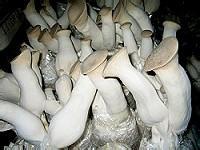
Advance preparation of raw materials is needed for winter and spring cultivation of king oyster mushrooms
King oyster mushroom (Pleurotus eryngii), also known as xuerong, is a high-quality large fleshy agaric. The king oyster mushroom has a thick, plump stalk, a crisp and tender texture, and a delicious flavor, and can be called the "king of oyster mushrooms." It is rich in nutrients and high in oligosaccharides, with effects on intestinal regulation and beauty. It is suitable for fresh preservation or drying and is highly favored by consumers...
-
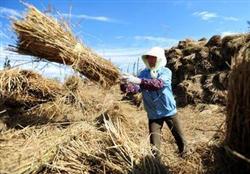
What raw materials can be used for growing straw mushrooms?
Straw mushroom prices are stable now, and you want to grow straw mushrooms but do not know what can be used as raw materials for straw mushroom cultivation? The raw materials for cultivating straw mushrooms are quite diverse, and nowadays the discarded fibers of many crops can be used to cultivate straw mushrooms. The usable materials from daily life are briefly introduced to mushroom growers as follows. 1. Rice straw. ...
条件筛选