-

How to source materials and cultivate Chinese juniper bonsai? A detailed guide to practical methods
Chinese juniper (Juniperus chinensis), native to China, has a slender, pointed tree form, cylindrical in shape, rising straight upward, with new branches growing around the trunk, resembling a green dragon coiled around a pillar, hence the name "dragon juniper." Its leaves are small and dense, emerald green, scale-like and alternately arranged, with spherical blue fruits that remain unchanged through the four seasons. It is a relatively superior and high-quality ornamental tree for parks and courtyards.
-
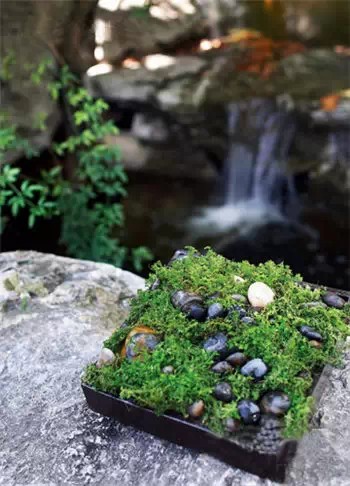
How to make a living bonsai in stone crevices? Materials and methods explained in detail
The tenacious life in the crevices of stones often moves us to tears. It is the restless wind that scatters seeds no one gathers to the ends of the earth. When they can no longer find soil, they place their last hope of life in this thin line of stone crevice. Although they can also share warmth from the sunlight
-
Identification Methods and Technical Key Points for Tea Plant Breeding Materials
Observe the traits of breeding materials, analyze the characteristics and features of various variant materials, select the superior and eliminate the inferior according to breeding objectives, and finally develop new varieties through comparative trials. The identification content is divided into 3 aspects: yield traits, quality traits and resistance. The yield traits of tea plants are mainly reflected in sprouting density and bud-leaf weight, growth speed, length of growth period, regeneration capacity after picking, and recovery capacity after suffering disasters or wounds; quality traits are mainly reflected in the chemical composition, color, pubescence,
-
-
Where do the materials for making bonsai come from? Pay attention to protecting natural plants
Since the day bonsai art was born, it has been inextricably bound to nature: first, the materials used in bonsai creation (tree stumps, stones, etc.) come from trees, flowers and grasses as well as mountain rocks in nature; second, what bonsai works display is the wonderful scenery of nature
-
What is the simplest way to make a ginkgo bonsai? Using natural materials is key
Ginkgo has uniquely shaped leaves like fans, and a tree form that is simple, ancient and elegant. Planted in a pot, it is especially favored by many bonsai enthusiasts for its plain naturalness and lush green appearance. Natural-style ginkgo bonsai is made from various natural ginkgo stumps, without any binding techniques, based on the natural form of the stump itself
-
How to Make a Redbud (Cercis) Bonsai: A Detailed Guide to Sourcing Materials and Styling Techniques
Redbud, also known as "mantiaohong" (full-branch red), is a deciduous shrub or small tree in the genus Cercis of the legume family (Fabaceae). The plant grows upright and clump-forming, reaching 3 m to 4 m in height. The trunk is grayish-brown, with the old bark splitting longitudinally, while young branches are smooth. The simple leaves are alternate, nearly round, 6 cm to 14 cm long, with pointed tips and deep heart-shaped bases, entire margins or with a transparent cuticle along the leaf edge
-
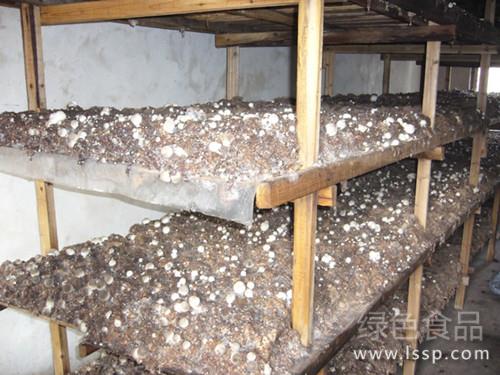
What raw materials are used for cultivating straw mushrooms? Comparative analysis of the advantages of each material
Many raw materials for straw mushroom cultivation: a comparison of the advantages of each
条件筛选