-
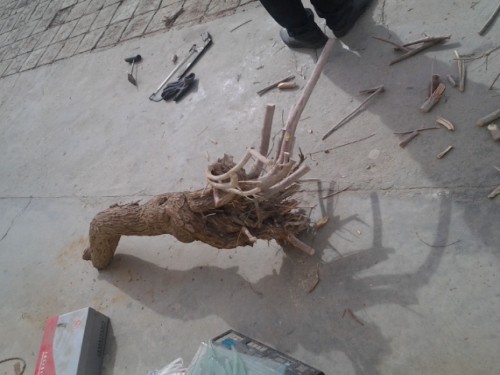
Detailed Explanation of Field Digging Techniques for Bonsai Stump Material
The classification of stump bonsai should include wild stumps and nursery-grown types. The former refers to bonsai made from dug-up wild stumps, whose main characteristic is aged and archaic simplicity; the latter refers to bonsai made from artificially cultivated seedlings, whose main characteristic is rigorous composition. The two must not be lumped together. To dig up tree stumps in the field, first do the preparatory work before digging.
-
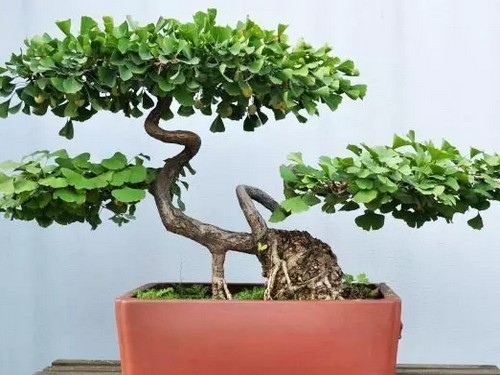
A Detailed Guide to Material Selection and Cultivation Methods for Ginkgo Bonsai
Ginkgo is a tree species with a remarkably long history of survival. Since ancient times in China, it has been regarded as an excellent material for bonsai. Ginkgo bonsai types can be divided into three kinds: foliage-appreciation, fruit-appreciation, and trunk-appreciation. To make ginkgo bonsai, one should select root-sucker seedlings from beneath large ginkgo trees and stalactite branches of ginkgo trees.
-
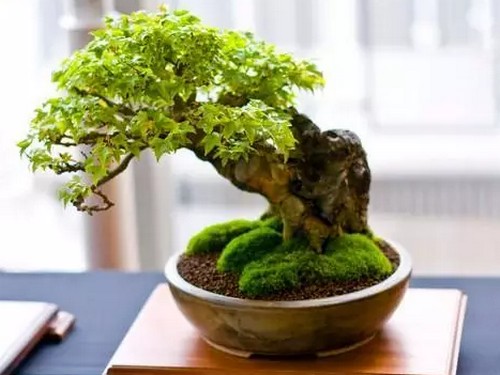
How to collect and cultivate material for a trident maple bonsai?
In the past, when cultivating trident maple material, I would generally let it grow freely in the ground for 5 years. During those 5 years, I would not prune the roots at all. However, I found that after 5 years, the roots had grown thick and long, making them very difficult to dig out of the ground, and the root flare had not developed ideally. Now I dig them up every year and prune the roots.
-

What are the methods for obtaining Syzygium buxifolium bonsai stock material?
The Syzygium buxifolium plant is relatively short, with dense, tough, and pliable branches, small leaves that are deep green and glossy, and it stays verdant through all four seasons. In early summer it blooms with small pink pom-pom-like flowers, set off by melon-seed-shaped green leaves, giving the tree an extremely graceful form. Old wild stumps, after cultivation and shaping, can have their horizontal branches spread flat with clearly defined layers, like piled-up layers of clouds, ruggedly elegant and antique.
-
How to source materials and cultivate Chinese juniper bonsai? A detailed guide to practical methods
Chinese juniper (Juniperus chinensis), native to China, has a slender, pointed tree form, cylindrical in shape, rising straight upward, with new branches growing around the trunk, resembling a green dragon coiled around a pillar, hence the name "dragon juniper." Its leaves are small and dense, emerald green, scale-like and alternately arranged, with spherical blue fruits that remain unchanged through the four seasons. It is a relatively superior and high-quality ornamental tree for parks and courtyards.
-
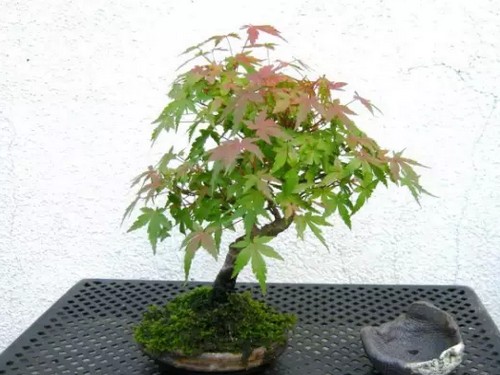
How to source material for a Japanese maple (Acer palmatum) bonsai
Acer palmatum is native to the provinces in the middle and lower reaches of the Yangtze River basin in China, and is also found in Shandong and Zhejiang. It is distributed in Japan as well. It is a common ornamental tree species in gardens, and also grows wild in mountainous areas. It prefers light, and a warm, humid climate; it is not very cold-tolerant, and thrives in humus-rich, fertile, moist acidic or neutral soil. For pot cultivation, avoid the western sun and direct sunlight.
-
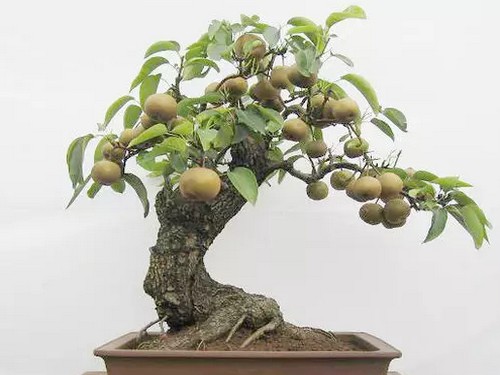
What are the methods for obtaining material for pear bonsai?
Pear trees are suitable for making many different styles of bonsai, such as formal upright, slanting, curved trunk, double trunk, forest, cascade, and semi-cascade. Pear trees have well-developed root systems and can be raised as needed to enhance the bonsai's sense of age and antiquity. There are many suitable rootstocks for pears, such as Ussurian pear (Pyrus ussuriensis) and birchleaf pear (Pyrus betulifolia), which can be propagated from seed
-
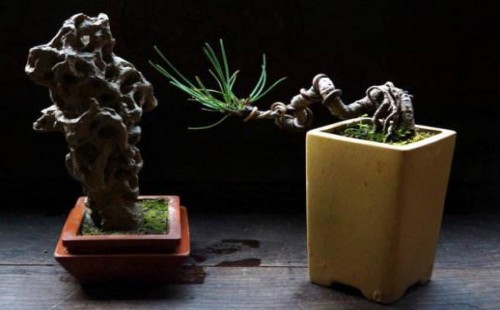
What Kind of Wire Is Best for Bonsai Shaping? A Full Breakdown of Material Selection Key Points
There are quite a few shaping techniques for bonsai trees, and different shaping techniques often need to be carried out with different tools or materials. Among them, the most commonly used is wire, but considering that ordinary wire wrapped around bark will oxidize, corrode and so on over time
-
Common plant viruses engineered into nanoscale agricultural materials that help crops grow
To reduce the harm caused by pests and diseases, farmers apply pesticides appropriately in accordance with the crop growth cycle. Since most pesticides are non-specific, improper application may destroy the food web around farmland and thereby affect the balance of the surrounding ecosystem. As environmental awareness
-
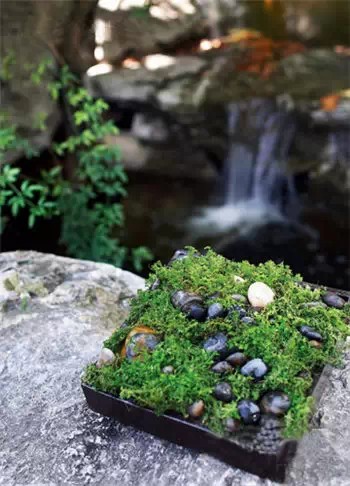
How to make a living bonsai in stone crevices? Materials and methods explained in detail
The tenacious life in the crevices of stones often moves us to tears. It is the restless wind that scatters seeds no one gathers to the ends of the earth. When they can no longer find soil, they place their last hope of life in this thin line of stone crevice. Although they can also share warmth from the sunlight
条件筛选