-
How to Tell the Authenticity and Quality of Medicinal Materials Such as Bird's Nest, Ejiao Cake and Ginseng
For consumers, the most commonly encountered traditional Chinese medicinal materials are precious ones like ginseng and bird's nest. 1. Bird's nest thread-pulling method: Bird's nest is an excellent tonic; high-quality bird's nest...
-
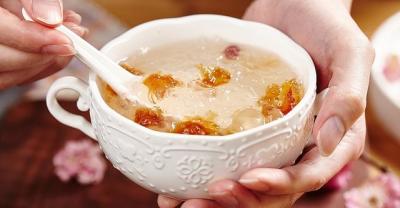
Pangolins are a precious animal-based medicinal material. How much do you know about them?
Pangolin is a traditional Chinese medicine containing multiple amino acids and trace elements, and it was widely used by people in ancient times. However, because pangolins are now...
-

Cultivation Methods and Technical Key Points for Gastrodia Seed Material
Gastrodia cannot nourish itself; it must rely on a symbiotic relationship with Armillaria mellea (honey fungus) to obtain nutrients for reproduction and growth. The parasitic Armillaria mellea can grow on about 200 species of tree trees, especially broadleaf forests. Generally, Armillaria mellea grows from the roots of cut trees, bamboo, or burned trees and bamboo, as well as dead trees fallen in the forest. Armillaria mellea must grow vigorously under certain moist conditions; soil moisture content should be no less than 45%-50%, and relative air humidity of 75%-80% is suitable. Armillaria mellea can also be cultured artificially, but the spawn must first be
-
Detailed Guide to Low-Altitude Substitute-Material Cultivation of Gastrodia (Part Two)
After 18°C-22°C cultivation for 2-3 months, the rhizomorphs of Armillaria mellea will have spread throughout the entire corncob material, and it can then be used for Gastrodia cultivation. If there is not enough Armillaria-infected material, Armillaria can be expanded and cultivated further. This method involves adding uncolonized corncobs to corncobs that have already been colonized by Armillaria, at a ratio of 50% each, with the same operation method as above, and finally covering with soil to let the fungus grow. This method is simple and easy to carry out and does not require mother spawn. As long as it is not affected by high temperatures in the environment or by pests and diseases that cause Armillaria to degenerate or mutate, it can be used in long-term cycles. Five
-
Detailed Explanation of the Low-Altitude Substitute-Material Cultivation Method for Gastrodia elata (Part One)
Gastrodia elata is a rare and precious traditional Chinese medicine. In the past it was gathered from the wild, growing in mountain forests above 500 m in altitude, and was very scarce and difficult to dig up; today it faces extinction. The development of artificial cultivation of Gastrodia elata has saved this precious species, but technically it still cannot break away from cultivation in high-altitude areas, and the raw material cannot be separated from log segments (oak). This makes Gastrodia elata cultivation greatly limited by region. Second, it is limited by the felling of forest resources. These two major drawbacks have long plagued the development of Gastrodia elata, and it has never been possible to achieve modern
-
Imitative wild cultivation technology for Gastrodia elata: efficient and material-saving
Terminology explained: ① From wild Gastrodia elata dug up over many years, it is not hard to find that the populations with large tubers, dense growth and high yield share a common set of features, summarized as: thick leaf-litter layer with tubers breaking through the ground (exposed above the surface), loose soil so air is not blocked, seven parts shade with little sunlight, and moisture suited to each of the four seasons. The inspiration for artificial imitative wild planting of Gastrodia is shallow beds, thin soil and thick mulch. ② High efficiency: imitative wild Gastrodia intercropped in the same bed with sweet potato gave a test result in which the total yield of Gastrodia was twice that of sweet potato, hence
-
Detailed Explanation of the Key Technical Points of the Fixed Bacterial Material Companion Planting Method for Gastrodia elata
The fixed bacterial material companion planting method for Gastrodia elata, also called the fixed material cultivation method, uses pits or boxes to cultivate 2 to 3 layers of bacterial material before planting the gastrodia. When planting, first remove the covering from the pit or box, take out the upper bacterial sticks layer by layer, leave the bottom layer of bacterial sticks undisturbed, then gently pull out the middle bacterial sticks, leaving one and skipping one, replace them with new wooden sticks, and plant the seed gastrodia close against both sides and both ends of the bacterial sticks. The spacing for planting large white gastrodia is 20 to 25 cm, for medium white gastrodia 7 to 9 cm, for small white gastrodia 4 to 6 cm, and rice gastrodia is broadcast scattered. Be careful to place the gastrodia seed close to where the fungal strands of the seedlings are dense. After planting the gastrodia, cover with soil
-
How to calculate material quantities, seed purchase quantities and investment for first-time Gastrodia elata planting
1. Sexual reproduction: to plant 60 sq m, you need broadleaf tree branches (fresh) 3000-4000 jin (400 yuan), broadleaf tree leaves 100 jin (20 yuan), Armillaria mellea spawn 100 bottles (300 yuan), germination fungus 100 bottles (800 yuan), Jianma tubers 10 jin (180 yuan), total investment 1700 yuan. 2. Asexual reproduction: to plant 60 sq m, you need broadleaf tree branches (fresh) 3000-4000 jin (400 yuan), broadleaf tree leaves 100 jin (20 yuan), Armillaria mellea spawn 100 bottles (30
-
Material-free Gastrodia Cultivation Technology Successfully Developed in Guizhou
The fragile ecological environment of western China urgently needs protection, yet impoverished westerners urgently need to cut trees to cultivate Gastrodia to escape poverty, thus environmental protection and moderate prosperity have become a difficult contradiction. Now, with the maturing and promotion of the material-free Gastrodia cultivation technology by Yunlong Gastrodia Development Co., Ltd. in Dafang County, Guizhou Province, this contradiction has been readily resolved. Dafang County is located in the northwest of Guizhou Province. Due to its unique geographical environment and climatic conditions, the Gastrodia produced in Dafang is large in size, transparent in texture, and its gastrodin content and beneficial trace elements such as molybdenum, chromium, rubidium, cobalt, and copper are far
-
Licorice should not be stored for too long; the storage time of medicinal materials must be reasonably controlled
Licorice is generally stored as compressed bales wrapped in burlap, each weighing 50 kg, kept in a dry, ventilated place, with a safe moisture content of 12%-14% for the commodity. There are more than ten kinds of warehouse pests of licorice, including the coffee bean weevil, the brown mulberry borer, and the four-spotted chestnut borer. Fumigation with nitrogen or carbon dioxide for 514 hours can kill all adults and larvae, with no obvious change in the inner quality of licorice. Licorice is prone to mildew. If the air humidity is too high, mold spots or white and green mycelium easily appear on the surface of licorice. The following measures can be taken for prevention and control
条件筛选