-

Modern logistics system for Chinese medicinal materials expected to be completed by 2020
This newspaper, Beijing, April 6 dispatch, reporter Li Yuyang reports: The General Office of the Ministry of Commerce recently issued the "Notice on Guiding Opinions on Accelerating the Construction of a Modern Logistics System for Chinese Medicinal Materials," proposing that by 2020, an integrated modern logistics system for Chinese medicinal materials covering harvesting, origin processing, packaging, warehousing and transportation will be initially formed
-
Technical material prices rise later, environmental pressure is the main driver
As environmental awareness strengthens, ecological and environmental protection is being taken more and more seriously. At this year's Two Sessions it even became a hot topic. Recently, with the introduction of the new Environmental Protection Law, the pesticide market is quietly undergoing changes. Last week, domestic chlorpyrifos technical material prices were higher than before the trade show
-
Grain-to-Feed Policy Boosts the Feed Industry, May Change the Raw Material Supply Landscape
In the view of industry insiders, judging from the development cycle of China's livestock and feed industry, the domestic livestock industry has already passed its period of rapid growth around 2005 and entered a mature stage. However, within the next 5 years, the domestic feed industry can still enjoy growth brought by economies of scale.
-
Typical Cases of Fake and Inferior Agricultural Materials: The Ministry of Agriculture Announces 13 Cases
The reporter learned from the Ministry of Agriculture that in 2014, agricultural departments across the country earnestly fulfilled their leading responsibility for cracking down on fake agricultural materials, and together with public security and other departments severely cracked down on illegal acts of producing and selling fake and inferior agricultural materials, effectively safeguarding farmers' lawful rights and interests and effectively guaranteeing that year's grain harvest and the quality and safety of agricultural products
-
Efforts to Crack Down on Fake Agricultural Materials and Strengthen Oversight Are Further Intensified
The special campaign to crack down on fake agricultural materials has been carried out for 14 consecutive years, with intensifying rectification efforts, a continuously purified agricultural materials market, and a quality situation that is stabilizing and improving. But we must also clearly see that the production and sale of fake agricultural materials has not yet been completely eradicated, incidents that cheat and harm farmers still occur from time to time, and many problems remain in the agricultural materials market.
-
How Is the Quality of Chinese Medicinal Materials Guaranteed? Modern Logistics to the Rescue
At the start of 2015, the Ministry of Commerce issued the "Notice on Guiding Opinions for Accelerating the Construction of a Modern Logistics System for Chinese Medicinal Materials," proposing to accelerate the construction of a modern logistics system for Chinese medicinal materials from 6 aspects, striving to initially form an integrated modern logistics system for Chinese medicinal materials covering harvesting, origin processing, packaging, warehousing
-
The modern logistics system for traditional Chinese medicinal materials will be initially established by the Ministry of Commerce by 2020
Recently, the General Office of the Ministry of Commerce issued the "Notice on Guiding Opinions on Accelerating the Construction of the Modern Logistics System for Traditional Chinese Medicinal Materials" (Shang Ban Zhi Han [2014] No. 809, hereinafter referred to as the "Notice"). The "Notice" requires local commerce authorities to promote the establishment of a modern logistics system for traditional Chinese medicinal materials
-
The road to traceability for traditional Chinese medicinal materials is long and arduous
Food and drug safety is closely tied to everyone's daily life and is a major issue of public livelihood and public safety. In recent years, as the contradiction between the output of traditional Chinese medicinal materials and their supply and marketing has intensified, the prices of traditional Chinese medicines have fluctuated considerably, and cases of counterfeit and shoddy products in production and circulation have occurred from time to time.
-
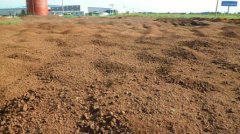
What are the raw materials for organic fertilizer? Farm-made organic fertilizer vs. commercial organic fertilizer
In what ways do farm-made organic fertilizer and commercial organic fertilizer differ? Because organic materials differ in composition and in the nutrients they release upon decomposition, their application requires attention to the advantages and disadvantages of each organic material, making up for shortcomings by drawing on strengths, and making the most appropriate blending and application, which will achieve twice the result with half the effort
-
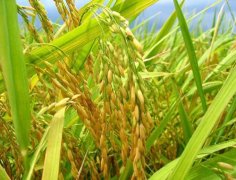
Four Key Points of Rice Seedling Cultivation Technology and Materials Needed for the Seedling Soil Formula
Rice is now our most important food, it is our staple food, so how much do you know about rice cultivation methods? Let's first take a look at the rice seedling cultivation methods below! Seedling cultivation methods 1. Seedbed soil Use one part wood shaving compost (each box weighs about 520 grams, 125 kg per hectare), add one part crushed rice husk (each box weighs about 150 grams, 36 kg per hectare), add one part soil (each box weighs about 800 grams, 192 kg per hectare), that is, a 1:1:1 volume ratio as the seedling cultivation material. The mixing method is carried out with a mixing mixer, or one part wood shaving compost and one part crushed rice husk are evenly spread on the upper layer of the soil pile, then mixed into the soil with a tractor, and finally screened with an electric soil crushing and soil sieving dual-purpose machine to obtain uniform seedbed soil. For covering soil, mix one part crushed rice husk with one part soil (that is, 1:1) for covering. The total soil amount including covering soil, calculated at 300 grams per box, is 264 kg per hectare. Compared with the current 432 kg of seedling soil mixed with rice husk and soil, this saves 168 kg per hectare (38.9%).
条件筛选