-
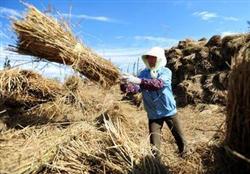
What raw materials can be used for growing straw mushrooms?
Straw mushroom prices are stable now, and you want to grow straw mushrooms but do not know what can be used as raw materials for straw mushroom cultivation? The raw materials for cultivating straw mushrooms are quite diverse, and nowadays the discarded fibers of many crops can be used to cultivate straw mushrooms. The usable materials from daily life are briefly introduced to mushroom growers as follows. 1. Rice straw. ...
-
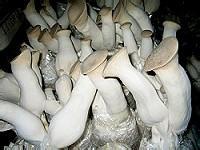
Advance preparation of raw materials is needed for winter and spring cultivation of king oyster mushrooms
King oyster mushroom (Pleurotus eryngii), also known as xuerong, is a high-quality large fleshy agaric. The king oyster mushroom has a thick, plump stalk, a crisp and tender texture, and a delicious flavor, and can be called the "king of oyster mushrooms." It is rich in nutrients and high in oligosaccharides, with effects on intestinal regulation and beauty. It is suitable for fresh preservation or drying and is highly favored by consumers...
-
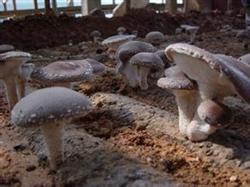
Analysis of the Concept of Disease- and Pest-Free Substitute-Material Shiitake and New Cultivation Techniques
The large-cup mushroom, also known as pig-stomach mushroom, has fruiting bodies that grow in clusters, cup-shaped or shallow funnel-shaped, pale yellow, with thick flesh and a thick stalk, crisp and tender and delicious, and rich in nutrients. Under natural conditions, the fruiting bodies appear from May to October, and it has the characteristics of both wood-rotting and soil-borne growth. Its cultivation essentials are briefly introduced as follows: 1. Seasonal arrangement: large-cup mushroom fruiting...
-
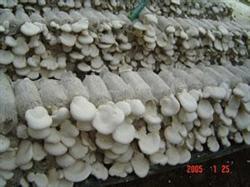
The raw material ratio for white lingzhi mushroom cultivation must be scientific and reasonable
The white lingzhi mushroom (Pleurotus nebrodensis) is an emerging mushroom type developed in recent years. Because its history of development is relatively short, many problems still exist in cultivation techniques, especially since total yield has been difficult to increase. Some growers achieve a biological conversion rate of less than 20% when cultivating white lingzhi mushrooms, and even when prices are relatively high, the economic benefit is still quite ordinary. The author...
-
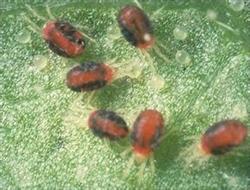
Eight Detailed Methods for Controlling Mites in Substitute-Material Wood Ear Mushrooms
Rapeseed cake powder trap method: take an appropriate amount of rapeseed (0,-5025.00,-100.00%) cake, grind it into powder, put it in a hot wok, and stir-fry over low heat until the powder gives off a rich oil fragrance, then remove from the wok. On the surface of the growing substrate or bed where the mushroom mites are causing damage, cover with a wet cloth, then lay a piece of gauze on top of the wet cloth, sprinkle the fragrant rapeseed cake powder onto the gauze, and wait...
-
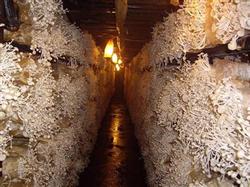
Detailed Explanation of New Technology for Raw Material Cultivation of Enoki Mushroom in Greenhouses
I. Morphological Characteristics The fruiting bodies grow in clusters. The cap diameter is 2-15 cm, hemispherical, with the margin incurved, later gradually expanding to flat. The stipe is straight, 2-13 cm long, 2-8 cm in diameter, roughly equal in thickness from top to bottom. The stipe is solid in the early stage and hollow in the later stage. There are 2 types of varieties, white and yellow. The white type is suitable for processing...
-

Detailed Explanation of Key Techniques for Raw-Material Cultivation of Winter Mushroom
Winter mushroom, also known as enoki mushroom, is a type of fungus that can grow in the harsh winter season. The fruiting bodies of the winter mushroom are small and attractive, and rich in nutrients. The winter mushroom is a premium edible fungus, but its spawn production and cultivation are not complicated. At present, cooked-material cultivation is mostly adopted in China. To save energy and reduce and simplify the procedures of high-pressure or low-pressure steaming of the substrate, relevant experts have achieved complete success through long-term cultivation experiments with raw materials. The new method for raw-material cultivation of winter mushroom is briefly introduced below. I. Cultivation and Sowing Time. The winter mushroom is a low-temperature fungus, and the fruiting temperature is mostly between 5 and 15 degrees C,
-
Causes and Control Techniques of Rotting in Substitute-Material Shiitake Mushroom Logs
In recent years, varying degrees of log rotting (i.e., rotting and disintegration of logs during the spawn-running period) have occurred in some substitute-material shiitake mushroom production areas, causing waste of resources and economic losses for mushroom growers, and in some areas it has seriously threatened the development of the shiitake mushroom industry. For example, in Qingyuan County, the log rotting rates in 1999 and 2003 reached 17% and 31% respectively, with some individual growers exceeding 50%, resulting in severe losses. In response, we have conducted dedicated investigations and research since 1997, and have preliminarily identified the causes of log rotting and its control techniques. 1. Causes of log rotting
-
Detailed Explanation of Key Points for Lightweight Cultivation Technology of Substitute-material Shiitake Mushrooms
Since the 1990s, the substitute-material flower shiitake cultivation technology successfully researched by the Qingyuan County Edible Fungi Research Center has been rapidly promoted and applied nationwide, making major contributions to poverty alleviation and prosperity in rural areas and to the transformation of shiitake production from quantity-oriented to quality-oriented. However, in substitute-material shiitake production, processes such as substrate log sterilization, inoculation operations, and manual bag cutting require large labor inputs, and problems such as low substrate log success rates, uneven fruiting, and deformed fruiting bodies have long constrained the development of shiitake production, especially creating major obstacles for intensive production. For this reason, our
-
Detailed Explanation of the Open-Field Cultivation Technique for Shiitake Mushrooms Using Substitute Materials
Recently, Gutian County in Fujian Province hosted the National Edible Fungi Technology Market. More than 700 people from research, production and management units as well as specialized household growers from 20 provinces, municipalities and autonomous regions gathered in Gutian. After visiting the county's field-cultivated shiitake mushrooms, everyone praised them without exception. Gutian County uses a new technique for open-field cultivation of shiitake mushrooms with substitute materials, and mushrooms emerge 70-80 days after inoculation. On average, every 100 kg of sawdust or cottonseed hulls can produce 8-12 kg of dried shiitake mushrooms, which is more than 10 times the per-unit yield of the old log cultivation method, and the production cycle has been shortened from the original more than two years to 10 months. The product's shape
条件筛选