-
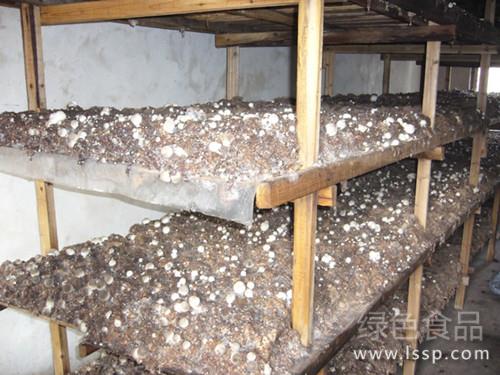
What raw materials are used for cultivating straw mushrooms? Comparative analysis of the advantages of each material
Many raw materials for straw mushroom cultivation: a comparison of the advantages of each
-

A Detailed Guide to Making Landscape Bonsai: Material Selection, Layout, Shaping and Plant Pairing
Rock Material Selection: Landscape bonsai is a scene formed by arranging and combining mountains, rocks, grass and trees in a pot. Rock material is the main material for creating landscape bonsai. There are many kinds of rocks, most of which are mined from nature, and their texture, color and crack patterns all have a natural essence. When selecting materials
-
How to Make a Redbud (Cercis) Bonsai: A Detailed Guide to Sourcing Materials and Styling Techniques
Redbud, also known as "mantiaohong" (full-branch red), is a deciduous shrub or small tree in the genus Cercis of the legume family (Fabaceae). The plant grows upright and clump-forming, reaching 3 m to 4 m in height. The trunk is grayish-brown, with the old bark splitting longitudinally, while young branches are smooth. The simple leaves are alternate, nearly round, 6 cm to 14 cm long, with pointed tips and deep heart-shaped bases, entire margins or with a transparent cuticle along the leaf edge
-
Methods for Making Sago Palm Bonsai: A Detailed Guide to Material Selection and Shaping Techniques
When growing potted flowers, plants, and trees at home, you need to consider both their decorative effect and their practical value. The sago palm (cycad) is very common, whether in parks or residential area landscaping. Today I will introduce to you: how to make a sago palm bonsai! (1) Material selection. Sago palms are usually propagated by sowing seeds, dividing offsets, or burying cuttings.
-
What is the simplest way to make a ginkgo bonsai? Using natural materials is key
Ginkgo has uniquely shaped leaves like fans, and a tree form that is simple, ancient and elegant. Planted in a pot, it is especially favored by many bonsai enthusiasts for its plain naturalness and lush green appearance. Natural-style ginkgo bonsai is made from various natural ginkgo stumps, without any binding techniques, based on the natural form of the stump itself
-
Where do the materials for making bonsai come from? Pay attention to protecting natural plants
Since the day bonsai art was born, it has been inextricably bound to nature: first, the materials used in bonsai creation (tree stumps, stones, etc.) come from trees, flowers and grasses as well as mountain rocks in nature; second, what bonsai works display is the wonderful scenery of nature
-
A Detailed Explanation of the Artistic Characteristics, Material Selection Methods and Styling Techniques of Tongling Penjing
:Tongling penjing mostly draws its materials from the mountains and countryside of southern Anhui, absorbing the spiritual essence of Huangshan and Jiuhua Mountain, creating naturally born wonders, shifting sky and settling earth with no school or sect. In styling techniques, it should both inherit the excellent techniques of Hui-school penjing and broadly adopt the strengths of many schools, learning from nature, developing its own unique style and forming a system of its own - this is the direction of penjing development in our country
-

How do you tell a raw stump from a cultivated stump? A must-read for beginners buying bonsai stump material
When beginners make bonsai, the most important thing is choosing the plant stump material. Cultivated stumps survive more easily than raw stumps. But many beginners cannot tell whether a bonsai is a raw stump or a cultivated stump. Let's take a look together below.
-
Identification Methods and Technical Key Points for Tea Plant Breeding Materials
Observe the traits of breeding materials, analyze the characteristics and features of various variant materials, select the superior and eliminate the inferior according to breeding objectives, and finally develop new varieties through comparative trials. The identification content is divided into 3 aspects: yield traits, quality traits and resistance. The yield traits of tea plants are mainly reflected in sprouting density and bud-leaf weight, growth speed, length of growth period, regeneration capacity after picking, and recovery capacity after suffering disasters or wounds; quality traits are mainly reflected in the chemical composition, color, pubescence,
-

Which material is better for dental implants?
A dental implant is a new type of technology; it is not actually growing teeth, but implanting artificial teeth made from various metals or ceramics. For this kind of artificial tooth...
条件筛选