-

Spider Plant Care Methods and Daily Maintenance Tips
Spider plant is a perennial evergreen herbaceous flowering plant with a rosette root system. It has diverse forms and is also highly shade-tolerant and easy to manage. It is often used as a hanging potted plant for indoor decoration or garden landscaping. Its management should master the following points: 1. Temperature regulation. Spider plant prefers a warm and humid climate and is not cold-tolerant. It grows fastest at 20-24°C, stops growing above 30°C, and its leaves tend to turn yellow and dry at the tips. Therefore, in summer, take measures to prevent heat and lower the temperature, and pay attention to ventilation. In winter, it should be cultivated in a greenhouse or indoor shelter, with an overwintering temperature of 10°C being suitable, and not lower than 5°C. 2. Light
-
American Cocker Spaniel Care Guide and Daily Maintenance Tips
In the diet of the American Cocker Spaniel, the supply of meat should be greater than for other dog breeds, generally requiring 250-350 grams of meat per day, plus an equal amount of dry vegetarian food and biscuits, along with an appropriate amount of drinking water. In daily management, attention should be paid to its activity level, because it was originally a hunting dog that lived in the wild. Owners of this dog should ideally take it out for walks 2-3 times a day. Generally, you can take it out for a walk after getting up in the morning, and then take it out again in the evening or afternoon. If it is kept
-
A Detailed Guide to Post-Bloom Care Methods and Key Maintenance Points for Phalaenopsis Orchids
Post-bloom care for Phalaenopsis orchids is extremely important, as it has a direct impact on surviving the summer safely and blooming the following year. After years of practice, the author has summarized a set of post-bloom care methods, presented below: 1. Removing the flower spike: After all the flowers of the Phalaenopsis have faded, the flower spike should be promptly cut off from the base to reduce nutrient consumption. Some people keep the flower spike to let it bloom a second time; this method is highly inadvisable. This is because the probability of a second bloom is not high, and even if it does bloom, the quality is poor, with small flowers and few in number, and Phalaenopsis that bloom a second time have poor flowering quality the following year
-
How to carry out maintenance and management of large spruce saplings after transplanting
Large spruce saplings over 40 years old have weak regeneration capacity after transplanting. To ensure their survival, maintenance and management of transplanted large spruce saplings is especially important. As the taste of urban construction keeps improving, the scale and grade of urban greening and beautification also rise accordingly, requiring the greening and beautification effect to be shown within a relatively short time, so a considerable number of tall trees need to be transplanted. Hebei Saihanba Mechanical Forest Farm, as the largest larch timber forest base in North China, also shoulders the mission of windbreak, sand fixation and water conservation, and for many years has provided
-
Never neglect agricultural machinery maintenance after the wheat harvest
Before the combine harvester goes out to the field, service the machine well so that it stays in good technical condition. Then it will have fewer breakdowns in use, run stably, reduce failures, raise work efficiency and extend the machine's service life. 1. Self-propelled combine harvesters (l) Add lubricating oil to each lubrication point every day as specified. (2) After a period of use, tighten the front wheel and rear wheel nuts; check and adjust the tension of all V-belts; check and adjust all drive chains; when the indicator light comes on, clean the dry air filter; clean
-
Timely Maintenance and Repair of Agricultural Machinery After Wheat Harvest
Combine harvesters should be well maintained before heading to the field, so that they stay in good technical condition, run with fewer breakdowns, perform reliably, reduce faults, improve work efficiency, and extend service life. 1. Self-propelled combine harvesters (l) Add lubricating oil to each lubrication point daily as specified. (2) After a period of use, tighten the front wheel and rear wheel nuts; check and adjust the tension of all V-belts; check and adjust all drive chains; when the indicator light comes on, clean the dry air filter; clean the rotating wind hood and radiator; check the coolant level and top it up; check and clean the water collector; check the fuel filter, drain the accumulated water and sediment, clean the hydraulic oil tank filler port and check the oil level. Park the combine harvester on level ground, check the engine oil in the oil pan, and add oil as needed; tighten the grain unloading auger wire rope; clean the hydraulic drive oil tank filler port and check the oil level. If necessary, clean the cab filter. (3) After one quarter of use, replace the fuel filter element and replace the engine oil filter. Check the specific gravity of the battery electrolyte, and charge or top up with distilled water as needed. Check the coolant level and top it up. Clean the fuel transfer pump, check and adjust the traveling clutch clearance, check and adjust the foot brake, and adjust the hand brake cable.
-
Maintenance Methods and Storage Key Points for Cotton Seeders
During the use of agricultural machinery, due to natural and human factors, the performance of parts and components will degrade or be lost. Therefore, the technical maintenance of agricultural machinery is extremely important. Correct maintenance and storage can greatly increase the service life of agricultural machinery, avoid premature wear of parts, and keep the machinery in good technical condition. Through the promotion of 514,000 mu of machine-picked cotton in Shawan County this year, the author has summarized some key points for doing a good job in the maintenance and storage of cotton seeders. The maintenance of cotton seeders is divided into three types of maintenance: pre-operation maintenance, in-operation maintenance, and post-operation
-
Jasmine: Home Care Methods and Maintenance Tips
Jasmine is a perennial flowering plant in the Oleaceae family, with strong adaptability, easy management, and a long blooming period, making it especially suitable for home cultivation. There are two common types: single-petaled and double-petaled flowers. Although single-petaled flowers are not as attractive as double-petaled ones, they have a strong fragrance and their cuttings root easily. It can bloom from June to November, and in northern regions it must overwinter indoors. Jasmine is a natural indoor air freshener; the essence extracted from its flowers is an important source for cosmetics, and it is an essential ingredient for scenting jasmine tea and scented tea. Its leaves can also be used as medicine, having the effects of clearing heat and relieving external symptoms, and promoting diuresis; the roots are toxic. Its place of origin is
-
Geranium Winter Care Methods and Maintenance Tips
Geraniums like warmth and fear cold, so in winter special attention should be paid to cold and frost protection. When growing geraniums in northern regions, the potted plants should be moved indoors when Frost's Descent arrives, placed by a sunny window so they receive sufficient light. If light is insufficient, the plants are prone to leggy growth, which affects flower bud formation, and even flower buds that have already formed may wither due to lack of light. If in the south, the potted plants should also be moved to a wind-sheltered, warm, sunny spot after the Start of Winter, which makes it easier for the potted flowers to get more sun and also helps them avoid wind and cold. Indoor temperatures should be maintained at 15°C to 20
-
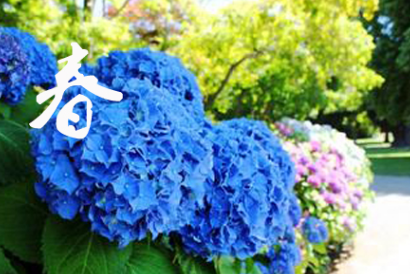
Hydrangea Four-Season Care and Maintenance Methods and Cut Flower Preservation Tips
The hydrangea has densely spreading branches and leaves, with fleshy roots, and strong adaptability to the environment. It can be planted in home courtyards and can also be grown as a potted plant to beautify balconies. Hydrangea (bigleaf hydrangea) four-season care and maintenance. Hydrangea prefers a shady and humid environment and is not cold-tolerant. Grown in scorching heat and direct sunlight, the leaves become scorched, withered, and yellow.
条件筛选