Hydrangea Four-Season Care and Maintenance Methods and Cut Flower Preservation Tips
The hydrangea has densely spreading branches and leaves, with fleshy roots, and strong adaptability to the environment. It can be planted in home courtyards and can also be grown as a potted plant to beautify balconies.
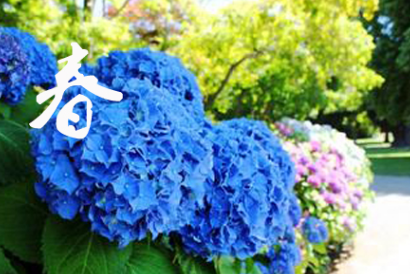
Hydrangea (bigleaf hydrangea) four-season care and maintenance
Hydrangea prefers a shady and humid environment and is not cold-tolerant. Grown in scorching heat and direct sunlight, the leaves become scorched, withered, and yellow. Hydrangeas cultivated in open ground or maintained on open-air balconies are prone to frost damage and death in autumn and winter. If overwintered in a greenhouse, they can remain evergreen. In short, each season has different care points. Let us look at them one by one:
1. Hydrangea spring care
In spring, the plant has just awakened, and it is necessary to promptly prune dead branches and repot with fresh soil.
2~3 weeks after repotting, begin fertilizing. Apply a diluted liquid fertilizer mainly based on nitrogen fertilizer once every 15~20 days to promote the growth of branches and leaves.
Watering should be based on the dryness and moisture of the potting soil. Usually water once a week.
2. Hydrangea summer and autumn care
Summer and autumn are when the flowers bloom and fade, and care is especially important.
When summer arrives, place the plant in a semi-shaded area to prevent scorching sunlight from burning the leaves. After autumn begins, it can be moved to a bright location for appropriate supplementary light.
Apply organic fertilizer 1~2 times each before and after flowering to promote green leaves and abundant flowers.
Control watering and keep the soil moist. In summer, water evaporates quickly, so water once in the morning and once in the evening. Prevent water accumulation in the potting soil and avoid the fleshy roots rotting from excessive moisture.
After the flowers fade, promptly cut off the flower stalks and dead leaves to keep the potted plant looking neat and attractive.
3. Hydrangea winter care
After winter begins, pay attention to keeping warm. For plants cultivated in open ground, add thicker soil or cover with plastic bags to keep warm; potted plants should be placed on a south-facing balcony, in a warm place with good ventilation but without cold wind.
In winter, hydrangea enters dormancy, and the aboveground parts wither and fall off, but the roots and stems remain alive and will grow branches and leaves again the following year.
How to preserve hydrangea (bigleaf hydrangea) cut flowers
Specific methods and precautions for hydrangea cut flowers:
For hydrangeas used at home for flower arranging, remove as many leaves as possible. Placing them in water can reduce water evaporation.
However, if placed at the entrance as a decorative flower basket or bouquet, do not remove the leaves immediately. After use, throw away the faded flowers and leaves, and remove the leaves from the rest for maintenance.
Soak the flower stems in water, and add water promptly when the flowers are placed in a flower pot.
When harvesting or purchasing, you can choose plants with half of the flower buds about to open, and do not expose them to scorching sunlight.
During transportation of cut flowers, try to place them in an environment with a pH value of 4.0~5.0. Ensure they do not lack water for 4 hours. During transportation, you can even use a water-soaked cotton cloth to replenish water to the flowers.
Hydrangea is not sensitive to ethylene gas and does not require special treatment.
To preserve freshness, hydrangea may be stored in cold storage, but it must not exceed 2 days. The most suitable storage temperature is 3~4°C.
Theoretically, hydrangea cut flower stems are 70~75 cm long, and with normal care they can be stored for 10~12 days. However, this is only theoretical. How long they last also depends on you!
How to preserve hydrangea (bigleaf hydrangea) cut flowers
Specific methods and precautions for hydrangea cut flowers:
For hydrangeas used at home for flower arranging, remove as many leaves as possible. Placing them in water can reduce water evaporation.
However, if placed at the entrance as a decorative flower basket or bouquet, do not remove the leaves immediately. After use, throw away the faded flowers and leaves, and remove the leaves from the rest for maintenance.
Soak the flower stems in water, and add water promptly when the flowers are placed in a flower pot.
When harvesting or purchasing, you can choose plants with half of the flower buds about to open, and do not expose them to scorching sunlight.
During transportation of cut flowers, try to place them in an environment with a pH value of 4.0~5.0. Ensure they do not lack water for 4 hours. During transportation, you can even use a water-soaked cotton cloth to replenish water to the flowers.
Hydrangea is not sensitive to ethylene gas and does not require special treatment.
To preserve freshness, hydrangea may be stored in cold storage, but it must not exceed 2 days. The most suitable storage temperature is 3~4°C.
Editor's summary:
Theoretically, hydrangea cut flower stems are 70~75 cm long, and with normal care they can be stored for 10~12 days. However, this is only theoretical. How long they last also depends on you!
How to preserve hydrangea (bigleaf hydrangea) cut flowers?
Hydrangea is a common material among cut flowers, used in bouquets or flower baskets. But hydrangea leaves are large and numerous, and they wither easily. Even with timely water replenishment, it is difficult to keep them fresh. This article introduces the key points for preserving hydrangea so that cut flower quality is better and the flowering period is longer!
Specific methods and precautions for hydrangea cut flowers:
For hydrangeas used at home for flower arranging, remove as many leaves as possible. Placing them in water can reduce water evaporation.
However, if placed at the entrance as a decorative flower basket or bouquet, do not remove the leaves immediately. After use, throw away the faded flowers and leaves, and remove the leaves from the rest for maintenance.
Soak the flower stems in water, and add water promptly when the flowers are placed in a flower pot.
When harvesting or purchasing, you can choose plants with half of the flower buds about to open, and do not expose them to scorching sunlight.
During transportation of cut flowers, try to place them in an environment with a pH value of 4.0~5.0. Ensure they do not lack water for 4 hours. During transportation, you can even use a water-soaked cotton cloth to replenish water to the flowers.
Hydrangea is not sensitive to ethylene gas and does not require special treatment.
To preserve freshness, hydrangea may be stored in cold storage, but it must not exceed 2 days. The most suitable storage temperature is 3~4°C.
Editor's summary: Theoretically, hydrangea cut flower stems are 70~75 cm long, and with normal care they can be stored for 10~12 days. However, this is only theoretical. How long they last also depends on you!