-

-
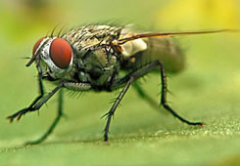
How to Raise Fly Maggots? Fly Maggot Farming Techniques and Adult Fly Rearing Methods
Nowadays, anything can be farmed, and even flies can be farmed, but how do you farm flies? And there are many things to pay attention to during fly farming, did you know? Let's take a look together. 1. Equipment: Fly cage: each fly cage must be equipped with a
-
What are the effective control methods for mushroom fungus maggots
There are many kinds of maggot-like larvae that damage mushroom fruiting bodies and mycelium, collectively known as "fungus maggots." The four more common ones are mushroom gnats, gall midges, mushroom flies, and dung flies. Their larvae--maggots--look roughly similar in morphology to the naked eye, and among the adults only the gnats and flies show obvious differences. The morphology and even the living habits of gall midges, mushroom flies, and dung flies are very similar, so they are often mistaken for just one species, all called "fungus flies." Fungus maggots (larvae) bore into and eat the fruiting bodies, turning the mushrooms into waste products, and some damage the mycelium. Bored into and eaten by fungus maggots
-
How to control soybean root maggots? All the control methods are here
Soybean root maggot, also called soybean root miner fly. It only harms soybean and wild soybean. The larvae bite and feed on the roots of soybean seedlings, forming maggot tunnels and excreting frass, causing root rot and stunted soybean plants; severely affected seedlings wither and die. This pest has only one generation per year. It overwinters as pupae in root bark tumors of soybean or in soil cracks; in mid-to-late May of the following year, it emerges as adults, lays eggs at the soybean roots, and hatches larvae that damage the soybean seedling roots. Control method: use seed dressing with chemicals to prevent larvae; dress seeds with 40% dimethoate emulsifiable concentrate at 0.7% of the seed weight, mix with water and spray, stirring while spraying. If dressing
-
How to control onion maggots in garlic? You can use 48% Lorsban
Reader Yuan Yong from Group 2, Jixing Village, Tongshang Town, Dafeng City, Jiangsu Province, wrote in to say that in 2005, onion maggots broke out severely in local garlic fields. Digging up 1 garlic plant revealed 6 to 8 maggots in the root and stem, causing some fields to suffer almost total crop loss. Many garlic farmers were extremely anxious and hoped we could ask experts to provide a solution. On this issue, we consulted relevant experts at the Plant Protection Station of the Jiangsu Provincial Department of Agriculture and Forestry. The experts said that the onion fly, also called onion maggot or garlic maggot, belongs to the order Diptera, family Anthomyiidae, and is a common pest on Welsh onions. In mild cases, it reduces yield by 10% to 20%; in severe cases, by more than 30%,
-
How to control onion maggots? Understanding the occurrence characteristics is key
I. Damage symptoms Onion maggot larvae bore into and feed on garlic bulbs, causing the bulbs to rot, and the above-ground leaves to turn yellow, wilt, and even die. Pulling out affected plants reveals maggot pupae; the damaged garlic skin shows yellowish-brown rot, the garlic heads are bored into holes by the larvae and become incomplete, with the cloves exposed and split open, accompanied by a foul odor. Affected plants are easily pulled out and break off. II. Occurrence characteristics Onion maggots can cause damage before winter, pupate and overwinter after winter sets in, and begin to emerge as adults from the pupae in March of the following year. Adults lay eggs around the garlic roots
-
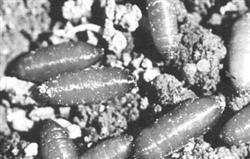
A Detailed Explanation of the Occurrence Patterns and Control Methods of Garlic Root Maggots
Root maggots is the collective term for the larval stage of Diptera pests that damage garlic and other crops. In recent years, the occurrence of garlic root maggots has shown a trend of increasing year by year. Root maggot damage can cause garlic yield reduction and has a major impact on garlic quality, with severe damage leading to serious economic losses. Garlic root maggots (larvae) generally gather on garlic roots and...
-
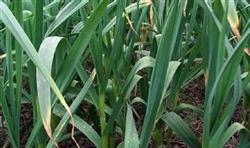
How to Control Onion Maggots in Garlic in Winter? A Full Breakdown of Practical Methods
Thoroughly remove plant residues. Onion maggots have a strong attraction to diseased and dead plant residues, especially rotting garlic plants, so at garlic harvest the garlic residues in the field, at the field edges and along roadsides should be completely removed and destroyed, to reduce the food source for the maggots and at the same time reduce the number of insects remaining in the field. Regulate water and fertilizer and the sowing schedule to disrupt...
-
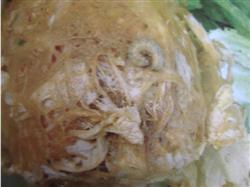
How to control root maggots in autumn cabbage? These methods you need to master
During the growth of autumn cabbage, the most dreaded pest is the root maggot (also called cabbage root maggot). It gnaws at the epidermis of the Chinese cabbage roots, allowing soil-borne pathogens to invade through the wounds, causing the cabbage to drop its outer leaves and rot. This not only reduces cabbage yield but also affects its edible value. If not controlled in time, it can damage the entire field, causing serious losses to vegetable growers...
-
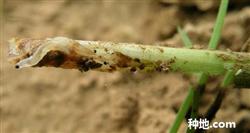
What to do when chives get chive maggots? All the chive maggot control methods are here
What to do when the chives you planted get chive maggots? Asking for guidance. Chive maggots: during spring irrigation, pesticides can be added to kill them; in late April, when adults emerge, spray with 600 times diluted Mieshabi; in early May, use 40% omethoate 800 times diluted solution to drench the roots for control. Mole crickets and white grubs are underground pests: during their peak damage period in March, April and May, in the chive beds use...
条件筛选