-
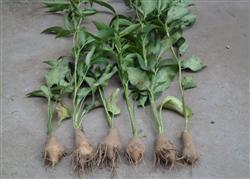
How to prevent diseases and apply fertilizer during Atractylodes macrocephala cultivation?
How to prevent diseases and apply fertilizer for Atractylodes macrocephala? Please provide an introduction to the methods. The common diseases of Atractylodes macrocephala are root rot and southern blight, and the control methods are as follows: Carefully select seedlings: they should be free of pests and diseases, with plump apical buds, slender upper parts, round and large lower ends, fine and tender skin, and dense soft fine roots. Seed soaking disinfection and soil sterilization: the planting material and soil are...
-

How to Grow Atractylodes macrocephala? A Detailed Guide to Cultivating the Medicinal Herb Bai Zhu
How do you grow the medicinal herb Bai Zhu (Atractylodes macrocephala)? Here is a detailed cultivation method. You can grow Bai Zhu by following these methods: 1. Site selection and land preparation: Bai Zhu prefers a cool climate and fears high temperatures and high humidity. It is not strict about soil requirements, but well-drained, deep, slightly acidic to alkaline and light clay soils are best. 2. Raising seedlings and transplanting...
-

How to weed Atractylodes macrocephala plantings? Key field weeding techniques
How to weed Atractylodes macrocephala plantings? Please explain the herbicides that can be used on Atractylodes macrocephala and how to apply them. Atractylodes macrocephala plantings generally need to control crabgrass, goosegrass, foxtail, barnyardgrass, leptochloa and lovegrass, etc. Commonly used soil-applied pre-emergence herbicides include trifluralin and acetochlor. For application methods, refer to the following: generally before transplanting...
-

How to prevent and control pests and diseases of Atractylodes macrocephala? Detailed explanation of planting prevention and control methods
How to prevent and control pests and diseases of Atractylodes macrocephala? Please introduce the prevention and control methods. Common diseases of Atractylodes macrocephala include: 1. Southern blight. This disease mainly affects the rhizome of Atractylodes macrocephala. In the early stage of the disease, there are no obvious symptoms on the aboveground part. Later, as temperature and humidity rise, the mycelium breaks through the soil surface, and white mycelium densely covers the rhizome and the surrounding soil surface. The top of the affected plant...
-
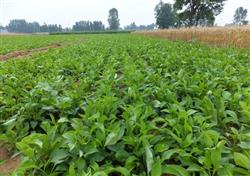
A Detailed Guide to the Cultivation Techniques and Growing Methods of the Chinese Medicinal Herb Atractylodes macrocephala
Cultivation Techniques 1. Raising Seedlings (1) Preparing the Seedbed One month before sowing Atractylodes macrocephala, turn the soil, cover it with a 30 cm thick layer of weeds, and burn the soil to disinfect it and prevent pests and diseases. Immediately after burning, turn the grass ash into the soil. If the soil is not to be burned, it can be turned in the previous winter so that the soil is fully weathered by freezing. The land...
-
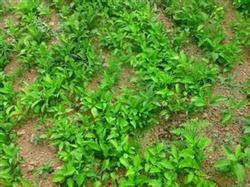
The key to high-yield Atractylodes macrocephala lies in preserving seedlings in the early stage
As a traditional Chinese medicinal herb with relatively high economic value, Atractylodes macrocephala is being planted by more and more people. However, due to uneven levels of planting and management, the economic returns of growers vary greatly. This is especially true for beginners, who are not sure about the growth habits of Atractylodes macrocephala and the prevention and control of pests and diseases, often causing a large number of seedling deaths in the early stage, while...
-
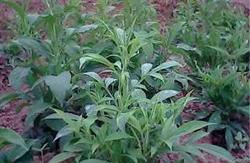
Detailed Explanation of Key Points for Pollution-Free Cultivation Techniques of Atractylodes macrocephala
Atractylodes macrocephala is distributed in the wild in Zhejiang, Jiangxi, Hunan, Hubei and Shaanxi, and can be cultivated in these provinces as well as in North China. Loose, fertile sandy loam with good water permeability is favorable for the growth of its root system and suitable for planting Atractylodes macrocephala; overly heavy, waterlogged soil or sandy soil with poor fertilizer retention is not suitable for planting it.
-
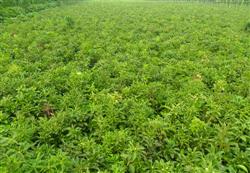
Five key technical points for successful Atractylodes macrocephala cultivation
Atractylodes macrocephala, also known as Yuzhu, Dongzhu, Zhezhu, etc., is a plant of the Asteraceae family. Its rhizome can be used as medicine and has effects such as strengthening the spleen, drying dampness, and preventing miscarriage, making it a valuable Chinese medicinal herb. Growing Atractylodes macrocephala in rural areas is a path to wealth with low investment, a short production cycle, smooth sales, and high economic returns. 1. Site selection and land preparation. Atractylodes macrocephala prefers a cool climate...
-
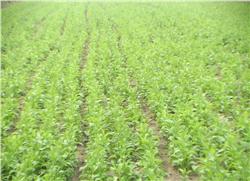
New high-yield techniques for Atractylodes macrocephala: scientific cultivation boosts production
Cultivation techniques and seedling raising (1) Preparing the seedbed: For Atractylodes macrocephala, one month before sowing, turn the soil, cover it with a 30 cm thick layer of weeds, and burn the soil to sterilize it and prevent pests and diseases; immediately after burning, turn the grass ash into the soil. If the soil is not burned, the soil can be turned in the winter of the previous year so that it is fully weathered by freezing. The soil...
-
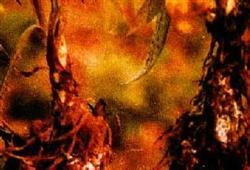
Identification and Control Techniques for Diseases and Pests of Atractylodes macrocephala
Southern blight: Also known as "white sugar rot", it damages the rhizome of Atractylodes macrocephala, with no obvious symptoms on the aboveground parts in the early stage of the disease. Later, as temperature and humidity rise, the mycelium penetrates through the soil surface, and white mycelium densely covers the rhizome and the surrounding soil surface. The top shoots of the affected plants wilt, droop, and eventually the entire plant dies. Disease characteristics: soil and planting material are...
条件筛选