Morphological Characteristics, Growing Environment and Flower Language of the Clock Flower Explained
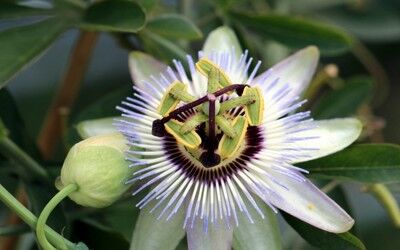
The clock flower is a member of the turnera family, an evergreen vine that grows in the tropical rainforests of South America; its shape closely resembles the face of a clock, which is why it is called the "clock flower."
The clock flower is an evergreen vine of the family Turnera and the genus Turnera, growing in the tropical rainforests of South America; its shape closely resembles the face of a clock, which is why it is called the "clock flower." The flowers of the clock flower are very regular, opening in the morning and closing at night.
In earlier times, the clock flower was chosen to commemorate the 7th-century Anglo-Saxon princess, the nun Saint Æbbe who founded a nunnery in Kent.
Morphological Characteristics
The clock flower is an evergreen vine that grows in the tropical rainforests of South America. Its shape closely resembles a clock face. The flower bed and corolla combine into a tube; the fruit is a capsule, and the seeds have a reticulated pattern.
Growing Environment
The blooming of the clock flower is very regular. It opens in the morning, and this is even more interesting at night; its flowers are almost identical, and very strange. Research shows that the blooming pattern of the clock flower is closely related to changes in sunlight and temperature, and is controlled by a substance within the body, the clock enzyme.
This enzyme regulates the physiological functions of the clock flower and controls the blooming time. After sunrise, as the temperature gradually rises, the enzyme becomes active and promotes the opening of the flowers.
When the temperature rises to a certain level, the enzyme's activity gradually weakens, and the flowers naturally fade. It has been observed that the temperature required for the clock flower to bloom is between 18°C and 20°C, and when withering the temperature is between 28°C and 32°C.
On sunny days it usually opens from 9 to 11 in the morning, and from 3 to 4 in the afternoon; it opens at 12 noon, and opens from 5 to 6 in the afternoon.
If the temperature is low, the opening time of the flowers is usually delayed until 3 in the afternoon. It is just a "wind and wind." If it is an overcast day, the flowers will be delayed until late at night, and sometimes even until the next morning. "