-

Australian Wheat Farmers Trial Blockchain to Sell Grain
Huobi: Australian Wheat Farmers Trial Blockchain to Sell Grain
-
Duckling prices rebound, but caution still needed when adding to flocks
Duck farming market analysis: duckling prices stage a comeback, but caution still needed when restocking
-
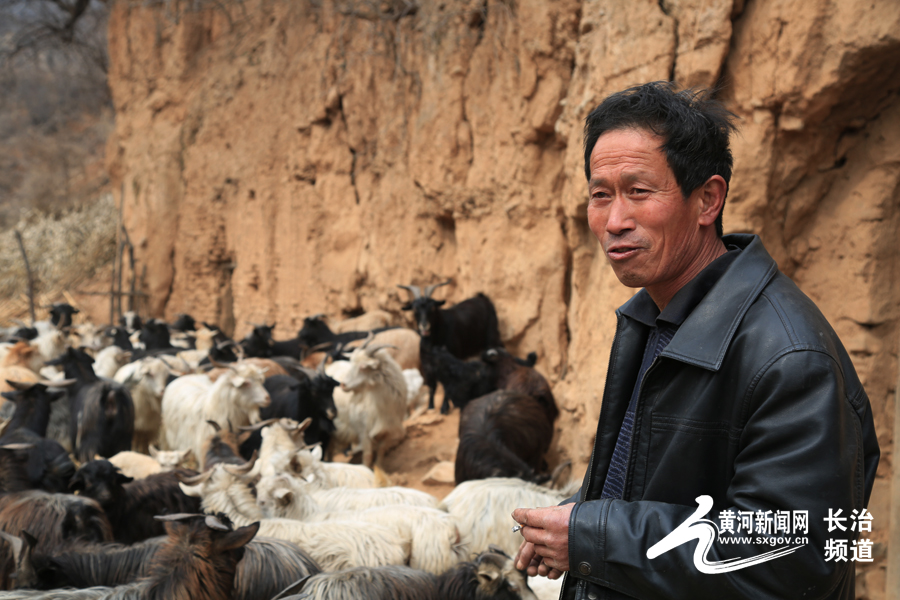
Raising Goats Lifted Chen Jiangqi's Family Out of Poverty, and the Flock Became the Family's Treasure
Chen Jiangqi: The Goat Flock Is My Family's "Treasure for Escaping Poverty"
-

Why It's Hard for Rural People to Get Rich: Mainly Because of These Roadblocks
Why is it hard for rural people to get rich? Because of these roadblocks, and rural folks will surely agree!
-
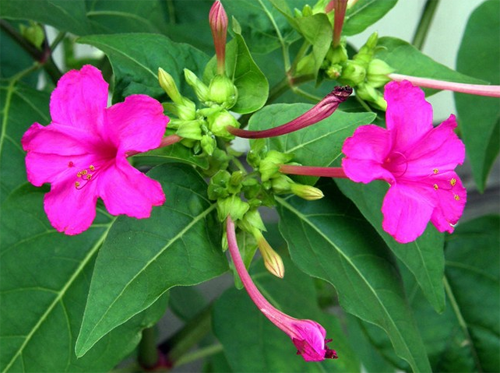
Four O'Clock Flower Seed Prices and Planting Methods
The four o'clock flower (Mirabilis jalapa) is a very common plant that can be seen in many places. One plant this year becomes a whole patch next year, showing that its reproductive capacity is extraordinarily strong. How do you grow four o'clock flowers, and how much do the seeds cost? How to grow four o'clock flowers: Soil selection
-
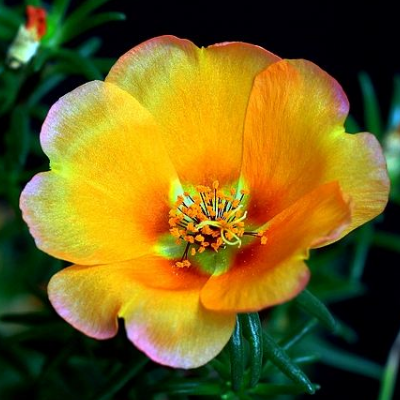
When does the Four O'Clock Flower bloom? A detailed guide to growing it
Most people have probably never heard of the Four O'Clock Flower (Mirabilis jalapa); this plant is just like its name. So when does the Four O'Clock Flower bloom? What are the methods for growing it? When does the Four O'Clock Flower bloom: The Four O'Clock Flower, also known as Scutellaria barbata, Moss Rose, and Night-falling Money, etc.
-

How to Propagate Four O'Clock Flowers and How They Differ from Night-Blooming Jasmine
Four o'clock flowers (Mirabilis jalapa) are often mistaken for night-blooming jasmine, and many people cannot tell them apart. How do you propagate four o'clock flowers? How do they differ from night-blooming jasmine? How to propagate four o'clock flowers: seed propagation of four o'clock flowers is very simple, and four o'clock flowers have a strong ability to self-sow, so
-
What to do when pinheads grow on the spawn blocks after inoculating straw mushrooms
2-3 days after inoculating straw mushrooms, many white pinheads grow on the spawn blocks exposed above the compost, causing the spawn to age and affecting the spawn's mycelial germination, or the mycelium grows but does not colonize the compost. The cause is that the spawn is stimulated by strong light, causing some hyphae to knot prematurely and form pinheads. Control method: when inoculating, do not leave the spawn exposed; it should be sown 2-3 cm deep into the compost, and a straw mulch should be used to shade and keep warm, preventing stimulation by strong light.
-
DNA testing confirms the Formosan landlocked salmon is a species endemic to Taiwan, China
Taiwan's Shei-Pa National Park announced the results of its conservation research program, among which research on Taiwan salmon, also known as the Formosan landlocked salmon, has made a major breakthrough. Through DNA sequence mapping analysis, it has for the first time been confirmed that the Formosan landlocked salmon is a native species endemic to the Taiwan region of China, and did not evolve from the landlocked form of masu salmon introduced from Japan or from rainbow trout that escaped from farms, but is truly a unique variety endemic to Taiwan. According to a report by Taiwan's Eastern Broadcasting, Taiwan salmon, formerly named Formosan landlocked salmon and also known as Taiwan trout, Lishan trout and Cishan trout, is the only temperate fish species in the subtropical Taiwan region, China,
-
High-yield cultivation method of cutting oyster mushroom blocks into pieces, standing them upright and covering with soil
Mushroom farmers in Dongkan Town, Binhai County, Jiangsu Province, through years of oyster mushroom cultivation practice, worked out the six-character high-yield formula for oyster mushrooms of "cutting into blocks, standing upright, covering with soil", which increased the oyster mushroom yield per mu by more than 2000 jin compared with the past, with an increase rate of about 30%, and at the same time, production costs dropped greatly. Their high-yield experience mainly consists of three steps: "cutting into blocks, standing upright, covering with soil". The so-called "cutting into blocks" means that at the end of harvesting the second flush of mushrooms in furrow-bed cultivation, the dead mushrooms, stipes and the like remaining on the bed surface are cleaned up, and a sharp knife is used to cut the cultivation substrate into multiple pieces of about 50 cm
条件筛选