-

Diagnosis and Treatment of Livestock Poisoning by Water Hemlock
Water hemlock, commonly known as wild celery, is a perennial plant of the Apiaceae family that prefers growing in moist, low-lying areas. Its toxicity is mainly concentrated in the roots and stems, and the toxic component is the alkaloid cicutoxin. Because water hemlock sprouts earlier and grows faster than other plants in spring, when grazing in low-lying areas in early spring, cattle and sheep are the first to spot the young water hemlock seedlings and immediately eat them, and they also gnaw off the rhizomes exposed above the ground. Since its rhizomes have a slightly sweet taste and are favored by cattle and sheep, poisoning occurs once a certain amount is consumed. 1. Clinical symptoms: Sudden onset during grazing, presenting with restlessness and agitation, rapid breathing, ruminal bloat, and abdominal pain
-
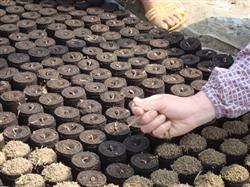
Key technical points for moving and hardening cotton seedling nutritional blocks
Moving and hardening the blocks is an important measure in the management of seedbeds for cotton nutritional block seedling raising. Its main benefits are: first, it can break off the tip of the cotton seedling's main root so that the upper part grows slowly, stimulate lateral root development, make the plant short with thick stems and many lateral roots, and improve cotton seedling quality; second, after the blocks are moved, air circulates around the roots and water dissipates quickly, which not only can enhance root activity...
条件筛选