-

What are the control methods for anthracnose in large-leaf boxwood (Euonymus japonicus)?
Methods for controlling anthracnose in large-leaf boxwood: 1. In autumn and winter, collect diseased branches and fallen leaves and burn them in a centralized manner to reduce the source of the disease. 2. At the early stage of the disease, promptly apply 75% chlorothalonil wettable powder at 500 times dilution, or 50% thiram wettable powder at 500 times dilution, or a 1:1:160 Bordeaux mixture, or 50% Tuzet wettable powder at 800 times dilution.
-
How to prevent and control leaf spot disease in Japanese euonymus?
Preventing and controlling leaf spot disease in Japanese euonymus: 1. In winter, thoroughly remove diseased fallen leaves, burn them in a centralized manner or bury them deeply, to reduce the source of the disease. 2. Select robust seedlings to create hedges or make euonymus balls. 3. During the disease season, spray 1% Bordeaux mixture, or 50% benomyl wettable powder at 1000 to 1500 times dilution, or 50% carbendazim at 500 times dilution, or 75% chlorothalonil at 500 times dilution, spraying once every 10 to 15 days, for 2 to 3 consecutive times. Alternatively, spraying 200 times diluted non-toxic high-lipid film 4 times is also effective.
-
A comprehensive guide to rhododendron leaf spot disease
Round lesions, or irregular polygonal lesions, dark brown, 1mm-5mm in diameter. In the later stage, the central tissue of the lesions turns grayish white. When the disease is severe, the lesions merge with each other, causing the leaves to turn yellow and drop early. Under moist environmental conditions, many small brown mold spots grow on the underside of the leaf spots, namely the conidia and conidiophores of the pathogenic fungus. Pathogen and current disease situation: it is Cercospora rhododendri Fer., Deuteromycotina, Hyphomycetes
-
What are the control techniques for azalea leaf blight
1. Main symptoms: It occurs on the leaves, mostly at the leaf tips. In the early stage, the lesions are chlorotic yellow spots, and the lesions spread from the edges inward, taking an irregular shape; in the later stage, the lesions are yellowish-brown, and in severe cases the diseased leaves dry up. 2. Causes of the disease: It is a fungal disease. The pathogen survives on diseased plant debris and spreads through watering, insects, human activities, etc. In indoor environments, it can occur year-round, and high temperature, dryness, and poor ventilation easily trigger the disease. Plants that are weak in growth or affected by pests (especially aphids, scale insects, and whiteflies)
-
What are the control methods for azalea leaf spot disease?
Leaf spot is a major disease of azaleas. When it first appears, small brown spots form on the leaves; the spots merge with one another and gradually develop into large blotches, and the lesions become irregular in shape, darker on the upper surface and lighter on the underside. In the later stage, the center of the lesion turns grayish brown, and many black or grayish-brown spots form on the lesion. In severe cases, the branches are completely bare and the plant becomes weak. Control plan: at the early stage of the disease, spray 1:1:120 Bordeaux mixture, or 0.4 degree Baume lime sulfur mixture, or 65% zineb wettable powder at 500 times dilution, or 25% car
-
Detailed Guide to Controlling Leaf Spot Disease in Rhododendrons
Symptoms: It mainly infects the leaves. In the early stage of the disease, small reddish-brown spots appear on the leaves and gradually expand into lesions or irregular polygonal lesions that are dark brown. In the later stage, the tissue in the center of the lesions turns grayish-white. When the disease is severe, the lesions connect with one another, causing the leaves to turn yellow, wither, and drop early. Control methods: 1. In autumn, clear away and dispose of fallen leaves, and during the growing season promptly remove diseased leaves. 2. Planting or potted flower placement density should be appropriate to ensure ventilation and light penetration for the plants and reduce leaf surface humidity. In summer, place potted flowers in an outdoor shade shed to reduce sunscald and mechanical
-
A Detailed Explanation of the Occurrence Patterns and Control Methods of the Jujube Leafroller
The jujube leafroller, also known as the jujube sickle-winged tortrix moth, commonly called the leaf-sticking worm, is one of the important pests of jujube trees. The larvae spin silk to roll leaves for feeding, rolling leaves longitudinally into a dumpling shape, or using silk to bind several leaves together. The larvae also bore into and feed on fruit attached to leaves, greatly affecting yield. 1. Occurrence patterns This pest has 3 generations per year, overwintering as pupae in rough bark crevices on branches and trunks. Adults hide by day and emerge at night, are strongly phototactic, and lay eggs 1 to 2 days after emergence; eggs are mostly scattered on smooth small branches and jujube spurs. The egg stage lasts 10 to 25 days, and the first-generation larvae occur
-
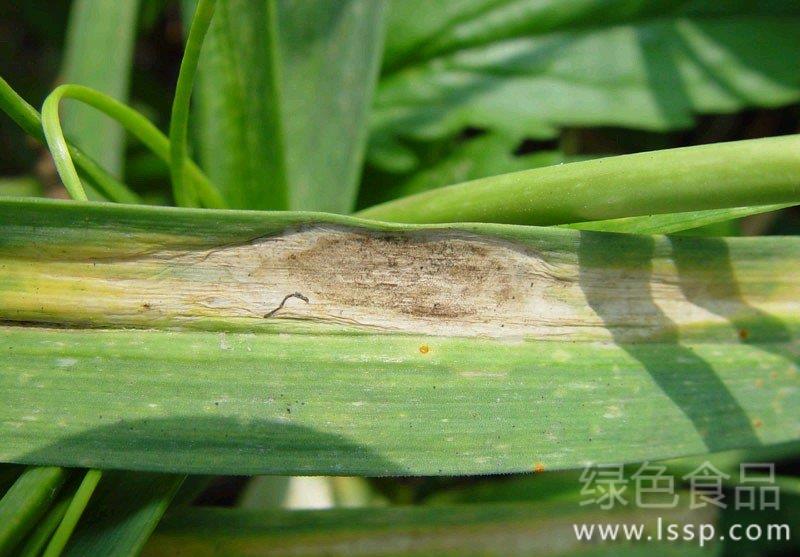
Garlic leaves turning from green to brown and yellow: master the control methods for garlic leaf blight
Garlic leaves turning from green to brown and yellow: control methods for garlic leaf blight
-
How can bamboo-leaf grass in cotton fields be controlled effectively?
First choose a suitable herbicide, then decide the dosage according to the weed species, leaf age and humidity level. For example, when using fluazifop-P-butyl to control annual weeds, when soil moisture is suitable, the effective ingredient dosage per mu is 9-17 grams; under drought conditions it is 17-24 grams; to control perennial weeds, the effective ingredient dosage per mu is 27-45 grams. Spray on the stems and leaves when grass weeds are at the 2-5 leaf stage. In summer, apply the herbicide on windless days, in the early morning and evening when temperatures are lower; uniform spraying is required, and keeping
-
What kind of tree species is the tetraploid large-leaf black locust?
The tetraploid large-leaf black locust is a superior variety selected through years of dedicated research and experimental comparison from among several excellent polyploid black locust clones introduced from abroad. The tetraploid large-leaf black locust is an artificially induced tetraploid plant, characterized by fast growth, large leaves and high biomass. Its leaf width is more than 2 times that of the common black locust, and its compound leaf dry weight, single leaf dry weight and total leaf dry weight are 1.5 times or more those of the common black locust respectively. Compared with the common black locust, the tetraploid large-leaf black locust has a denser crown, thicker branches and a stronger photosynthetic capacity. Tetraploid
条件筛选