-

What are the control methods for the rice leaf beetle and the millet stem borer?
Rice is the most important and longest-cultivated grain species in the genus Oryza; millet is a plant of the grass family Poaceae, called ji or su in ancient times, also known as liang. Both are among humanity's food crops. But during growth they always suffer pests and diseases that affect yield. Below we introduce
-
-
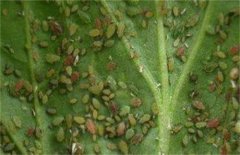
Control Methods for Yam Bean Beetle and Blue-Winged Leaf Beetle
How should the control methods for yam bean beetle and yam blue-winged leaf beetle be carried out? Do you know? Let's take a look together. The yam bean beetle pest occurs from May to August, with only 1 generation per year. The yam blue-winged leaf beetle also has 1
-
Effective control methods for leaf beetle pests on licorice
The main species of leaf beetles harming licorice include Diorhabda tarsalis, Pynrrhalta aenescens, Monolepta quadrigutdata, Diorhabda rybakowi, Ceytra sp., Colasposoma dauricum, Coptoc
-
Morphological Characteristics and Control Techniques of the Rice Root Leaf Beetle
The rice root leaf beetle, also known as the rice root golden flower beetle, belongs to the order Coleoptera, family Chrysomelidae. The adult is about 6 mm long; the dorsal surface of the body and the antennae are greenish brown with a metallic sheen, and the ventral surface bears dense, thick silvery hairs. The lower half of the femur of each leg is swollen, and the femur of the hind leg has a tooth-like spine near its apex. The elytra bear several parallel longitudinal grooves made up of punctures. Eggs are laid in masses and covered with a white, transparent gelatinous substance. The eggs are long oval, slightly flattened, about 0.8 mm long, initially milky white and later turning pale yellow. The larva is about 9 mm long, spindle-shaped, white and slightly curved, with 3 pairs of thoracic legs
-
A Detailed Guide to the Harm Caused by the Jujube Leaf Beetle and Its Control Methods
The jujube leaf beetle belongs to the order Coleoptera, family Chrysomelidae. The larvae and adults of this insect damage jujube leaves and tender shoots. In outbreak years, the leaves are eaten bare, leaving only the bare fruiting branchlets, which greatly affects yield. The peak damage period for this insect is from mid-April to mid-May. Both larvae and adults damage jujube leaves, tender shoots, flower buds and flowers. Control methods: spraying mainly for flower protection is the primary approach. During the occurrence period of larvae and adults, spray 90% trichlorfon at 1500 times dilution or deltamethrin at 1.5 ten-thousand to 1.6 ten-thousand times dilution; generally the insecticidal effect is very good.
-
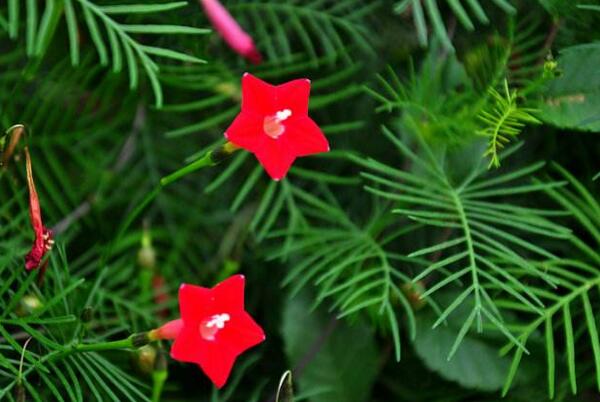
How to control powdery mildew, leaf spot, aphids and scarab beetles on cypress vine?
Although cypress vine is very tenacious and has strong adaptability to the environment, during cultivation it can sometimes become infected with pests and diseases due to neglect of management, sudden environmental changes and other reasons. Once this happens, the consequences can be unimaginable. Here, the editor will tell you a few common pest and disease control methods for cypress vine.
-

What are the control methods for the rice leaf beetle? Explained in one article
What damage does the rice leaf beetle cause? What control methods are there? We also ask netizens to help introduce them. Zhongdiwang has compiled the damage caused by the rice leaf beetle and its control methods, listed below for netizens' reference. Damage caused by the rice leaf beetle: The leaf beetle mainly damages rice seedlings and rice plants in paddy fields. Adults and larvae feed...
-
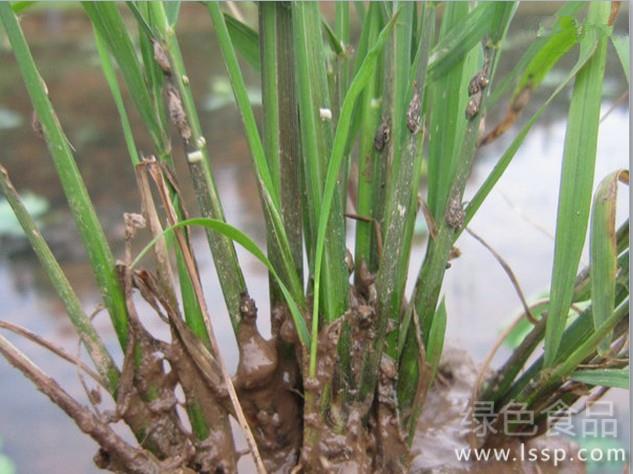
How to control rice leaf beetle (rice hispa) causing slow growth
How to control rice leaf beetle when it causes slow growth in rice
条件筛选