How to control powdery mildew, leaf spot, aphids and scarab beetles on cypress vine?
Although cypress vine is very tenacious and has strong adaptability to the environment, during cultivation it can sometimes become infected with pests and diseases due to neglect of management, sudden environmental changes and other reasons. Once this happens, the consequences can be unimaginable. Here, the editor will tell you a few common pest and disease control methods for cypress vine, so as to avoid a tragedy.
Common pest and disease control for cypress vine
1. Leaf spot
Main symptoms: Blackish-brown diseased spots appear on the leaves of cypress vine. The spots on the stems and petioles are elongated and brown. They are initially small but keep expanding, finally becoming irregular in shape. The spots also develop concentric rings, causing the leaves to wither and turn yellow, and the plant's growth to weaken.
Control method: Pay attention to pruning at ordinary times to keep the density of cypress vine branches and leaves moderate, increase the ventilation of the environment and reduce air humidity. After the disease occurs, spray with 38% dimethomorph-plus-copper-oxychloride fungicide at 800-1000 times dilution, or 50% thiophanate at 1000 times dilution.
2. Powdery mildew
Main symptoms: Small yellow spots appear on the leaves of cypress vine. These spots gradually expand into circular or oval shapes. A white powdery mold layer forms on the surface of the diseased spots, and usually the lower leaves are more severely affected. Because the leaves are covered with powder, the plant lacks photosynthesis, and decline comes earlier.
Control method: Among the common pests and diseases of cypress vine, powdery mildew is relatively easy to prevent. Its occurrence follows patterns such as excessive nitrogen fertilizer application and overly dense branches and leaves that block light. Avoiding these two situations can prevent powdery mildew well. When the disease occurs, spray with 15% triadimefon at 1000 times dilution.
3. Scarab beetle
The scarab beetle is a pest with a very large number of species. It gnaws at the roots and stems of cypress vine, damaging the underground parts. It is especially likely to attack during the reproduction process, reducing the success rate of reproduction. In addition, it may also harm the leaves, flowers, fruits and so on of cypress vine.
Control method: When planting, choose relatively superior and robust cypress vine varieties. At ordinary times, do a good job of environmental sanitation, ensure moderate air humidity and that the temperature is not too high, and at the same time let cypress vine receive sufficient light. After the pest occurs, use 10% dimehypo emulsifiable concentrate at 2500 times dilution to spray and kill scarab beetles.
4. Aphids
Aphids are very small in size but reproduce very quickly. They are one of the most common pests and suck the sap from cypress vine leaves, causing nutritional deficiency in the plant. They are one of the most headache-inducing pests when cultivating flowers, but the control methods for them are relatively mature.
Control method: When there are only a few aphids, gently scrape them off with a brush to reduce the harm aphids cause to the plant, then cut off the affected branches and leaves. After that, pesticides still need to be sprayed to completely eliminate the aphids. Commonly used pesticides include 40% omethoate emulsifiable concentrate at 2000 times dilution and so on.
How to grow cypress vine
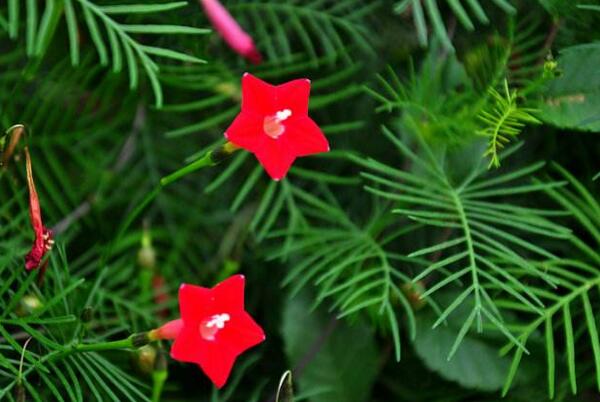
Cypress vine is an excellent plant for courtyard flower trellises and flower hedges. It is also known as golden silk thread, brocade screen seal, lion grass and so on. It is an annual slender twining herbaceous plant in the genus Ipomoea of the Convolvulaceae family. Its vines and leaves are slender and elegant, and it can also be potted and displayed indoors. When it blooms, although the flowers are small in shape, they are scattered like stars among the green leaves, lively and moving. Now let us take a look at how to grow cypress vine!
Growth habits of cypress vine
Cypress vine likes light and prefers a warm and humid environment. It grows in areas at an altitude of 0 to 2500 m. It is not cold-tolerant and can self-sow (generally introduced and cultivated artificially). It requires fertile soil. It has strong stress resistance and is simple to manage. The capsule contains 4 seeds, which after maturity fall to the ground on their own and grow by themselves the following year. If sown artificially, sow the seeds in March. Transplant when the seedlings are 10 cm long. To make it bloom more, it should be planted in fertile soil in a sunny place. Potted plants must have a support erected for them to twine around. When blooming, it is extremely delicate and beautiful.
Propagation methods of cypress vine
1. The fruits of cypress vine do not ripen uniformly, and after ripening they fall off easily, so they should be collected as they ripen. Each fruit contains 3-4 seeds. If there are both red-flowered and white-flowered plants, the seeds should be collected separately.
2. Sow cypress vine seeds in April of the following year, and they can germinate after one week. After the last frost, the seedling-raising period before planting out in the open is about 45 days. It must not be too long, otherwise the vines grown from the seedlings will become tangled together.
How to grow cypress vine
1. Soil: Cypress vine grows well when sown and raised into seedlings using ordinary nutrient soil for seedling raising. After sowing, cover with about 1.5 cm of fine soil, and it must not be too thin.
2. Temperature: Cypress vine is native to tropical regions. It likes warmth, avoids cold and fears frost. When the temperature is low, growth is very slow. The suitable temperature for seed germination is 20-25°C.
3. Water and fertilizer: When growing cypress vine, apply sufficient base fertilizer, fertilize and water in a timely manner, and drain promptly in the rainy season. It is not strict about soil, fertilizer or water requirements. Generally, applying fertilizer water once every 15 days is enough.
4. Light: Cypress vine likes a sunny and warm environment. Properly thinning the vines and leaves not only helps ventilation and light transmission, but also makes the plant shape more graceful.
5. Removing flowers: After the flowers fade, cypress vine should have the faded flowers removed in a timely manner so that it does not set seed. This allows nutrients to be concentrated on producing flowers on new branches and prolongs the flowering period.
5. Pests and diseases: For cypress vine leaf spot and powdery mildew, spray with 50% thiophanate wettable powder at 500 times dilution. For aphids and scarab beetles, use 10% dimehypo emulsifiable concentrate at 2500 times dilution to spray and kill them.
How to grow cypress vine and what are its growth habits
Cypress vine is an excellent plant for courtyard flower trellises and flower hedges. It is also known as golden silk thread, brocade screen seal, lion grass and so on. It is an annual slender twining herbaceous plant in the genus Ipomoea of the Convolvulaceae family. So what are the methods for growing cypress vine?
How to grow cypress vine:
1. Soil: Cypress vine grows well when sown and raised into seedlings using ordinary nutrient soil for seedling raising. After sowing, cover with about 1.5 cm of fine soil, and it must not be too thin.
2. Temperature: Cypress vine is native to tropical regions. It likes warmth, avoids cold and fears frost. When the temperature is low, growth is very slow. The suitable temperature for seed germination is 20-25°C.
3. Water and fertilizer: When growing cypress vine, apply sufficient base fertilizer, fertilize and water in a timely manner, and drain promptly in the rainy season. It is not strict about soil, fertilizer or water requirements. Generally, applying fertilizer water once every 15 days is enough.
4. Light: Cypress vine likes a sunny and warm environment. Properly thinning the vines and leaves not only helps ventilation and light transmission, but also makes the plant shape more graceful.
5. Removing flowers: After the flowers fade, cypress vine should have the faded flowers removed in a timely manner so that it does not set seed. This allows nutrients to be concentrated on producing flowers on new branches and prolongs the flowering period.
5. Pests and diseases: For cypress vine leaf spot and powdery mildew, spray with 50% thiophanate wettable powder at 500 times dilution. For aphids and scarab beetles, use 10% dimehypo emulsifiable concentrate at 2500 times dilution to spray and kill them.
Growth habits of cypress vine:
Cypress vine likes light and prefers a warm and humid environment. It grows in areas at an altitude of 0 to 2500 m. It is not cold-tolerant and can self-sow (generally introduced and cultivated artificially). It requires fertile soil. It has strong stress resistance and is simple to manage. The capsule contains 4 seeds, which after maturity fall to the ground on their own and grow by themselves the following year. If sown artificially, sow the seeds in March. Transplant when the seedlings are 10 cm long. To make it bloom more, it should be planted in fertile soil in a sunny place. Potted plants must have a support erected for them to twine around. When blooming, it is extremely delicate and beautiful.
Propagation methods of cypress vine:
1. The fruits of cypress vine do not ripen uniformly, and after ripening they fall off easily, so they should be collected as they ripen. Each fruit contains 3-4 seeds. If there are both red-flowered and white-flowered plants, the seeds should be collected separately.
2. Sow cypress vine seeds in April of the following year, and they can germinate after one week. After the last frost, the seedling-raising period before planting out in the open is about 45 days. It must not be too long, otherwise the vines grown from the seedlings will become tangled together.