-
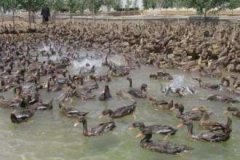
Causes and Treatment of Sand-Shelled Eggs in Laying Ducks
What causes laying ducks to produce sand-shelled eggs? It is generally caused by calcium deficiency, as the main component of the eggshell is calcium. So how do you treat sand-shelled eggs in laying ducks? When the proportion of thin and soft-shelled eggs increases, gradually add 0.1% calcium to the daily ration and observe
-

How long does it take for a shelduck to start laying eggs?
Summary The time from duckling to egg laying for shelducks is generally around day 75 to 120. With good feeding, they can lay around 300 eggs a year. The egg production of shelducks tends to be stable in the first two years, and begins to decline from the third year. The shelduck is a duck breed that lays relatively many eggs
-
How long do Silkie chickens generally need to be raised before they start laying eggs?
Summary Silkie chickens will start laying eggs at around 180 days of age, and the annual egg production is about 160 to 180 eggs. March to August is the best period for hatching eggs, and the hatching success rate can reach 90%. If you want to increase the egg-laying rate of Silkie chickens, you can choose 9 a.m. or 3 p.m.
-
When do Green-shell laying hens start laying eggs? A detailed explanation of the start of laying
Abstract Green-shell laying hens generally start laying eggs after about half a year of growth, and the specific time of laying depends on their breed and later feeding methods. During the laying period of Green-shell laying hens, it is necessary to adjust the light duration and light distribution, keep the chicken coop quiet, or add some Chinese herbal ingredients
-
What to do when a parrot fish lays eggs, and how many days until the fry hatch?
Many people keep ornamental fish at home, but there are so many varieties of ornamental fish that people are not particularly familiar with the fish they do not often see in daily life, and the parrot fish is one of these. Some people who keep parrot fish find that they have laid eggs and think they can hatch out
-
How to Raise Green-Shelled Laying Hens? A Detailed Guide to Key Feeding Management Techniques
Eggs and chicken meat are common poultry products on ordinary people's dining tables. Nowadays, people's demands for pollution-free and green food are growing ever higher. For the vast number of chicken farmers, how to produce green chicken products, reduce feeding costs and expand profits is knowledge they urgently need to understand.
-
Key Technical Points for Feeding and Management of Laying Hens During the Laying Period
The first laying cycle of egg-type chicken breeds is about 1 year, and the whole process can be divided into three stages: early laying period, peak period and late laying period. The coordinate curve plotted based on the average weekly laying rate during the laying period (the vertical axis indicates the laying rate, and the horizontal axis indicates age in weeks) is called
-
Experience and Rearing Methods for Green-Shelled Laying Hens
Green-shelled eggs have always been in good demand on the market. How do you raise green-shelled laying hens well? 1. Construction of the chicken coop. Artificially raised green-shelled laying hens can be kept intensively, with 17-20 birds per sq m of coop. But pay attention to coop ventilation and keeping the floor dry; a cement floor is best, as it makes it easier to clean manure and carry out epidemic prevention and disinfection.
-
What are the reasons pigeons stop laying eggs?
Stopping laying caused by advanced age. Breeding pigeons over 7 years old, due to reduced or lost reproductive function, lay fewer eggs or even stop laying. In production, old pigeons producing fewer than 5 pairs per year should be culled. Stopping laying caused by molting. This kind of laying pause is seasonal. Meat pigeons molt from
-
How Do Spiders Reproduce? A Detailed Explanation of Reproduction Methods and Process
Spiders reproduce by laying eggs. Before reproducing, they first use spider silk to make something like a "birthing mat," then lay the eggs on it and cover them. The spiderlings that hatch from the egg shells remain inside the egg sac, and they must undergo 1 molt inside the egg sac before leaving it.
条件筛选