Causes and Treatment of Sand-Shelled Eggs in Laying Ducks
What causes laying ducks to produce sand-shelled eggs? It is generally caused by calcium deficiency, as the main component of the eggshell is calcium. So how do you treat sand-shelled eggs in laying ducks?
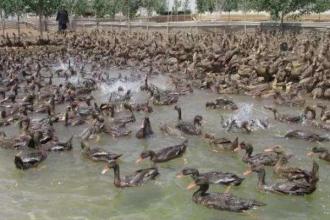
When the proportion of thin and soft-shelled eggs increases, gradually add 0.1% calcium to the daily ration and observe the change in eggshell thickness at any time. If the shell thickness increases, it indicates calcium deficiency. If the number of deformed eggshells increases, it indicates a lack of vitamin D3, which should be supplemented. Check the daily ration formula and adjust the calcium and phosphorus content in time. Strengthen feeding management and keep the duck house environment quiet. When preparing feed for laying ducks, there should be both a fast-absorbing calcium source and a slow-absorbing calcium source; usually limestone powder and shell powder are used together as calcium sources.
Ducks generally lay eggs in the early morning, so ducks must maintain a relatively high blood calcium concentration in the early morning, otherwise they will produce sand-shelled eggs and deformed eggs, or even cause a decline in egg production.
1. Insufficient calcium content in the daily ration, or an imbalance in the calcium-to-phosphorus ratio, or a lack of vitamin D3.
2. Continuous high production over a long period makes it difficult to replenish the required calcium from the feed.
3. When the ambient temperature is too high, the ducks' appetite decreases and they eat relatively less feed, so calcium supply falls short of demand.
4. The ducks are frightened, which disrupts nerve function and endocrine gland function, causing a disturbance in eggshell calcium formation, or the egg is expelled too quickly, resulting in soft-shelled or thin-shelled eggs.
5. Stress factors caused by overcrowding in the duck house, heavy ammonia gas in the duck house, and poor ventilation make the ducks uncomfortable and cause them to lay soft-shelled eggs.