-
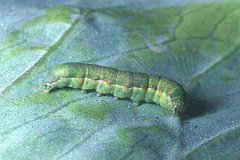
What do beet armyworm larvae and adults look like? A detailed breakdown of their morphological features
We know that the beet armyworm is a pest, but do you understand its ecological habits and morphology? Let's take a look together. Ecological habits: The adult beet armyworm hides by day and comes out at night, resting on the undersides of leaves or in dark places during the day, and beginning activity and mating after sunset.
-
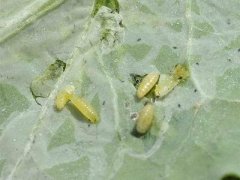
Damage symptoms of flower leafminer flies and identification of larval morphology
What are the damaging habits of the Liriomyza leafminer, and what does it look like? Do you know? Would you like to learn about it? Let's take a look together. Damaging habits: Adults lay eggs inside the leaf mesophyll, and the larvae first mine and feed beneath the epidermis on the light-facing side of the leaf, creating grayish-white feeding marks on the leaf.
-

Comprehensive Control Methods for the Peach Borer Moth in Peach Cultivation
The peach borer moth larvae bore into and feed on peach fruit, causing gumming; the fruit discolors and drops, or the interior becomes filled with insect frass, making it unfit to eat, and this has a great impact on both yield and quality. I. Occurrence pattern. In Shandong, this pest occurs in 2-3 generations per year, mainly overwintering as mature larvae in cocoons inside damaged mummified peaches, bark crevices, gaps among loose stones in embankments, chestnut burs, sunflower heads, castor seeds, and corn and sorghum stalks, with a small portion overwintering as pupae. In Shandong, the first moth emergence of the overwintering generation occurs in mid-May, with the peak in early to mid-June; most eggs of the 1st generation are laid on early-maturing peach varieties, with the most eggs laid on the ventral (belly) side; the newly hatched larvae appear in mid-to-late June and mainly damage early-maturing peach fruit, boring into the fruit to feed; mature larvae spin cocoons and pupate at the stem cavity of damaged fruit and in bark crevices. The 1st-generation adults begin emerging in early July, with the peak from late July to early August; adults are highly selective in egg-laying, basically laying eggs on late-maturing peach varieties and pomegranates; newly hatched 2nd-generation larvae are found in mid-to-late July, with the peak in early to mid-August; by late July, larvae are already found maturing and pupating. The pupation peak is in mid-to-late August. As late-maturing peaches begin to be harvested, adults then move to other crops to lay eggs and continue causing damage.
-
Practical experience in pest control for apricot cultivation
Apricot kernel wasp: The larvae overwinter inside fallen apricot pits or inside apricot pits on branches. The female adult lays eggs between the pit shell and the kernel. The egg-laying hole on the fruit surface is not obvious, slightly grayish-green and sunken, and sometimes apricot gum flows from the egg-laying hole. The egg stage is about 10 days. The hatched larvae feed inside the pit.
-
Techniques for Pure Freshwater Farming of Whiteleg Shrimp
Abstract Stocking shrimp larvae: Select shrimp larvae that are highly active, strong in adapting to water, with a transparent body, no blackening on the gills, and with the black umbrella fully open, and stock them in a pond with a water temperature above 20°C. Strict desalination and nursery rearing: In the early stage of farming, the shrimp larvae must be gradually desalinated
-
A Detailed Guide to Freshwater Oriental River Prawn Farming Techniques and Postlarval Breeding Techniques
The oriental river prawn is a type of freshwater prawn, and its nutritional value is very high. The freshwater oriental river prawn grows very quickly, and individuals are larger than ordinary prawns. The freshwater oriental river prawn reproduces quickly and has strong vitality. The freshwater oriental river prawn mainly lives in the freshwater lakes of China.
-
A Detailed Explanation of the Technical Method for Raising Fly Larvae with Wheat Bran
Now the agricultural industry is developing faster and faster, with supply falling short of demand. In order to discover the agricultural industry faster and better, the industry of raising fly larvae has begun to emerge. Raising fly larvae has very successfully advanced the development of the agricultural industry, and has also improved the quality of the agricultural industry. Below we will talk about
-
What are the new techniques for rearing silkworms in greenhouses? Detailed explanation of key rearing and management points
Silkworms reproduce by eggs; after the larvae grow a bit, they molt, then become mature silkworms. From the mature silkworm stage they begin to spin silk and form cocoons, and inside them they pupate. When the pupa completes development, it sheds the pupal skin and emerges as an adult. After becoming an adult, it breaks out of the cocoon as a moth, then mates and lays eggs.
-
Methods for the Prevention and Control of Glochidiosis in Yellow Catfish Aquaculture
[Cause] The pathogen is the glochidium larva (Glochidium sp.). The fertilized eggs of mussels develop into glochidia in the outer gill cavity of the mother mussel, then leave the parent and float in the water; after contacting the fish body, they parasitize on the fish. The larvae undergo metamorphosis by absorbing nutrients from the fish body and develop into young mussels.
-
Detailed Explanation of the New Technology for Raising Fly Larvae in Plastic Greenhouses
Raising flies in cage nets in ordinary civilian houses is a technology commonly adopted in the fly farms that have emerged in China in recent years. This technology requires heating facilities to be installed in the room; otherwise, when the indoor temperature in autumn, winter and spring cannot reach 27°C, the reproductive capacity of the flies drops severely.
条件筛选