-

Detailed Explanation of the New Technology for Raising Fly Larvae in Plastic Greenhouses
Raising flies in cage nets in ordinary civilian houses is a technology commonly adopted in the fly farms that have emerged in China in recent years. This technology requires heating facilities to be installed in the room; otherwise, when the indoor temperature in autumn, winter and spring cannot reach 27°C, the reproductive capacity of the flies drops severely.
-
A Detailed Explanation of the Technical Method for Raising Fly Larvae with Wheat Bran
Now the agricultural industry is developing faster and faster, with supply falling short of demand. In order to discover the agricultural industry faster and better, the industry of raising fly larvae has begun to emerge. Raising fly larvae has very successfully advanced the development of the agricultural industry, and has also improved the quality of the agricultural industry. Below we will talk about
-
-
-
-
-
Introduction to a Simple Method for Outdoor Culture of Fly Larvae
Introduction to a Simple Method for Outdoor Fly Larvae Culture
-
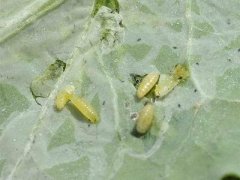
Damage symptoms of flower leafminer flies and identification of larval morphology
What are the damaging habits of the Liriomyza leafminer, and what does it look like? Do you know? Would you like to learn about it? Let's take a look together. Damaging habits: Adults lay eggs inside the leaf mesophyll, and the larvae first mine and feed beneath the epidermis on the light-facing side of the leaf, creating grayish-white feeding marks on the leaf.
-
How can sheep bot fly larvae disease be treated effectively?
Sheep bot fly larvae disease mainly affects sheep and goats. This disease mainly occurs from early autumn to mid-autumn. After infection, the sheep become restless, showing symptoms such as shaking the head, running around, and lowering the head to press the tip of the nose against the ground; some hide their heads under the bellies of other sheep. Treatment: (1) In early autumn, when adult flies fly and deposit larvae, an insecticidal ointment can be applied to the sheep's nose and nostrils once every 7 days to prevent adult flies from depositing larvae. (2) Spray 60 ml of 3% Lysol solution into the sheep's nostrils once a day for 7 consecutive days; the curative effect is excellent.
-
Can You Eat Bayberry If It Has Worms? Salt Water Soaking to Remove Worms and Cleaning Methods
The small white worms in bayberry are fruit fly larvae, basically harmless and safe to eat. This article introduces the method of soaking in salt water for 10 to 20 minutes to remove the worms, cleaning bayberry with cornstarch water, as well as tips for selecting fresh bayberry and its ripening time, to help you enjoy it with peace of mind.
条件筛选