-
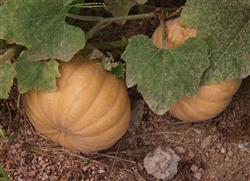
Techniques for Skillfully Trellising Pumpkins in Spring Polytunnel
Spring open-field cultivation techniques 1. Sowing and seedling raising: The pumpkin varieties introduced above belong to the Western pumpkin type, and for spring cultivation early sowing is suitable; the sowing date can be calculated back from the planting time. For example, in the Jianghuai region, planting can be done in mid-to-late April, and counting on a seedling age of 30 days, sowing should be done in mid-to-late March. If a specific time is needed...
-
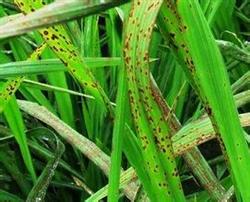
Identifying Zinc Deficiency Symptoms in Rice and Techniques for Skillfully Applying Zinc Fertilizer in Paddy Fields
Zinc is one of the essential trace elements for the growth and development of rice. Zinc deficiency in rice shows obvious symptoms. When rice is deficient in zinc, chlorotic yellow-white spots first appear in the midrib area of the lower leaves, with reddish-brown spots and irregular patches forming on them, which then gradually expand into reddish-brown streaks, turning reddish-brown and drying from the leaf tip downward, and from...
-
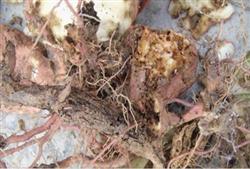
Two Methods for Poisoning and Killing Underground Pests of Sweet Potato
When sweet potatoes are damaged by underground pests, they become riddled with pest entry holes and tunnels, cannot be processed or eaten, and rot more quickly, causing reduced yields. In production, the following methods can be promptly adopted for poisoning and control to improve yield and quality. 1. Spray Lorsban. During the growth and development period of sweet potatoes, spray the leaves once every 10-15 days with a 1000-fold Lorsban aqueous solution...
-
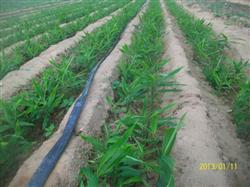
How to skillfully apply nitrogen fertilizer to ginger for high quality and high yield
Reasonably applying suitable varieties of nitrogen fertilizer according to the fertilizer uptake pattern of ginger can greatly increase yield, improve quality, increase the starch, protein and volatile oil content of commercial ginger, and reduce the soluble sugar and cellulose content. Among the four nitrogen fertilizers ammonium bicarbonate, sodium nitrate, urea and ammonium nitrate, sodium nitrate has the...
-
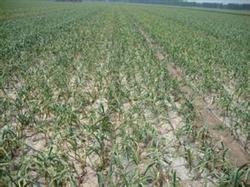
Good garlic growth depends on the skillful application of four kinds of fertilizer
Year-after-year garlic cultivation creates a series of problems that give farmers a headache. Because land resources are limited, continuous cropping of garlic is very common in Feng County, Jiangsu, and this has also led to the buildup of various pathogens in the soil, causing the trace elements that garlic can easily absorb to gradually decline, resulting in deficiency symptoms. In addition, garlic...
-

How to skillfully manage late-season wheat? These technical points must be mastered
Ensure sufficient soil moisture and base fertilizer. For late-season wheat, never rush to sow by seizing moisture; on the premise of ensuring adequate soil moisture, apply heavy base fertilizer, and where conditions permit, apply 3-5 cubic meters of high-quality farmyard manure per mu; at the same time, according to yield requirements, mix 2/3 of the total nitrogen, phosphorus and potassium chemical fertilizers invested throughout the growth period with farmyard manure, spread them on the surface and plow them into the soil. Choose the right variety and increase the seeding rate. Late-season wheat is suitable for semi-winter varieties, which can be selected according to local conditions. At the same time, determine the actual number of days of late sowing according to local autumn temperatures. Generally, it is advisable to increase the seeding rate by 0.5 kg for each day of delayed sowing, and never
-
Earthing up ginger requires attention to technique; master the skills for a steady high yield
Earthing up is an important measure that determines ginger yield and quality. Only with proper earthing up can ginger grow vigorously and yield high. The rhizome of ginger needs to grow in a dark, moist environment, and stops growing when exposed to light. Therefore, earthing up should be carried out as the ginger grows. If earthing up is not done in time, the ginger rhizome becomes exposed to the air, which seriously affects ginger quality and yield. What methods should be mastered for earthing up ginger? How should earthing up be carried out to better promote rhizome expansion and increase yield? Li
-
72% Biprofezin? WP is a veritable killer of rice pests
This product has a strong stomach-poison and contact action, high insecticidal activity, and excellent systemic activity; it can be absorbed and translocated by crops to kill relatively concealed pests. It is highly effective against the main rice pests, planthoppers and stem borers, and also has good control efficacy against thrips, leafhoppers, rice weevils, etc. At the same time, it can also control various pests on vegetables and fruit trees. Method of use: To control rice pests, use 50 g of this product per mu, and at the peak of young nymphs or larvae, dilute with 30 kg to 50 kg of water for conventional spraying, or dilute with 10 kg of water and spray with a mist sprayer. In the middle and late stages of rice growth
-
Master the Three Earlies and Three Skills for Spring Potato Planting to Achieve High Returns
Three Earlies: Choose early-maturing varieties. Practice has proven that selecting high-yielding, high-quality, virus-free potato varieties with a growth period within 70 days (from emergence to harvest) is the key to achieving high, stable yields and quality in spring-planted potatoes. Currently ideal varieties include Holland No. 7, Holland No. 15, Zhengshu No. 6, etc. Start sprouting early. Using a sunny cold frame before planting to pre-sprout can make potatoes emerge early and uniformly, with complete and strong seedlings, promoting early plant development and early tuber formation - this is an important yield-increasing measure. The key points of sprouting technique are: before planting
-
How effective is the Jiaduo frequency-vibration insect-killing lamp at trapping and killing the rice stem borer?
The rice stem borer is one of the important pests in rice production in Wuchang City. In recent years, with changes in rice varieties and warming climate conditions in our city, the occurrence and damage of the rice stem borer have become increasingly serious. According to this autumn's survey, for certain varieties in Wuchang, the average number of insects per 100 steps per mu reached more than 20,000, with the highest in key outbreak areas reaching 60,000, and in some cases more than 100,000. Such insect numbers are rare in history, whether domestically or abroad. In order to further control the damage of the rice stem borer, explore new approaches to its control, and reduce pesticide pollution of rice. This year our city set up at Sun Guanghao's field in Lianhua Village, Wuchang Town
条件筛选