-

How to make candied walnut kernels, a sweet, crisp walnut kernel snack
Production method 1. Material selection: Pass the walnut kernels through a vibrating sieve with 0.8 cm apertures to remove broken kernels, broken skins, insect-damaged and moldy kernels and other substandard kernels, and remove impurities. 2. Boiling: Boil in boiling water for 2-4 minutes, then immediately cool thoroughly with clean water, and rinse to remove the astringent taste. The pre-boiling water should be changed frequently. 3. Water spinning: Put the walnut kernels in cloth bags and spin in a centrifuge for 1-2 minutes so that the walnut kernel content is controlled at about 10%. 4. Sugar coating: Place about 50 kg of the water-spun walnut kernels at a time in
-
Detailed Explanation of High-Yield and High-Quality Cultivation Techniques for Kernel Apricots
In recent years, apricot kernels have been selling very well on domestic and international markets. Apricot kernels contain various nutrients and are a highly nutritious health food; they can also be used as medicine, having functions such as clearing heat and detoxifying, and preventing cancer. Therefore, the cultivation area has been continuously increasing, with broad prospects. Because kernel apricots bloom relatively early and are prone to damage from late frost, combined with extensive management, they cannot achieve their proper yield level and economic benefits. To increase apricot kernel yield and quality and boost benefits, the key points of high-yield and high-quality cultivation techniques for kernel apricots are introduced as follows: 1. Variety selection: kernel apricots
-
Characteristics of the Double-Kernel Softshell Almond Variety
The nut is round-spherical with a pointed tip and light brown color; sweet kernel; thick shell, averaging 0.10 cm; nut weight 1.77-1.83 g, with about 720 nuts per kilogram; kernel weight 0.98-1.15 g. Kernel yield 55.7%-63.0%, oil content 55.4%-56.0%. The double-kernel rate is about 80%. The tree habit is slightly spreading. It bears fruit mainly on small short fruiting branches, with relatively high yield. Strong resistance and wide adaptability. The fruit ripens in late August. The leaves are dark green, broadly lanceolate, with flat leaf margins.
-
Detailed Explanation of Key Techniques for Flower and Fruit Preservation in Kernel Apricots
1. Pre-bloom irrigation: Irrigate about 10 days before the apricot blooms. This can lower the ground temperature, increase air humidity, and delay blooming by 3-4 days, which helps avoid damage from late frost. 2. Frost prevention during the blooming period: During the blooming period, special attention should be paid to frost forecasts. When frost is forecast, smoke methods should be promptly used to prevent frost damage, that is, before the frost occurs, light the previously prepared straw, fallen leaves and other debris so that smoke covers the entire apricot orchard, and the temperature can be raised by about 2°C. Smoke agents can also be used, with a formula of 20% ammonium nitrate, 15% waste diesel oil, 15%
-
Canned Apricot Kernel Processing Methods and Technical Key Points
(1) Process flow: Raw materials → cleaning → shell cracking → material selection → rinsing and soaking → peeling → debittering → color protection → blanching and rinsing → canning → adding broth → exhausting and sealing → sterilization and cooling → heat preservation inspection → finished product (2) Technical requirements 1. Raw materials and cleaning: Select apricot kernels that are large, glossy, fresh, free from mold and damage, and wash them thoroughly with running clean water, then drain. 2. Shell cracking and material washing: Use manual or mechanical shelling to crack the shells and obtain the kernels, selecting high-quality apricot kernels that are plump, free from rot, deterioration and insect damage.
-
Detailed Explanation of Pruning and Training Techniques for Kernel Apricot
Apricot trees are extremely sun-loving. In other countries, tree forms with 2 main branches and no lateral branches on the trunk, or with 4 main branches and no lateral branches on the trunk, are often used. In China, the natural round-headed form or the open-center tiered form is usually adopted, and a few regions use the natural spindle form. In short, there should not be too many main branches, the spacing between tiers should be large, sunlight should be able to enter the inner canopy, there should be many small branch groups and few large branch groups, and then high yields can be achieved. 1. Pruning of young trees Young trees need to expand their canopy as quickly as possible. When pruning, moderately cut back the leaders of the main branches, remove competing branches, crowded branches and whorled branches, and let the main branch leaders grow outward at an angle as single leaders.
-
Introduction to the Characteristics of the Twin-Kernel Soft-Shell Almond Variety
The nut is round and spherical with a pointed tip and light brown color; sweet kernel; thick shell, averaging 0.10 cm; nut weight 1.77-1.83 g, with about 720 nuts per kilogram; kernel weight 0.98-1.15 g. Kernel yield 55.7%-63.0%, oil content 55.4%-56.0%. Twin-kernel rate about 80%. The tree habit is slightly spreading. It bears fruit mainly on small short fruiting branches, with relatively high yield. Strong resistance and wide adaptability. The fruit ripens in late August. Leaves are dark green, broadly lanceolate, with flat leaf margins. On small short fruiting branches there are 2-4 single flowers, white in color.
-
What varieties are first-grade superior varieties of apricots for kernel use?
1. Longwangmao Among the apricot varieties for kernel use currently mainly cultivated in production in China, only Longwangmao is first-grade, and it is called "Longhuang Big Almond" internationally. The fruit is oblate, with an average single fruit weight of 18 g and a maximum of 24 g; the skin is orange-yellow and the flesh is thin; the stone is free. The kernel rate is 17.5%, and the dry stone weight is 2.3 g. The kernel yield is 37.6%, and the average dry kernel weight is 0.8-0.84 g. The kernel is flat and plump, conical with a flat base; the kernel skin is brownish-yellow, and the kernel flesh is milky white, fragrant and crisp in taste, with a slight bitterness. The average yield per tree at 5-6 years old
-
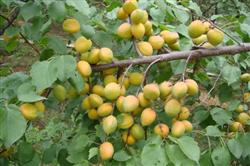
A Detailed Explanation of the Growth and Fruiting Habits of Kernel Apricot and the Key Points of Pruning Techniques
I. Growth and fruiting habits of kernel apricot: 1. Weak branching ability: After planting, kernel apricot produces a few long branches, and once these long branches enter the fruiting stage, they rarely branch, often showing insufficient branch quantity under natural growth. 2. High germination rate: Whether the long branches of kernel apricot are left unpruned or cut back, the vast majority of buds can germinate, ...
-
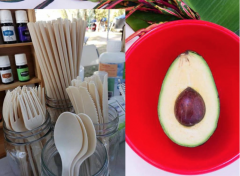
Avocado seeds turned into bioplastic to make tableware, self-decomposes in half a year, very eco-friendly
Avocados, as we all know, are a fairly popular food, but did you know? Its seed can be turned into tableware. How does that work? Let's take a look! In recent years, more and more people have come to love eating avocados, but you would never guess that the avocado seed, besides being
条件筛选