-

Direct combine harvesting of corn kernels saves 100 yuan per mu, putting real benefits into farmers' pockets
Direct combine harvesting of corn kernels saves 100 yuan per mu, straight into the pocket
-

Zhuolu County, Hebei: It's apricot kernel harvest time again
Zhuolu County, Hebei: It's apricot kernel harvest time again
-
What are the control methods for rice kernel smut?
Symptoms Also known as smut, rice dark smut, black kernel smut, etc. It is distributed in the Yangtze River Basin and areas to the south in China, mainly occurring from the flowering stage to the milk-ripe stage of rice, and only infecting the grains. Each panicle may have 1, several, or even dozens of infected grains, with symptoms generally appearing when the rice is near maturity. Infected rice grains turn a dirty green or dirty yellow color, containing black powdery material inside. At maturity, the abdomen splits open, exposing the black powder. Between the inner and outer glumes of the diseased grain there is a black tongue-shaped protrusion, and a black liquid often oozes out, contaminating the surface of the grain. When the diseased grain is opened, the seed can be seen to be partially or entirely transformed into black powdery material.
-
Development and Utilization Value and Methods of Kernel Apricot Flesh
I. Dried Apricot Processing 1. Process flow: apricot flesh → washing → sulfur fumigation → drying → finished product 2. Technical points: (1) Washing. Select flesh that is uniform in appearance, fully ripe, with no fuzz on the fruit surface, small in fruit size and thick in flesh; wash clean with water and drain off the moisture. (2) Sulfur fumigation. Send the material baskets or bamboo trays holding the apricot slices onto the wooden racks in the fumigation room, pour the burning charcoal into the iron pan in the center of the fumigation room, quickly sprinkle sulfur (3-4 kg of sulfur per 1000 kg of apricot slices) onto the charcoal, then leave the fumigation room immediately
-
Detailed Explanation of High-Light-Efficiency Tree Shape Renovation Techniques for Kernel Apricot
In regions where kernel apricots are cultivated, we found that due to the influence of traditional habits, most fruit growers either do not prune or prune unreasonably. Each tree has an average of 8 to 10 large branches, the tree shape is chaotic, the proportion of complete flowers is low, the fruiting zone moves outward, the canopy is closed and shaded, and the small fruit-bearing branches in the lower part die prematurely due to shading, resulting in late fruiting, low yield and poor quality of kernel apricots. Therefore, high-light-efficiency tree shape renovation must be carried out to improve quality and efficiency. High-light-efficiency tree structure for kernel apricots After several years of exploration and practice, we believe that the high-light-efficiency tree shape for apricot should be
-

-
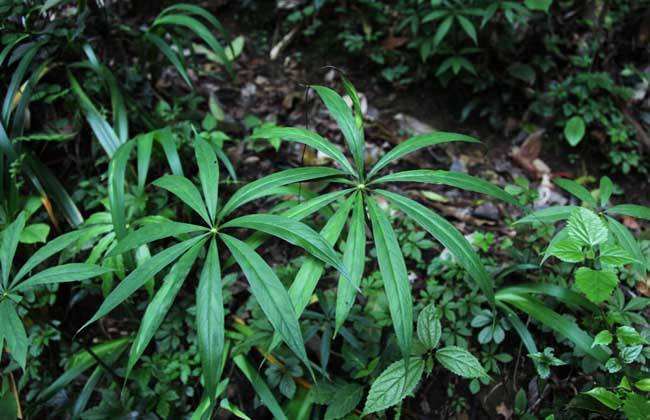
This thing is poisonous. Its roots look like peanut kernels, and it is commonly known as snake corn, yet farmers grow it in large quantities.
Have you ever heard of Arisaema? When you hear this name, you may think of the famous baby's breath, but the two are completely unrelated. Despite its rather artistic name, it is a poisonous plant. Although it is not much to look at and is itself toxic, it...
-
Analysis of the Nutritional Value and Main Nutritional Components of Palm Kernel Meal
Nutritional Value of Palm Kernel Meal
-
-
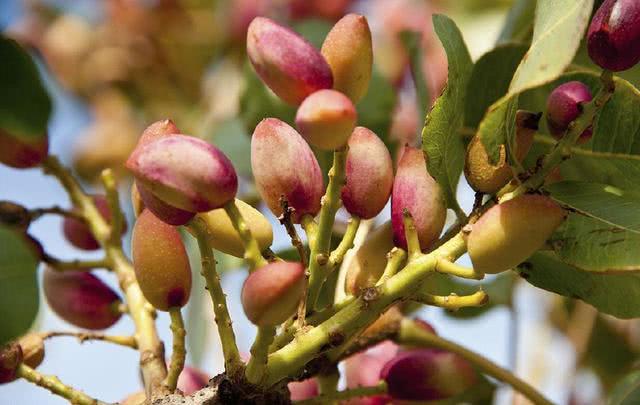
Pistachio is also called anacardia, one of the world's four major nut tree species, and its kernel is a highly nutritious food.
Pistachio tree The pistachio tree (Pistacia vera), also called anacardia, is a small deciduous tree. The tree is about 10 m tall, with odd-pinnate compound leaves, a long lifespan, and slow growth. Counting from the first year of planting the seed, a seedling grown from seed needs at least six years to bear fruit...
条件筛选