Direct combine harvesting of corn kernels saves 100 yuan per mu, putting real benefits into farmers' pockets
Original title: Experts recommend direct combine harvesting technology for corn kernels -
From "harvesting ears" to "harvesting kernels": saving 100 yuan per mu on average
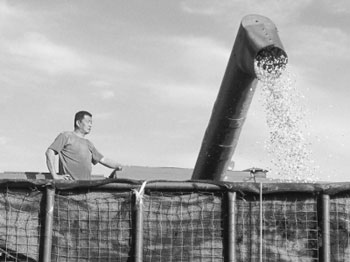
**Direct kernel harvesting site at the 71st Regiment of the Construction Corps
Kernel harvesting site at the experimental base in Linying County, Luohe City, Henan Province, Chinese Academy of Agricultural Sciences
Direct combine harvesting of corn kernels lowers costs by about 100 yuan per mu compared with manual harvesting and by about 50 yuan compared with mechanical ear picking, and it can avoid the losses and mold problems that occur during transport, drying and threshing in manual and mechanical ear-picking harvesting, thereby improving corn product quality. Corn kernel harvesting can also simultaneously achieve straw crushing and return to the field, reducing environmental pollution caused by straw burning.
Corn harvesting is an important part of corn production operations, requiring labor input that accounts for about 55% of the total labor input for corn planting. At present, corn harvesting in China basically has three methods: first, manual harvesting of ears followed by drying and then threshing; second, mechanical harvesting of ears followed by drying and threshing; third, mechanical direct harvesting of kernels. Mechanical corn kernel harvesting means using a combine harvester to complete in one pass the picking of corn ears, husking of ears, threshing, cleaning, straw crushing and other operations; it is the last kilometer of full mechanization in corn production.
Since the beginning of the new century, China's agricultural production methods have been undergoing rapid changes, agriculture is gradually achieving intensive production, and the area under mechanical harvesting will occupy a dominant position. Among these changes, the development from "harvesting ears" to "harvesting kernels" is regarded as another major transformation in corn production technology after "single-seed planting" of corn.
According to Li Shaokun, a researcher at the Institute of Crop Sciences, Chinese Academy of Agricultural Sciences, and a post expert in the National Corn Industrial Technology System, direct combine harvesting of corn kernels lowers costs by about 100 yuan per mu compared with manual harvesting and by about 50 yuan compared with mechanical ear picking, and it can avoid the losses and mold problems that occur during transport, drying and threshing in manual and mechanical ear-picking harvesting, thereby improving corn product quality. Corn kernel harvesting can also simultaneously achieve straw crushing and return to the field, reducing environmental pollution caused by straw burning. Therefore, promoting mechanical corn kernel harvesting has become one of the effective ways for farmers to save costs, increase efficiency and improve the market competitiveness of corn.
Kernel harvesting technology was already widely adopted in developed countries such as those in Europe and America in the 1970s, but its promotion and application in China are still at an initial stage. Since 2010, Li Shaokun's research team has carried out trials and demonstration work on mechanical corn kernel harvesting technology at more than 60 sites across major corn-producing regions nationwide. During the trial and demonstration process, various problems were encountered: late maturity, poor kernel maturity, late-stage lodging, varieties unsuitable for kernel harvesting, lack of suitable harvesting machinery, low harvesting quality, and no drying or storage conditions for harvested kernels, no relevant evaluation standards, and so on. In response to these problems, the research team continuously supplemented and improved the experimental research plan, formulated unified variety evaluation indicators and harvested kernel quality evaluation standards, helped cooperatives and large growers in demonstration areas purchase and allocate harvesting machinery, and at the same time organized various forms of field observation meetings and technical training sessions, actively publicizing modern corn production concepts and mechanical corn kernel harvesting technology to ensure the smooth progress of demonstration and promotion work.
At present, the main factor limiting the promotion of direct combine harvesting technology for corn kernels in China is that mechanical harvesting quality needs to be improved. Generally speaking, indicators for evaluating corn kernel harvesting quality include: kernel breakage rate after harvesting, impurity rate, and field kernel loss and ear loss rates, all of which are closely related to the characteristics of corn varieties. Li Shaokun's research team obtained thousands of sets of experimental data in the field and summarized that varieties suitable for kernel harvesting should have the following basic characteristics:
1. Short growth period and low kernel moisture content at maturity. The moisture content of main varieties currently on the market during the normal harvest period is higher than the optimal moisture content for kernel harvesting (around 25%), resulting in a high kernel breakage rate during harvesting, decreased commercial quality and economic losses. This is especially true in the Huang-Huai-Hai summer corn region, where because wheat and corn are grown twice a year, the corn growth period is limited, placing higher demands on varieties suitable for mechanical kernel harvesting.
2. Strong late-stage lodging resistance. Under mechanized harvesting conditions, lodged corn causes direct yield losses, but in the past, based on manual harvesting, China's corn breeding community focused on early-stage plant lodging resistance and paid insufficient attention to late-stage lodging resistance. The lodging resistance of corn varieties after the maturity stage is generally weak and cannot meet the requirements of mechanized harvesting.
3. Greater suitability for dense planting. Increasing yield through dense planting has been widely recognized. However, as planting density increases, the labor time, intensity and cost of manual harvesting are greatly increased, while the application of mechanized kernel harvesting technology removes the obstacles of dense-planting varieties in production operations.
How should this new technology of direct combine harvesting of corn kernels be promoted? Li Shaokun said: the research team integrated a full-process mechanized production model for dense planting and high yield of corn, with core technologies including dense planting of corn, single-seed precision sowing, mechanical topdressing, direct kernel harvesting, straw return to the field and full-cost accounting. It was selected by the Ministry of Agriculture as a main promoted technology for corn, providing a strong guarantee for the nationwide promotion and application of corn kernel harvesting technology. In the autumn of 2015, the research team organized 32 on-site observation meetings for corn kernel harvesting in 13 major corn-producing provinces (municipalities and regions) nationwide, including Liaoning, Jilin, Heilongjiang, Inner Mongolia, Ningxia, Gansu, Beijing, Tianjin, Hebei, Henan, Shandong, Jiangsu and **, and the promotion and application of this technology received widespread social recognition.
Of course, corn kernel harvesting is absolutely not simply a change in variety characteristics; it also requires adjustment, change, coordination and support from all links in the entire industrial chain, all aspects of supporting industries, and industrial policies and administrative measures, such as kernel harvesting machinery, straw treatment machinery, supporting industrial capacity, grain collection and storage processes and policies, and so on. (Text/Photos by our reporter Li Yaling)