This thing is poisonous. Its roots look like peanut kernels, and it is commonly known as snake corn, yet farmers grow it in large quantities.
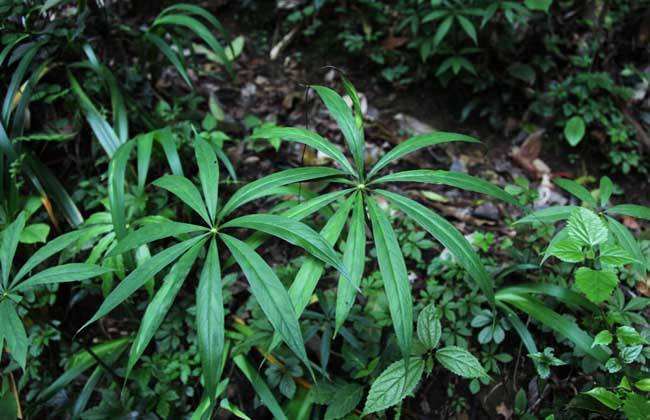
Have you ever heard of Arisaema? When you hear this name, you may think of the famous baby's breath, but the two are completely unrelated. Despite its rather artistic name, it is a poisonous plant. Although it is not much to look at, is itself toxic, and cannot be eaten, it is a traditional Chinese medicinal herb with a long history in China. It is widely used in medicine, both internally and externally, and can also help drive away insects and flies.
It can treat snakebite envenomation, and is commonly known as "snake corn." It is cultivated in both northern and southern China, and Arisaema can be found in most provinces. It likes to grow in shrub thickets and grassy areas, which shows that it prefers damp environments.
Arisaema can be seen in rural areas, and many older farmer friends still keep the custom of using Arisaema to treat illnesses. Arisaema has strong medicinal value, and there has long been a saying about its toxicity, with the whole plant being poisonous.
Arisaema tastes extremely bitter. Once accidentally eaten, it causes strong irritation to the body and can also damage the skin. If gastric lavage is not performed immediately at that point, the toxins will quickly paralyze the nerves, disrupt gastrointestinal function, and cause vomiting and nausea. In severe cases, breathing difficulties may occur, and if treatment is not timely, it can also damage the brain nerves and leave lifelong aftereffects.
Accidentally eating Arisaema is actually quite easy to notice, because the reaction is very severe, generally hard for a person to endure, and the body surface feels as if it is being bitten by insects, just like the sinister poison in martial arts novels. Arisaema is exactly like this. In severe cases, the skin may also ulcerate, and breathing may become impossible. If not treated in time, it can be fatal.
After reading the description of Arisaema poisoning, I immediately pictured a scene of poisoning in a martial arts novel. It really is a terrifying poisonous plant. But it is precisely this kind of poisonous plant that some people use as medicine, and its medicinal effects are remarkable. Truly, the identity between poison and medicine is only a fine line.
Arisaema is widely used in traditional Chinese medicine. It is effective in clearing dryness and transforming phlegm, dispelling wind and stopping spasms, and treating cough with profuse phlegm, numb and inflexible hands and feet, epilepsy symptoms, tetanus, and traumatic injuries. In addition, it can also be used to treat snake and insect bites, and to repel and eliminate flies and insects.
Although it is toxic, the whole plant is a treasure. Its roots look like peanut kernels and contain a large amount of starch, so local farmer friends not only grow Arisaema in large quantities, but also use it to make alcohol and some pastes. Because it is widely used in traditional Chinese medicine, demand is also quite high, and as a medicinal crop its cultivation prospects are still very promising.
Dear friends, do you know about Arisaema? Do you grow it where you are? You are welcome to leave a comment and share your views!