-

Comprehensive Utilization Techniques for Fish Fingerling Ponds During the Winter Fallow Period
Using Winter-Fallow Fingerling Ponds to Raise Marketable Fish Raising a crop of marketable fish in winter-fallow fingerling ponds can both increase production and help regulate the "summer shortage" in the aquatic product market. Because the rearing period is relatively short and temperatures are low, the following techniques should be adopted: 1. Stock early, that is, stock immediately after the fingerlings are concentrated in ponds, so as to make full use of the growing period. Based on a maximum water depth of 2 m, the usual stocking rate is 125-150 kg per mu. The usual stocking ratio is about 40% silver carp, about 10% bighead carp, about 30% grass carp and bream, and about 20% black carp and common carp. Stocked fish
-
Detailed Explanation of Pig Immunization Programs: Vaccination Schedules for Pig Farms
Pig farms must always uphold the principle that prevention is more important than treatment, and establish a strict epidemic prevention system. To ensure good returns from pig farming, on the basis of regularly disinfecting pig farms and pens, the following immunization procedures must also be properly carried out: 1. Immunization of replacement gilts. Replacement gilts 1 month before mating, and multiparous sows after weaning, should be vaccinated as follows: 1. Swine fever vaccine, 4 doses per head; 2. Swine erysipelas and swine pasteurellosis combined vaccine, 1 dose per head; 3. Swine Japanese encephalitis vaccine, 1 dose per head; 4. Porcine parvovirus vaccine, 1 dose per head
-
Mushrooms can achieve increased yields with traditional fertilization methods
Applying mushroom soup. Collect and wash the mushroom bases and broken mushrooms cut off during harvesting and processing, cut them into thin slices, add 1-1.5 kg of water per kg and boil for 15 minutes, take the filtrate and dilute it with water to 10-15 kg, and spray it on 30-40 sq m of mushroom beds. Applying it at the peak of fruiting can make the fruiting bodies thick and fleshy and extend the peak fruiting period. Spraying plant ash. Soak 25 kg of plant ash in 50 kg of water, filter it, and spray it to prevent mushrooms from turning red. Spraying chemical fertilizer solution. Take 0.1%-0.2% urea solution, every
-
How to fertilize rice? Mastering scientific fertilization methods is key
Use organic fertilizer together with chemical fertilizer. Organic fertilizer is rich in organic matter, can build up soil fertility, provide a variety of nutrients, and also supply compounds with auxin- and hormone-like properties. Applying organic fertilizer helps maintain the nitrogen reserves in rice paddy soil. Organic fertilizer releases nutrients slowly, while chemical fertilizers are mostly quick-acting fertilizers that supply nutrients rapidly; using the two together makes the nutrient supply relatively steady. The organic acids and humic acids in organic fertilizer can bind with iron and aluminum in the soil, reducing the fixation of phosphate fertilizer by the soil and increasing the amount of available phosphorus and the
-
How to apply the three fertilizers well for rice? Detailed explanation of the key points of fertilization methods
Excessive vegetative growth of seedlings causes ineffective tillers to proliferate rapidly, leading to delayed maturity with excessive greenness; some seedlings grow so densely shaded that they trigger diseases such as sheath blight or rice blast. In paddy fields where fertilizer damage occurs, it causes yield reduction in mild cases and forces the seedlings to be plowed up and replanted in severe cases. To give full play to the fertilization effect on rice, in addition to applying sufficient base fertilizer, the "three fertilizers" must be applied well as topdressing, namely tillering fertilizer, panicle fertilizer and grain fertilizer. Rice fertilization should be considered comprehensively and applied flexibly according to variety characteristics, soil fertility, climate factors and cultivation conditions. The fertilizer demand of rice is expressed in the nutritional stage, the critical nutritional period and the period of maximum nutritional efficiency.
-
Detailed Explanation of Key Fertilization Techniques for Mushroom Cultivation
Mushrooms require relatively large amounts of nutrients for growth. If nutrients cannot be supplied in time, the fruiting bodies will grow poorly, and especially in the later stage, premature senescence may occur. Particularly when the compost quality is poor, with little manure and much straw, and the casing layer is thin, yield and quality will be noticeably affected. Therefore, in the later stage of mushroom growth, timely and appropriate topdressing is beneficial for improving yield and quality. However, topdressing for mushrooms can only play a supplementary role, and attention must be paid to its effects to prevent the growth of contaminating microorganisms caused by improper topdressing. In addition, the concentration and amount of topdressing must be controlled.
-
Detailed Explanation of Apricot Processing and Utilization Technology
1. Special-flavor Apricot Plum Apricots are nutritious and delicious. Because apricots have a short ripening period, rot easily, and do not store well, in recent years their economic value has mostly been concentrated in the apricot kernels. Especially in more remote mountainous areas, much of the apricot flesh is left to rot. Although some enterprises process dried apricots, in order to extend the processing period they often use unripe apricots to make the preserved fruit, so the products cannot match the nutrition, flavor and mouthfeel of natural apricots. This research and development center has used advanced biological fermentation technology and vacuum cold osmotic pressure technology to develop a product that preserves
-
Key Technical Points and Detailed Explanation of Epidemic Prevention Methods for Swine Disease Immunization
Reference Immunization Program 1. Vaccines Recommended for General Inoculation 1.1 Classical Swine Fever Immunization: Newborn piglets receive their first vaccination with the conventional dose of lapinized attenuated classical swine fever virus vaccine at 20 days of age. (It is best to promote zero-time pre-immunization.) Piglets at 50-60 days of age receive the routine second immunization. Selected replacement pigs receive a third immunization before participating in mating. 1.2 Swine Paratyphoid Immunization: The entire herd of adult and replacement pigs are immunized at conventional doses in March of spring and September of autumn. Pig
-
What are the precautions for pig immunization? Pig farmers need to master these key points
Pig farmers immunize their pigs once, twice or more times every year, but the pigs still contract infectious diseases they have been immunized against, causing huge losses. What is the reason? This has a great deal to do with neglecting the precautions for immunization. Therefore, we offer a reminder to pig farmers. First, be careful to buy vaccines from reliable sources. Vaccines or bacterial vaccines need to be managed by special methods so they do not lose their efficacy. Before buying a vaccine or bacterial vaccine, confirm whether the department selling the vaccine has a certain level of technical capability, so as to ensure the efficacy of the
-
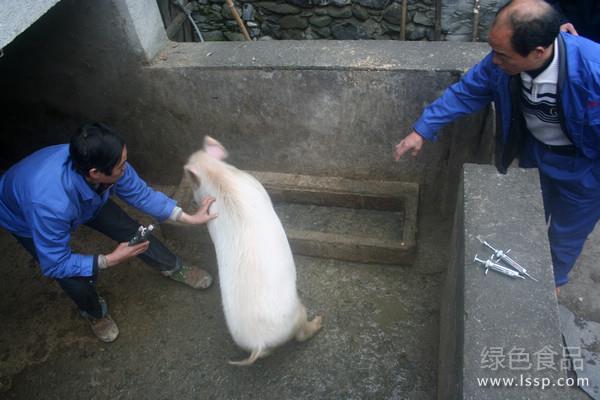
Precautions for Preventing Adverse Reactions During Livestock Immunization
Precautions for Preventing Adverse Reactions in Livestock Immunization
条件筛选