Precautions for Preventing Adverse Reactions During Livestock Immunization
Livestock Immunity
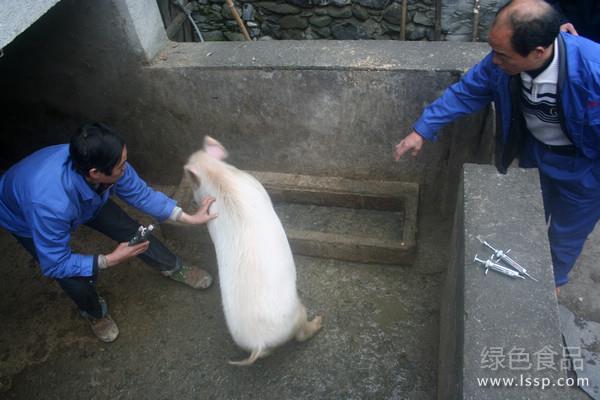
Immunization of livestock and poultry is an artificially acquired immune process. It is an extremely effective means of stimulating the animal body to produce specific resistance through vaccination, reducing susceptibility, and thereby preventing and controlling the occurrence of infectious diseases in livestock and poultry, lowering mortality rates, and reducing losses in the breeding industry.
Animal immunization is divided into routine vaccination and emergency vaccination. Routine vaccination is a planned immunization method carried out in areas where certain infectious diseases frequently occur or where there is a potential threat of infectious diseases. Immunization in the general sense mainly refers to routine vaccination. Emergency vaccination is a responsive immunization method carried out on animals in epidemic areas and threatened areas when an animal disease occurs, in order to rapidly control the spread of the disease and eradicate it.
Whether routine vaccination or emergency vaccination, a reasonable immunization program must be formulated, operating standards strictly followed, and precautions observed to ensure immunization safety and quality. Once an adverse reaction occurs during immunization, effective measures must be taken promptly. The following are treatment methods for adverse immunization reactions:
I. Immunization Method and Immunization Dose
When different vaccines, especially those produced using the same production process, are injected simultaneously, adverse reactions may compound. Therefore, unless clinical trials have confirmed that different vaccines can be injected simultaneously at separate sites, immunization must be carried out strictly in accordance with the immunization method and immunization dose specified in the vaccine instructions.
A small-scale preliminary trial is required before immunization with different batches of vaccine. Before using different batches of foot-and-mouth disease vaccine for large-scale centralized immunization, especially for large-scale farms, a preliminary trial on 5-10 animals due for vaccination is needed in advance. Only after confirming that no serious adverse reactions will occur can large-scale immunization be carried out.
II. Diagnosis and Treatment of Adverse Immunization Reactions
(I) Diagnosis of adverse immunization reactions. Adverse reactions unrelated to the immune effect that occur after vaccination of animals are called adverse immunization reactions. Adverse immunization reactions are divided into general adverse reactions, serious adverse reactions, and adverse reaction death.
1. General adverse reactions. After compulsory immunization personnel carry out foot-and-mouth disease immunization on animals due for vaccination according to prescribed procedures, swelling at the injection site, lameness of the limb on the injected side, elevated body temperature, accelerated breathing, reduced feeding or brief cessation of feeding, and decreased milk production occurring within two days are general adverse reactions.
2. Serious adverse reactions. After compulsory immunization personnel carry out foot-and-mouth disease immunization on animals due for vaccination according to prescribed procedures, restlessness while standing, inability to rise from lying down, difficulty breathing, congestion or edema of visible mucous membranes, muscle tremors, rumen bloating, white foam at the corners of the mouth, falling down with convulsions, nasal bleeding, and abortion in pregnant animals (including premature birth) occurring within two days are serious adverse reactions.
3. Adverse reaction death. After compulsory immunization personnel carry out foot-and-mouth disease immunization on animals due for vaccination according to prescribed procedures, death without treatment, death after ineffective treatment, or death of aborted (including premature) fetuses within five days is adverse reaction death.
(II) Emergency Treatment of Adverse Immunization Reactions
1. General adverse reactions. After the township veterinary station receives a report of an adverse reaction, if it is a general adverse reaction, it should promptly guide the livestock raiser to handle it themselves.
2. Serious adverse reactions. If on-site assessment determines it to be a serious adverse reaction, emergency treatment may be carried out according to the following treatment plans.
(1) Treatment of the most acute type. If serious adverse reaction manifestations occur within 2 hours after vaccine injection, one or more of the following plans may be selected for emergency treatment according to the specific situation. I. Subcutaneous injection of 0.1% adrenaline hydrochloride, 5 mL for cattle, 1 mL for pigs and sheep. Depending on the degree of remission, repeat the injection once after 20 minutes. II. Intramuscular injection of promethazine hydrochloride, 500 mg for cattle, 100 mg for pigs and sheep. III. Intramuscular injection of dexamethasone sodium phosphate, 30 mg for cattle, 10 mg for pigs and sheep (not for pregnant animals).
(2) Treatment of animals already in shock. If shock occurs in animals within 2 hours after immunization, one or more of the following plans may be selected for emergency treatment. I. Carry out treatment according to the method for the most acute type. II. Quickly prick the ear tip, tail base, hoof head, great vessel acupoint and other sites with a needle to let a small amount of blood. III. Add norepinephrine (10 mg for cattle, 2 mg for pigs and sheep) to 10% glucose injection (1500 mL for cattle, 500 mL for pigs and sheep) for intravenous drip. After the animal regains consciousness and the pulse rhythm gradually recovers, withdraw this group of drugs and switch to 5% glucose injection (2000 mL for cattle, 500 mL for pigs and sheep), adding vitamin C (5 g for cattle, 1 g for pigs and sheep) and vitamin B6 (3000 mg for cattle, 500 mg for pigs and sheep) for intravenous drip, followed by 5% sodium bicarbonate solution (500 mL for cattle, 100 mL for pigs and sheep) for intravenous drip.
(3) Treatment of the acute type. The treatment methods and medications are the same as for the most acute type.