-

Geranium Winter Care Methods and Precautions
Geraniums like warm winters and cool summers. Indoors in winter, keeping them at 10-15°C during the day and above 8°C at night allows them to bloom normally. However, the optimal temperature is 15-20°C. Geraniums like dry conditions and dislike dampness, so watering should not be excessive in winter; water should be given intermittently, allowing the soil to dry between waterings. When the soil is wet, the stems become soft and tender, which is unfavorable for the sprouting and opening of flower stems; prolonged excessive moisture will cause the plant to grow leggy, the flower stems to be positioned higher up, and the leaves to gradually yellow and drop. Geraniums need ample sunlight during their growing period, so in winter they must be placed in a sunny spot. With insufficient light, the stems and leaves grow leggy
-
Key Technical Points and Management Methods for Winter Soybean Cultivation
1. Sowing time. The sowing window for winter soybeans is quite flexible; yields do not differ noticeably when sowing from early April to early June. In practice, to ensure winter soybeans obtain a suitable stand of basic seedlings, in addition to correctly determining the number of hills per mu to provide the density basis, sowing should generally be done during the period before the corn canopy closes, so that the soybean seedlings have already formed the necessary vegetative mass before shading intensifies, which helps ensure the basic seedling stand. In strip-planting areas, it is best to sow together with corn or slightly later, that is, in mid-to-late April; in sole-cropping areas after the small spring crop, it is best to sow in early-to-mid May. 2. Planting method. Winter soybean planting method
-
Interplanting autumn soybeans in rice paddies yields good increases in both output and income
According to trials: after the mid-season rice harvest, by using the temperature and light conditions in the field, planting an additional season of autumn soybeans can increase soybean yield by 60-120 kg/mu, with economic income of 150-420 yuan/mu, giving a relatively good effect of increasing both output and income, and it is suitable for extension in ratoon rice areas below 400 m in altitude. The key technical points are as follows: 1. Suitable site and good varieties: fields below 400 m in altitude with no water for retaining ratoon rice, as well as all rice seed production fields, can be planted. After the rice grains have set, open ditches to drain water; after the rice harvest, promptly clear weeds and rice stubble, without plowing, and according to
-
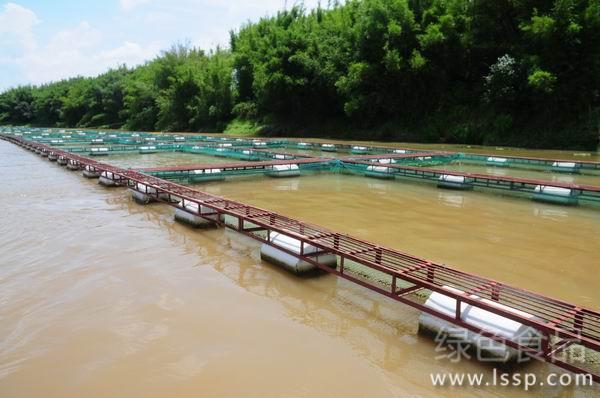
What are the key points for production management during the overwintering stage of freshwater aquaculture
Key points for production management during the overwintering stage of freshwater aquaculture
-
Cattle farmers must guard against cold-induced dehydration in cattle in winter
Water can both cool them down and warm them up. 1) Cooling with water: For each adult cow, each time mix 0.3-0.6 kg of baijiu (Chinese liquor) or 0.2 kg of urea into 5 kg of cold water and let the cow drink it on its own. Alternatively, the day before feeding hay, soak the hay in cold water for 3-5 hours, then feed it to the cow. 2) Warming with water: In winter, when the weather is cold, for cows in weak body condition, heat clean water to 40°C and add 30-50 g of table salt or 100 g of soy sauce per kg of water and let them drink it. 2. Feeding nutritional tonics
-
What are some practical methods for protecting fish and soft-shelled turtles from the cold in winter?
1. Pond selection: Choose a deep-water pond (over 2 m deep) that is sheltered from the wind and faces the sun for natural overwintering. The water in the overwintering pond should not remain stagnant for long periods; usually replace part of the pond water every 20 to 30 days, each time replacing 1/4 to 1/5 of the total pond water, to prevent pond water contamination. 2. Set up windbreaks and cold-shelter holes: On the north side of the pond, a 2 m high windbreak can be built from straw or soil, and on the east and west sides, earthen walls sloping toward the south can be built in a dustpan shape to reduce the impact of the north wind, so that when a cold wave strikes, the water temperature will not drop significantly. Around the pond,
-
Introduction of new giant winter peach varieties, a first look at new peach varieties
The "Giant Winter Peach", king of Chinese peaches, is a newly bred superior winter peach variety from the Zhengzhou Fruit Research Institute of the Chinese Academy of Agricultural Sciences. Its outstanding characteristics are as follows: exceptionally large fruit. The average single fruit weight reaches over 400 grams, with the largest single fruit reaching 1200 grams. The fruit is nearly round, making it one of the largest peach varieties currently available in China. Beautiful appearance and excellent quality. After ripening, the fruit fuzz falls off naturally. The background color of the fruit surface is creamy yellow, and the fruit surface is bright red, very gorgeous, matching international popular colors; the flesh is milky white, dense in texture, tender and firm, with a sweet and delicate fragrance, and a sugar content of 17%-19%
-
What should be noted when intercropping in a peach orchard?
Points to note when intercropping in a peach orchard: after the peach trees are planted, the trees are still small, so tall-stemmed crops are not suitable for the intercropped land; peanuts, root and tuber crops, and legumes are preferable. Intercropped crops must not be planted too close to the tree trunks. Generally, for newly planted trees, a tree plate of about 1 sq m can be left, and for trees that have just begun to bear fruit, a tree plate of about 2 to 3 sq m should be left, to prevent the intercropped crops from competing with the fruit trees for fertilizer and water. To increase soil organic matter, green manure can be interplanted between the rows of peach trees. Interplanting green manure is an important way to resolve the competition between fruit trees and grain crops for fertilizer.
-
Ten Proven Recipes for Fattening Thin Rabbits in Autumn and Winter
After making it through the hot summer, most domestic rabbits are weak and thin, so as soon as autumn begins you must hurry to increase their feed and build them up, in order to improve their strength and productivity. The following methods can be used to fatten thin rabbits in autumn and winter. 1. For rabbits with coarse, messy fur and poor spirits, take an appropriate amount of tea leaves, plus 15 grams each of Clubmoss (Huperzia) and honeysuckle, decoct into a liquid and administer orally, twice a day, 10-15 ml per rabbit each time, for 3-5 consecutive days, with marked effect. 2. Dissolve 5-7 grams of white sugar per rabbit per day in warm water and let the rabbit drink it freely. Generally after 15-20 days
-
Winter cherry blossoms are light and delicate, a brilliant sight in winter
Winter cherry blossom (Cerasus cerasoides), also known as Gaopen cherry and winter begonia, belongs to the Rosaceae family. It blooms in autumn and winter, with pink flowers; when in full bloom, the whole tree is covered in a profusion of blossoms, dazzling and eye-catching; after flowering, purple-red young leaves continue to grow, which can enrich the color changes of winter garden plants, adding a gorgeous natural landscape to the flower-scarce winter, and is of great significance to the winter landscape of cities in subtropical regions. Winter cherry blossom is a deciduous tree, reaching 3-10 m tall. Leaves alternate, ovate-lanceolate or oblong,
条件筛选