-

Under full-light cultivation of Schisandra chinensis, Welsh onion or Schisandra chinensis seedlings can be intercropped
To make full use of the land between the rows of cultivated Schisandra chinensis, before the Schisandra chinensis plants reach fruit-bearing at 4 years of age, intercropping Welsh onion or Schisandra chinensis seedlings can yield certain economic benefits to offset the costs of cultivating Schisandra chinensis. I. Planning 1. When Schisandra chinensis is cultivated with a row spacing of 1.5 m and a plant spacing of 0.5 m, the available inter-row land area per mu (667 sq m) of Schisandra chinensis orchard is as follows: for each mu (667 sq m) of land, estimated by a long side of 33 m and a short side of 20 m (660 sq m), with a row spacing of 1.5 m, 22 rows can be laid out, each 20 m long; at the early stage of cultivation, the horizontal spread of the Schisandra chinensis root system is not large, so the width of the Schisandra chinensis seedling belt can be kept at 80 cm (40 cm on each side), the usable inter-row width is 70 cm, leaving a ditch width of 10 cm on each side, and one ridge 50 cm wide can be formed, on which 2 rows of Welsh onion are planted, with a row spacing of 10-15 cm and a plant spacing of 10 cm. Based on this calculation, each inter-row space can plant 10 sq m of Welsh onion, and each mu of Schisandra chinensis orchard can plant 22 rows of Welsh onion, requiring 9,680 Welsh onion sets; each Welsh onion set is 1.5-2 cm in diameter, about 80 per jin, so about 120 jin of Welsh onion sets are needed, and the plantable Welsh onion area is 220 sq m.
-
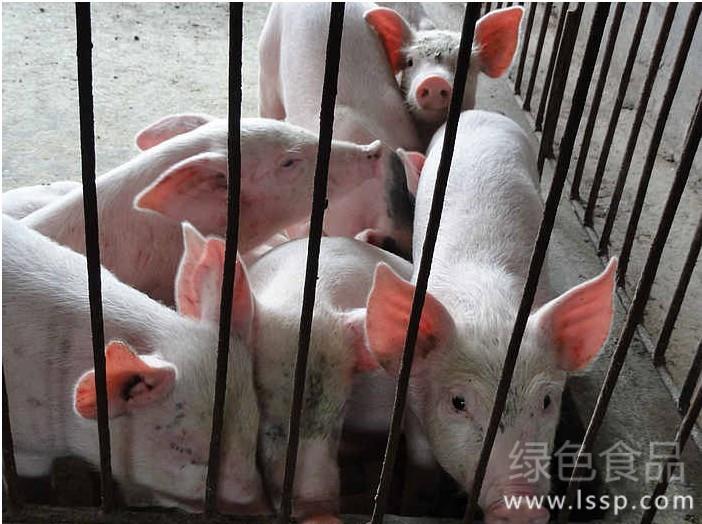
Key points for raising pigs in winter: cold protection and warmth must be done well
Key points for raising pigs in winter: strengthen cold protection and warmth
-
Want to raise pigs safely and efficiently in winter? Managing these three aspects is key
Winter temperatures are low and the weather is cold, which is not conducive to the normal growth and development of pigs, and also makes them prone to illness. Therefore, safe pig raising in winter should revolve around the theme of cold protection, and specifically the following three aspects should be grasped: 1. Increasing the temperature. There are many ways to raise the temperature of the pig house, but there are four simple, economical, and practical methods: 1. Cover open-style pig houses with plastic film. It is best to cover with double-layer plastic film. Although the cost is higher than single-layer plastic film covering, the insulation effect is better. This method is suitable
-
3 Management Points for Safe and Efficient Pig Farming in Winter
Winter temperatures are low and the weather is cold, which is not conducive to the normal growth and development of pigs and also makes them prone to disease. Therefore, safe pig farming in winter should revolve around the theme of cold protection, and specifically the following three aspects should be grasped: 1. Raising the temperature. There are many ways to raise the temperature of pig housing, but there are four simple, economical and practical methods: 1. Cover open-style pig housing with plastic film. It is best to cover with double-layer plastic film. Although the cost is somewhat higher than single-layer plastic film covering, the insulation effect is better. This
-
Things to Keep in Mind When Selecting Fish Fingerlings in Winter and Spring
1. Pay attention to whether the fingerlings are uniform. If the fingerlings in the same pond vary in size, have relatively straight belly lines, thin and elongated tails, and slender bodies, then after being placed in a fish cage for 30 minutes they will show weak, sluggish movement, and some may even show symptoms of disease. Such fish cannot be stocked into ponds, nor are they suitable for long-distance transport; you may reduce the stocking density or move them to fertilized water for rearing. If they are indeed diseased, timely treatment is also needed. 2. Pay attention to the body length of the fingerlings. Whenever seining exercise is carried out, the fingerlings jump vigorously
-
Key Techniques and Management Measures for Winter Potato Cultivation
1. Pre-sowing preparation: In mid-February, prepare agricultural materials such as seed potatoes, pesticides, chemical fertilizers and agricultural film. Place the seed potatoes indoors at about 12°C to sprout. 2. Cut the seed potatoes: Make sure each seed potato piece has at least 1-2 eyes and weighs about 30 grams. Treat the cut seed potato pieces with a seed dressing. The formula for the medicinal powder is: add 250 grams of 70% thiophanate-methyl wettable powder to 50 kg of talcum powder. 3. Sow early at the right time: Generally sow from late January to early February, with a row spacing of 90
-
Key Points of Mechanized Intertillage and Ridging Technology for Potatoes
At present, it is exactly the intertillage stage of potato planting. To guide agricultural machinery operators in production, the precautions and troubleshooting of mechanized intertillage and ridging technology for potatoes are introduced as follows: 1. Adjustment methods (taking the 3ZF-4 model as an example) 1. Row spacing adjustment. Row spacing adjustment of the 3ZF-4 potato intertillage fertilizer applicator: taking the center line of the front crossbeam of the intertillage machine as the baseline, loosen the fixing screws on the main beam connecting the intertillage fertilizer applicator units on both sides, move the intertillage fertilizer applicator units, measure the spacing between the middle points of two adjacent shovel tips to the required size
-
Potato Intercropping Cultivation Models and Key Technical Points
To improve land utilization and increase farmers' income, several intercropping and relay-cropping models with potato as the main crop are introduced here, for the reference of farmer friends and grassroots leaders in adjusting the agricultural structure. 1. Potato-cotton. Potatoes are sprouted in late January and sown in mid-to-late February, using plastic film mulch cultivation. The varieties selected are virus-free potatoes Zheng Yin No. 5 and Zheng Yin No. 7, bred by the Zhengzhou Fruit Research Institute of the Chinese Academy of Agricultural Sciences; for cotton, the large-plant, disease-resistant Biao Za A1 is preferable. Potatoes are planted in double rows on high ridges, with wide rows of 8
-
Symptoms and Prevention and Treatment Methods of Canine Intervertebral Disc Disease
Canine intervertebral disc disease is the sudden protrusion or extrusion of the intervertebral disc after disc degeneration. Pekingese and Shih Tzu dogs aged 3-6 years are very prone to it, and the thoracolumbar intervertebral discs are more commonly affected. Intervertebral disc protrusion causes paralysis in affected dogs due to spinal cord compression, and the onset is relatively acute, often occurring suddenly. Causes: Due to genetic factors, calcium and phosphorus malnutrition during puppyhood, trauma, autoimmunity, chondrodystrophy, etc., the canine intervertebral disc undergoes degeneration. (1) When the intervertebral disc undergoes cartilaginous metaplasia,
-
Geranium Winter Care Methods and Maintenance Tips
Geraniums like warmth and fear cold, so in winter special attention should be paid to cold and frost protection. When growing geraniums in northern regions, the potted plants should be moved indoors when Frost's Descent arrives, placed by a sunny window so they receive sufficient light. If light is insufficient, the plants are prone to leggy growth, which affects flower bud formation, and even flower buds that have already formed may wither due to lack of light. If in the south, the potted plants should also be moved to a wind-sheltered, warm, sunny spot after the Start of Winter, which makes it easier for the potted flowers to get more sun and also helps them avoid wind and cold. Indoor temperatures should be maintained at 15°C to 20
条件筛选