-

Experts Assess the Promotion and Application of Integrated Water and Fertilizer Management: Staying Close to the Market Is Key
China ranks first in the world in the use of chemical fertilizers and pesticides, but their utilization rate is 15% to 20% lower than that of developed countries. At the beginning of the year, the Ministry of Agriculture proposed that by 2020 China's agriculture should achieve "one control, two reductions, three basics" and zero growth in chemical fertilizer use. In the fertilizer industry, accelerating transformation and upgrading
-
Experience Sharing on Integrated Pest Management for Grapes
1 Dormant period control techniques (November to March). During this period, the pests that were rampant and causing damage stop their activity, and various pests enter the overwintering state in different insect forms and ways, and their overwintering sites are relatively hidden. 1.1 Clearing the orchard. After the grapes shed their leaves, promptly clear away the fallen leaves, dead branches and weeds,
-
A Detailed Explanation of Integrated Pest and Disease Management Strategies for Walnut Trees
There are many different methods for controlling walnut tree pests and diseases. In practice, the principle of "prevention first, integrated management" should be followed, with agricultural control as the foundation, rational use of pesticides, and integrated management measures combining biological control, physical control and chemical control, so as to
-
Key Technical Points for Integrated Water and Fertilizer Management in Mountain Orchards
Integrated water and fertilizer drip irrigation technology is a new agricultural technique that combines fertilization with drip irrigation. This technology uses a pressure system to dissolve soluble fertilizers into a nutrient solution, based on soil nutrient content and the fertilization characteristics of the crop, and delivers it together with irrigation water through pipes and drippers, evenly, at set times and in set amounts, to the crop root zone...
-
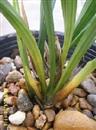
Integrated Pest and Disease Management Methods for Chinese Orchids
For orchids, rot diseases are extremely serious and spread rapidly. Orchid rot diseases mainly consist of two types: soft rot and black rot. In the early stages of soft rot, tiny brown water-soaked spots appear on the leaves, which then expand into dark moist patches; at this point the lesions rupture very easily and exude a foul-smelling...
-
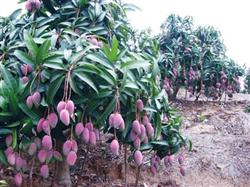
Integrated management with new techniques makes mangoes retain flowers and fruits, with more fruit set
Mango jujube sets fruit easily but retaining it is difficult; from the young fruit stage to the white-ripe stage it keeps dropping fruit, and puzzlingly, it always drops the large ones and keeps the small ones, which distresses jujube growers greatly. In recent years, various flower- and fruit-retention measures were tested on mango, and the following integrated management new techniques were developed to solve this problem: 1...
-
What to do when the white part of scallions is short, thin, and hollow? Control measures and integrated management
1. Select excellent long-white scallion varieties, such as Zhangqiu scallion, grain scallion (whip-pole scallion), etc. 2. Choose a plot with deep soil, fertile texture, and good drainage, and carry out deep plowing and fine harrowing; generally plow deeper than 30 cm, dig 20-30 cm deep, 15-30 cm wide or more, with ridges 70-80 cm wide between furrows to facilitate earthing up. Before planting, open furrows and apply fertilizer, applying 1000-5000 kg of farmyard manure per mu, then subsoil the furrows deeply so that manure and soil are combined. 3. Plant between Grain in Ear and Minor Heat; earlier is better than later. If planted too late,
-
Detailed Explanation of Integrated Pest Management (IPM) Technology in Peach Orchards
The 6 core components of IPM technology in peach orchards: (1) Agricultural control measures for pests and diseases in peach orchards. During winter pruning, remove diseased and pest-infested branches and mummified fruit, and destroy them in a centralized manner; adjust the tree structure, improve ventilation and light penetration conditions, and strengthen tree vigor; (2) Frequency-vibration insect-killing lamp technology for trapping and killing pests. Install 1 insect-killing lamp per 3.3 hm2 of orchard, and use it from early April to mid-October, which can achieve a good insect-killing effect; (3) Sugar-vinegar basin technology for trapping and killing pests. Starting in mid-March, placing sugar-vinegar basins in the orchard has a clear effect on trapping and killing overwintering-generation adults of the peach leafminer moth; (4) Sex phero
-
Detailed Explanation of Key Points for Integrated Pest Management of Edible Fungi
I. Eliminating pests starts from the source. Before the growing season each year, thoroughly clean the mushroom yard and eliminate pest breeding grounds. The cleaning scope includes mushroom houses and courtyards. All spent mushroom bags, straw pile garbage, compost and all organic waste from the previous year should be centrally burned or transported away, and weeds and peat soil should be removed. In the evening, spray with 15 ml of 80% dichlorvos and 5 ml of 1.8% abamectin mixed with 40 kg of water. After an interval of 1 week, apply once more, and after another week, whitewash the mushroom house with bleaching powder and lime slurry, and spread dry lime powder throughout the courtyard
-
Key Integrated Management Techniques for Soybeans During the Flowering and Podding Stage
When soybeans enter the flowering and podding stage, vegetative growth and reproductive growth proceed together, requiring sufficient water, nutrients and light. In terms of cultivation measures, vegetative growth and reproductive growth should be coordinated to achieve many pods and many seeds. The main measures should include the following "three preventions" and strengthened management during the seed-filling and maturation stage. The "three preventions" measures during the flowering and podding stage (1) Preventing excessive vegetative growth: when soybeans have shown 2 tillers and are flowering, use 30 grams of 15% paclobutrazol wettable powder per mu, mix with 40 kg of water, and spray to top the plants, which can shorten internodes, control top vine growth, increase flowers and preserve pods, so that pods cover the top; (2) Preventing drought and waterlogging: during the soybean flowering period, attention should be paid to summer drought, seepage and moisture retention, and in case of severe waterlogging, drain promptly to reduce waterlogging damage; (3) Controlling pests: from the end of July to mid-August is the peak outbreak period for soybean semi-looper, bean hawk moth, leaf roller, alfalfa noctuid and other pests. Pesticides with contact and stomach poison effects such as fenvalerate or cypermethrin plus dimethoate emulsion or dichlorvos can be used for control, eliminating pests at the 1st-2nd instar stage.
条件筛选