-
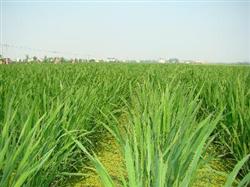
Occurrence Characteristics of Pests and Diseases in High-Mountain Water Bamboo and Integrated Control Techniques
The key points of off-season cultivation techniques for double-cropping water bamboo at low altitudes are introduced as follows: 1. Selection of improved varieties. The Zhejiang Yidianhong water bamboo (a single-cropping type) is selected. 2. Land preparation and seedling raising. Select a field sheltered from wind and facing the sun, with convenient irrigation and drainage and loose, fertile soil, as the seedling bed. In early November, sun-dry the seedlings until they are 60-70% dry, 1...
-
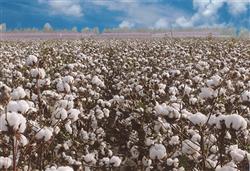
What are the integrated control techniques for cotton pests and diseases?
Topdressing is an important measure for cotton to set more bolls, set large bolls, reduce shedding, and increase yield. However, if topdressing is not done scientifically, it will not achieve the desired effect and sometimes may even produce side effects. In production, cotton topdressing has the following four key points. First, topdress according to the fertilizer requirement pattern. At different growth stages, cotton has different requirements for fertilizer...
-
Occurrence and Integrated Control Methods of Water Bamboo Smut
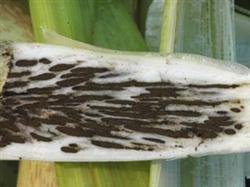
Water bamboo smut is a major disease of water bamboo (Zizania latifolia), mainly affecting the leaf sheaths and the edible swollen stems, leading to reduced yield and quality of water bamboo. The main symptoms and integrated control methods of this disease are briefly described below: 1. Main symptoms: In the early stage of leaf sheath infection, the lesions appear as small dark green round spots, which later develop into oval tumor-like protrusions; in the later stage, the leaf sheaths are filled with black spore masses, causing the leaf sheaths to turn black. When the edible swollen stem is infected, the smut fungus fills the water bamboo tissue, causing the middle to swell and protrude, the edible stem strips to become shorter, and the outer surface to have many longitudinal grooves. It becomes rough, and in severe cases the edible stem is unfit for consumption.
-
Integrated control methods for downy mildew in autumn garland chrysanthemum
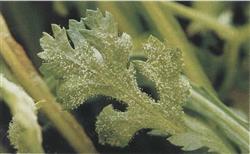
Downy mildew in garland chrysanthemum mainly damages the leaves. In the early stage of the disease, pale yellow nearly round or polygonal lesions appear on the old leaves in the lower part of the plant, gradually spreading to the middle and upper parts of the plant; in the later stage the lesions become yellowish brown, and when the disease is severe the lesions merge into one patch and the leaves turn yellow and die. When humidity is high, white mold develops on the underside of the lesions. The pathogen infects...
-
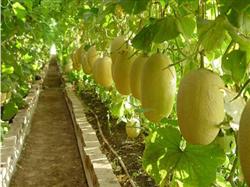
Integrated Control Measures for Gummy Stem Blight of Hami Melon in Rainy Regions
I. Bacterial Leaf Spot Symptoms: In the early stage, water-soaked lesions appear near the veins on the underside of leaves; the lesions expand rapidly and merge into one another, with a yellow halo at the edges. Control method: In the early stage of the disease, spray the foliage 2-3 times with 77% Duoning at 500 times dilution or 3% zhongshengmycin at 800 times dilution, once every 4-5 days. II. Gummy Stem Blight Symptoms...
-
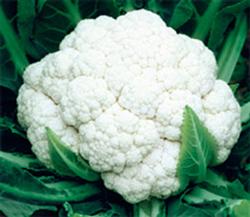
Key Technical Points for Integrated Pest and Disease Control in Bitter Gourd
Cauliflower has poor waterlogging tolerance. When growing cauliflower in rainy areas and in environments with a high water table, deep furrows and high beds should be used to facilitate drainage. This is the key to successful cauliflower cultivation. Cauliflower also should not be grown in continuous cropping. The previous crop is best as cucurbits, solanaceous fruits, or legume vegetables, and fertile...
-
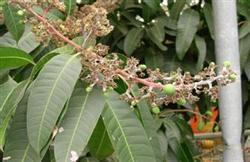
What to do if a mango tree gets sooty mold? Key points of integrated control techniques
I. Causes of mango flower and fruit drop 1. If the mango flowering period and young fruit period encounter low-temperature rainy weather (temperature below l1.5°C) and it lasts a long time, flower and fruit drop will be severe. The flower spikes are damaged and die, a large number of deformed fruits and abortive fruits appear, and they easily fall off naturally. 2. Pests and diseases damage Pests that harm mango...
-
What are the main pests of bayberry (Chinese bayberry)? A detailed guide to integrated control methods
I. Bayberry crown gall disease 1. Symptoms: Bayberry crown gall disease is a bacterial disease. It mainly affects the branches and trunks of 2-3 year old fruiting trees, mostly forming tumors on the branches and trunks. The tumors are nearly spherical, varying in size, very hard and suberized, and brown to dark brown. Generally, the tumors on the branches and trunks begin to enlarge in early April, and in July-August...
-
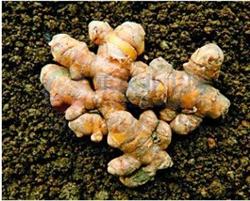
How to prevent and control ginger rot? A detailed explanation of integrated control techniques
1. Select disease-free ginger seed and disinfect seed ginger. Keep seed from disease-free land or select disease-free ginger as seed; before sowing, soak the cut seed ginger in a 800-fold dilution of 50% carbendazim wettable powder for 6 hours, or soak it in a 2000-fold dilution of xinzhiromycin for 24 hours. 2. Ginger field selection and disinfection. The pathogen can survive in soil for more than 2 years, so...
-
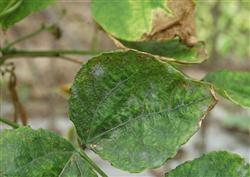
How to carry out integrated control of cowpea rust and powdery mildew in greenhouses?
At the early stage of the disease, spray 70% thiophanate-methyl wettable powder at 500 times dilution, or 40% copper oxychloride wettable powder at 600 times dilution, 50% sulfur suspension concentrate at 300 times dilution, or Fenbiqing at 150 times dilution. Spray 2 to 3 times consecutively, at 5 to 7 day intervals.
条件筛选