-
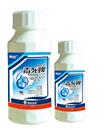
Why do insecticides become less and less effective the more you use them?
Chlorpyrifos is a highly effective, broad-spectrum organophosphorus insecticide that acts on pests through contact toxicity, stomach toxicity and fumigation, and is especially effective against the brown planthopper. The relevant application techniques are described below: 1. Product characteristics: 1. Chlorpyrifos is currently available in China in formulations such as emulsifiable concentrate, granules and microemulsion. Among them...
-
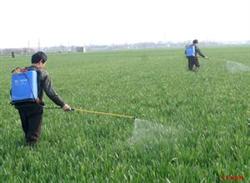
Two key points to master when spraying insecticides
First, choose the favorable time period for application according to climate characteristics and the pests' day-and-night activity patterns. The best application times are 9-10 a.m. and after 4 p.m. This is because at 9-10 a.m., the dew on crop leaves has already dried, and it is precisely when diurnal pests are most active. Applying the insecticide at this time will not...
-

How to apply insecticides scientifically? Correct methods and techniques
To control crop pests with pesticides and achieve the best insecticidal effect, in addition to selecting the right targeted agent and applying it at the right time, you should also pay special attention to the following two issues that are easily overlooked. Different agents and different application methods should be chosen according to the part of the plant the pest damages, so that the pesticide is delivered to the right place. For example, for pests that damage...
-
Using specific insecticides requires particular care; mastering the method is key
Generally speaking, specific insecticides have different active ingredients, each with its own characteristics, and they also have different insecticidal mechanisms of action (that is, the principles by which pesticides kill pests). Varieties of this type often used in production today include: chlorfluazuron, buprofezin, flufenoxuron, diflubenzuron, bisultap, monosultap, imidacloprid, fipronil...
-
Detailed Explanation of Key Points for Using Bacterial Biological Insecticides
Bacterial biological insecticides have advantages such as high insecticidal rate, no environmental pollution, safety to natural enemies, harmlessness to humans and livestock, and not inducing pest resistance. They are a new type of protective pesticide currently promoted for use in pollution-free cultivation. Because their control effect mainly depends on the bacterial activity in the pesticide, the following points need to be kept in mind during use...
-

What are the scientific methods for using bacterial biological insecticides?
From rice sowing to the seedling stage, farmers should focus on controlling seed-borne diseases (bakanae disease, rice blast at the seedling stage, white-tip nematode disease, etc.), the small brown planthopper, and the first-generation stem borers. At the rice booting stage, the focus should be on controlling pests and diseases such as the rice planthopper, rice leaf roller, stem borers, ear blast, and rice false smut. At the rice ear stage, the rice planthopper is the main target, along with...
-
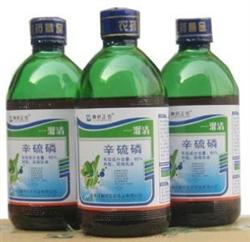
What are the characteristics of organophosphate insecticides?
Organophosphate insecticides are the most widely used and highest-volume class of insecticides in China. They come in many varieties with widely differing properties, but taken together they have the following characteristics: (1) A relatively broad insecticidal spectrum. The organophosphate insecticides commonly used today can control many agricultural and forestry pests, and some can be used to control public health pests...
-
What are the main characteristics of organophosphate insecticides?
(1) Relatively broad insecticidal spectrum. The organophosphate insecticides commonly used today can control many agricultural and forestry pests, and some can be used to control public health pests and external parasites of livestock and poultry. (2) Diversified modes of action, able to meet many different needs. Most varieties have contact and stomach poison action, and some varieties...
-
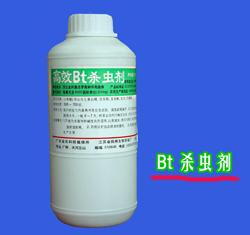
Four points to note when using Bt insecticides
Bt is a bacterial insecticide, belonging to a variety of the Bacillus thuringiensis group, and is very effective against lepidopteran larvae. When using it, pay attention to the following issues: 1. First, pay attention to the quality of Bt. Generally, it is required to contain more than 10 billion spores per milliliter (or per gram), and the application concentration is 500-700 times. If the product...
-
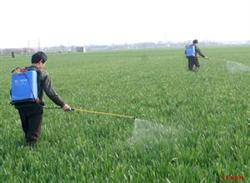
What are the precautions for using bacterial biological insecticides?
To use pesticides to control crop pests and achieve the best insecticidal effect, while selecting the right pesticide and applying it at the right time, you must, based on the three factors that affect efficacy, pay attention to solving the two easily overlooked problems of timely application and delivering the pesticide to the target. 1. The three factors affecting efficacy. 1. Climate. Application...
条件筛选