Two key points to master when spraying insecticides
First, choose the favorable time period for application according to climate characteristics and the pests' day-and-night activity patterns. The best application times are 9-10 a.m. and after 4 p.m. This is because at 9-10 a.m., the dew on crop leaves has already dried, and it is precisely when diurnal pests are most active. Applying the insecticide at this time will not...
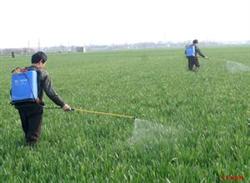
First, choose the favorable time period for application according to climate characteristics and the pests' day-and-night activity patterns. The best application times are 9-10 a.m. and after 4 p.m. This is because at 9-10 a.m., the dew on crop leaves has already dried, and it is precisely when diurnal pests are most active. Applying the insecticide at this time will neither dilute the spray solution with dew and reduce its effectiveness, nor fail to bring pests into direct contact with the pesticide, thereby increasing the chance of pests being poisoned. After 4 p.m., light intensity weakens, which is precisely when pests are flying and active and when nocturnal pests are about to emerge. Applying the insecticide at this time can apply the agent to the crops in advance, so that when pests come out to move about or feed at dusk and at night, they contact the toxic solution or ingest it and die of poisoning, while also avoiding evaporation loss of the spray solution and failure due to photodegradation.
Second, according to the part of the plant that the pests damage, select different agents and adopt different application methods to deliver the pesticide to the right place. For pests that damage the roots, the spray solution should be poured as a drench at the roots or applied in the sowing furrow; for pests that feed on the underside of leaves, the spray solution should be sprayed on the reverse side of the leaves; to control pink bollworm and cotton bollworm, the spray solution should be sprayed onto the flower buds, young bolls and growing tips; to control the dead-heart seedlings caused by stem borers, the agent should be made into poisonous soil and broadcast; to control white heads, the spray solution should be sprayed or splashed; to control rice planthoppers and rice leafhoppers, the spray solution should be sprayed onto the base of the rice plants; to control tobacco cutworm, the spray solution should be sprayed onto the flower buds and young pods. In addition, for concealed pests such as cotton aphids, red spiders, rice planthoppers and rice leafhoppers, according to their piercing-sucking mouthpart feeding method, insecticides with strong systemic activity can be selected; after being absorbed, the spray solution can be translocated to other parts of the plant, achieving the goal of delivering the pesticide to the right place.