-

The key to high yields of shiitake mushrooms lies in doing a good job of inoculation
Dense inoculation: increase the inoculation points on the log; the more inoculation points, the larger the colonisation area, and the mycelium can permeate the log in a relatively short time. Gas exchange between the log and the outside world mainly relies on absorbing and evaporating water; the alternating wet-dry movement of moisture allows the interior of the log to receive sufficient oxygen, enabling the mycelium to penetrate deep into the log to feed, thereby accelerating the maturation of the log and reducing the chance of infection by contaminating fungi. Deep inoculation: deep inoculation holes hold more spawn, which helps prevent drought and reduces the temperature-difference stimulation of the spawn blocks at the bottom of the holes from the outside. The mycelium inside the spawn blocks, under relatively constant temperature and humidity
-
Key to High-Yield Inoculation of Shiitake Mushrooms
Dense inoculation increases the number of spawn points on the log; more spawn points mean a larger colonisation area, allowing the mycelium to penetrate the log in a shorter time. The log exchanges gases with the outside mainly by absorbing and evaporating water; the alternating wet-and-dry movement of moisture allows sufficient oxygen to reach the interior of the log, enabling the mycelium to grow deep into the log and feed on it, thereby accelerating the maturation of the log and reducing the chance of infection by contaminating fungi. With deep inoculation, deep spawn holes hold more spawn, which helps enhance drought resistance and reduces the temperature-difference stimulation from the outside on the spawn blocks at the bottom of the holes. Under relatively constant temperature and humidity, the mycelium inside the spawn blocks will quickly
-
Detailed Explanation of Key Points of Open Inoculation Technology for Shiitake Mushroom Logs
Open inoculation of shiitake mushrooms is a new technology summarized and innovated in recent years. Because it is easy to operate, does not require an inoculation box, and saves time and labor, it is generally welcomed by the majority of mushroom farmers. The technology is introduced as follows: 1. Selection of inoculation site ① Choose a room that is sheltered from the wind, clean, dry, well sealed, and with no sources of miscellaneous bacteria contamination within 50 meters nearby as the open inoculation site. ② The inoculation room must be cleaned and disinfected one day before the mushroom logs are moved in. 2. Mushroom log handling ① Under normal pressure sterilization, after maintaining at 100°C for 14 hours,
-
Artificial inoculation methods for log cultivation of shiitake mushrooms
When the logs are sufficiently dried, inoculation should be carried out promptly. The inoculation time for shiitake is generally above 5°C and below 20°C, with a monthly average temperature of around 10°C being ideal. In the region south of the Yangtze River in China, inoculation of shiitake logs takes place from late February to early April, with the optimal period being from February to mid-March. There are sawdust spawn, stick spawn and wedge spawn; most log cultivation in China uses sawdust spawn. High-quality pure shiitake spawn has white and dense mycelium, the distinctive aroma of shiitake, aerial hyphae capable of climbing the container wall, and no discoloration or obvious inhibition lines in the substrate. Some
-
Detailed Explanation of Key Points of Shiitake Mushroom Sterilization and Inoculation Techniques
Shiitake mushroom culture media mostly use the method of normal-pressure high-temperature sterilization to achieve the purpose of killing harmful organisms. (1) Bag substrate sterilization: Put the bags filled with substrate into the sterilization stove and sterilize at normal pressure. Before the substrate bags enter the stove, first add enough water to the steamer. When loading the bags into the stove, they must not be arranged in a "pin" shape; they should be stacked overlapping from top to bottom, with gaps left between rows so that airflow moves freely up and down. After the bags enter the chamber, immediately burn with a strong fire so that the temperature rises rapidly to 100°C within 6 hours and continues for 20-24 hours, without the fire dropping midway. Achieve "attack the beginning, protect the end,
-
Clever inoculation of shiitake mushrooms: master the method to achieve high yields
1. Dense inoculation increases the spawn points on the log segments. More spawn points means a larger area of spawn growth, allowing the mycelium to penetrate deep into the log segments and feed within a shorter time, reducing the chance of contamination by competitor fungi. 2. Deep inoculation: deeper spawn holes hold more spawn, which helps enhance drought resistance and reduces the stimulation of external temperature differences on the spawn blocks at the bottom of the holes. Under constant temperature and humidity, the mycelium inside the spawn blocks germinates quickly, and the survival rate improves. Drilling deeper holes increases the tangential depth of the wood, greatly raising the yield. 3. Early inoculation: under low-temperature conditions, the density and activity of competitor fungi in the air are low,
-
Mastering 3 inoculation methods for shiitake mushrooms can achieve high yields
Dense inoculation: Increase the inoculation points on the log; more inoculation points mean a larger colonization area, allowing the mycelium to permeate the log in a shorter time. The log mainly exchanges gases with the outside through absorbing and evaporating water; the alternating wet-dry moisture movement can provide sufficient oxygen inside the log, enabling the mycelium to penetrate deep into the log to feed, thereby accelerating log maturation and reducing the chance of contamination by competitor fungi. Deep inoculation: Deep inoculation holes hold more spawn, which helps enhance drought resistance and reduces the stimulation of temperature fluctuations outside on the spawn blocks at the bottom of the holes. The mycelium inside the spawn blocks
-
Which type of inoculation tent works well for edible mushroom inoculation
1. Construction. The mosquito-net-style plastic inoculation tent is made from 3 m wide, 0.5 mm thick agricultural plastic film, and the specifications of the inoculation tent are 3 m long, 3 m wide and 3 m high. First cut a 13.5 m length of plastic film as the 3 m square enclosure wall of the inoculation tent, and take another 3 m length of film as the tent roof. Then use a plastic sealing machine or electric soldering iron to seal the two films along the edges, leave an overlapping joint line on one side of the tent as the door of the inoculation tent, and at the same time tie a rope at each of the 4 top corners of the inoculation tent for easy hanging. 2. Disinfection. Before use, first clean the inoculation
-
How to reduce contamination in edible mushroom inoculation? Five practical methods to help you solve it
Autumn and winter are the golden seasons for producing edible mushrooms, but every year, inoculation contamination causes economic losses of around 20% for mushroom growers. Using the following 5 methods can reduce the inoculation contamination rate. 1. Bottled fermented material: Fill fermented material 1 to 2 cm deep above the culture medium at 4 cm from the bottle mouth, then sterilize. Its advantages are that contaminating bacteria are less likely to infect the culture medium, and the spawn age is consistent. 2. Wheat grain germination method: Let wheat grains germinate before bottling and sterilizing. That is, let the wheat grains used for spawn germinate all at once, with sprouts 1 to 2 times the length of the wheat grains, then fully sun-dry and store. One day before making the spawn, soak the wheat grains for 12 hours and directly bottle and sterilize. Its advantages are that the process of boiling the wheat grains is omitted, mycelium grows quickly, and there are fewer contaminating bacteria. The contamination rate is 2% to 3%.
-
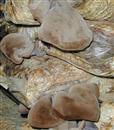
Detailed Explanation of Wood Ear Mushroom Inoculation Techniques: Master the Key Operational Steps
There are many raw materials suitable for bag cultivation of Auricularia polytricha (hairy wood ear), such as mixed wood sawdust, cottonseed hulls, broken cottonseed, bagasse, mulberry branches, cassava stalks, rice straw, soybean stalks, peanut vines, and so on. Except for mixed wood sawdust, cottonseed hulls, broken cottonseed, and bagasse, the remaining raw materials must be crushed into powder before they can be used for production. The bag cultivation process for Auricularia polytricha is similar to that for golden needle mushroom (Flammulina velutipes) bags...
条件筛选